


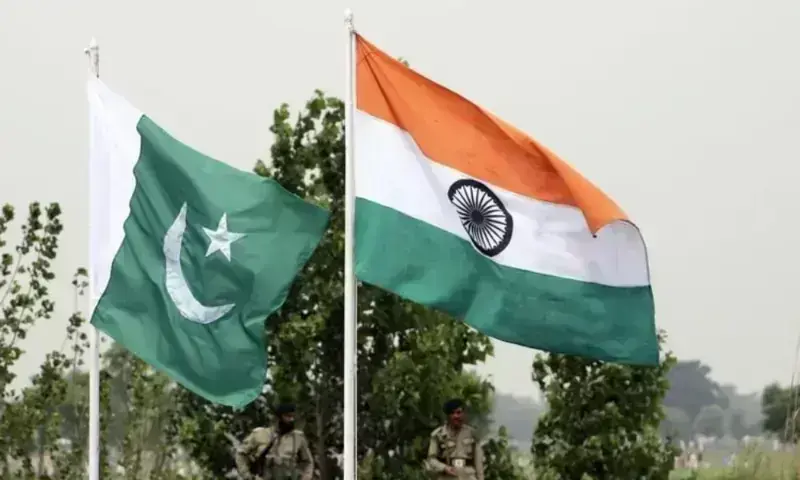
South Asian leaders urged to choose ‘talks over hostility’
Summarized and contextualized by DistantNews.
At a glance
News
Named sources
Context piece
- Over 100 civil society representatives from Pakistan and India have jointly urged the prime ministers of both nations to prioritize peace and dialogue.
- The appeal highlights that ongoing hostility deprives millions of young people of opportunities and a secure future, emphasizing the need for cooperation over confrontation.
- Signatories called for restoring full diplomatic ties, resuming bilateral talks on all outstanding issues including Kashmir, and reopening trade, travel, and people-to-people exchanges.
A joint appeal signed by over 100 civil society representatives from Pakistan and India calls for an urgent shift from hostility to dialogue and cooperation between the two nuclear-armed neighbors. Coordinated by the New Delhi-based think tank Centre for Peace and Progress, the appeal directly addresses Prime Ministers Shehbaz Sharif and Narendra Modi.
The signatories argue that the relentless animosity between India and Pakistan is not only a source of perpetual mistrust but also actively deprives millions of young people in both countries of essential opportunities, prosperity, and a secure future. They emphasize that the combined population of both nations represents nearly one-fifth of humanity, and these people deserve a future defined by peace, development, and connectivity.
Notable figures from both sides have lent their support. The Pakistani signatories include former Foreign Minister Khurshid Mahmud Kasuri and former Ambassador to New Delhi Ashraf Jehangir Qazi. On the Indian side, the list features prominent leaders such as Dr. Farooq Abdullah, Mirwaiz Umar Farooq, and former RAW chief A.S. Dulat.
The appeal proposes concrete steps to de-escalate tensions and rebuild trust. These include restoring full diplomatic relations, reinstating High Commissioners in both capitals, and resuming visa services. The representatives also urged the reopening of bilateral talks on all pending issues, specifically mentioning the Jammu and Kashmir dispute, and suggested considering measures for demilitarization and de-escalation, potentially using the 2004-2007 dialogue framework as a starting point.
Furthermore, the signatories advocated for practical measures to enhance people-to-people contact and economic integration. They called for reopening land borders like Wagah-Attari, resuming cross-border bus and train services, and reopening airspace to commercial airlines. Reinstating Most Favoured Nation status and promoting regional economic integration were also highlighted as key steps toward fostering a more peaceful and prosperous South Asia.
India and Pakistan combined are home to nearly one-fifth of humanity. The people of both countries deserve a future defined by peace, development, connectivity and cooperation, rather than perpetual mistrust and confrontation.
DistantNews Editorial
Originally published by Dawn. Summarized and contextualized by our editorial team with added local perspective. Read our editorial standards.
More Stories
From Our Blog

What Gets Lost (and Found) When News Is Translated

The Critical Role of Diaspora Media in Global News

What Travellers Should Know About Countries with Restricted Press

A Digital Nomad's Guide to Following Local News

How the Same Story Looks Different in Different Countries
