


South Korea Could Participate in Building NASA's 'Small City' on the Moon
Translated from Korean, summarized and contextualized by DistantNews.
At a glance
News
Sources not specified
New plan
- NASA plans to build a permanent base on the moon, aiming for long-term human habitation beyond 2032.
- South Korea is being considered as a partner, with NASA identifying its strengths in communication, satellite systems, robotics, and sensor technology.
- The moon base, envisioned as a small city, will serve as a testing ground for future Mars missions.
South Korea has the potential to play a significant role in NASA's "Building Moon Base" program, a plan to establish a permanent settlement on the moon.
The construction of a 'small city' on the moon can have South Korea as one of its pillars.
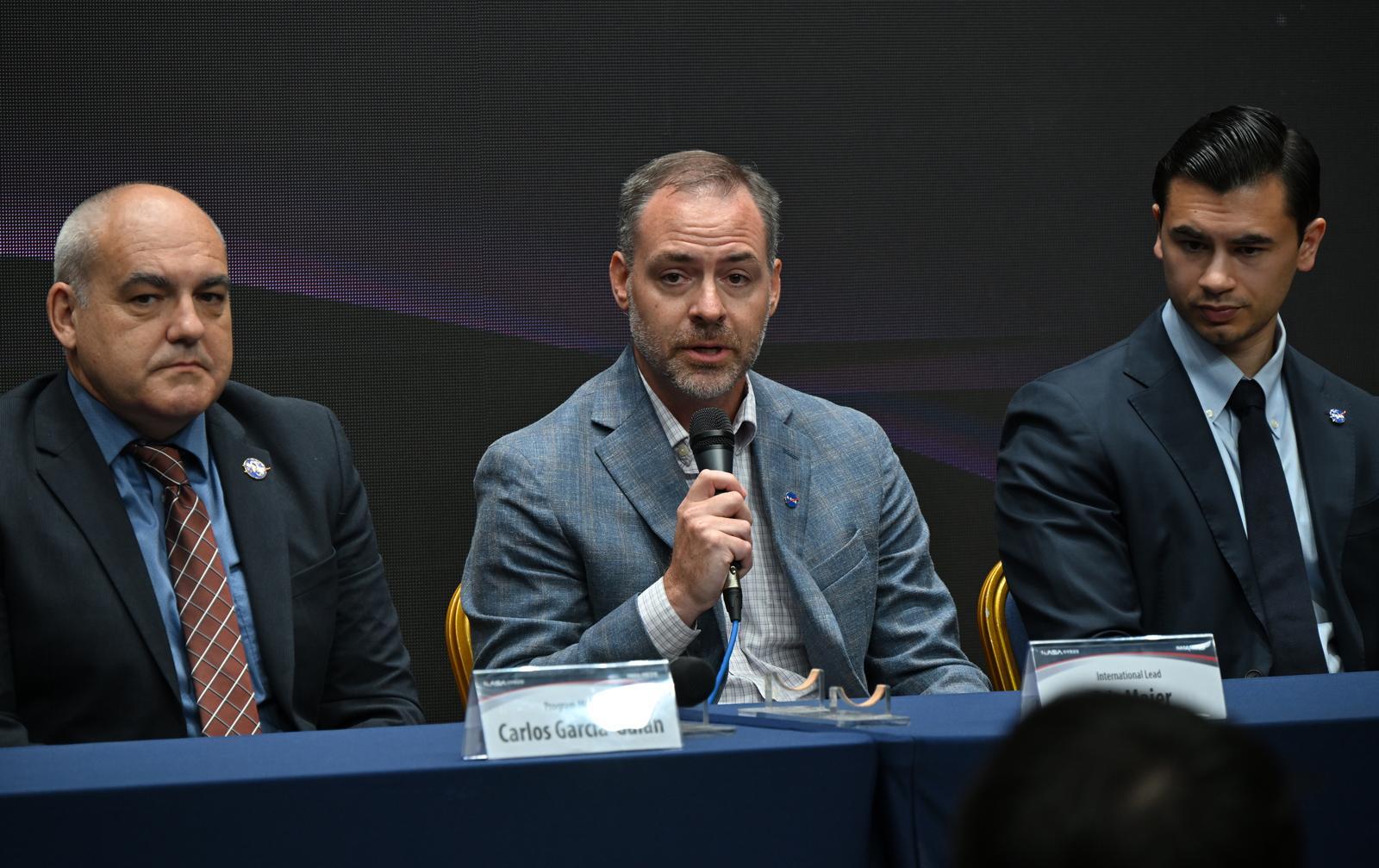
Carlos Garcia-Galan, the lead program executive for NASA's Moon to Mars Architecture Development, stated at a press briefing in Seoul that international partners, including South Korea, are crucial for this ambitious endeavor. Unlike the Apollo missions, which were primarily a U.S. effort, the moon base construction will be a collaborative international project.
Unlike the Apollo mission, where the U.S. worked alone, this moon base construction will create a team with international partners to achieve the impossible.
NASA sees South Korea's expertise in communication and satellite systems, as well as its advancements in robotics, mobility, and sensor technology, as key contributions. Discussions are underway with the Korea Aerospace Administration (KASA) regarding potential cooperation in areas such as landers, communication systems, lunar surface mobility, scientific research, and sample collection and storage. A clearer outline of national roles is expected within the next three months.
We need to define the key elements and contribution plans and decide who will do what within approximately the next three months.
The envisioned "small city" on the moon would span several square kilometers, featuring distributed facilities for transportation, habitation, power, and communication. Long-term plans include industrial facilities for producing oxygen and fuel. NASA intends to utilize the moon base as a proving ground for future crewed missions to Mars.
We are currently in the stage of establishing a government-to-government cooperation framework.
DistantNews Editorial
Originally published by Dong-A Ilbo in Korean. Translated, summarized, and contextualized by our editorial team with added local perspective. Read our editorial standards.
More Stories



From Our Blog

What Gets Lost (and Found) When News Is Translated

The Critical Role of Diaspora Media in Global News

What Travellers Should Know About Countries with Restricted Press

A Digital Nomad's Guide to Following Local News

How the Same Story Looks Different in Different Countries
