


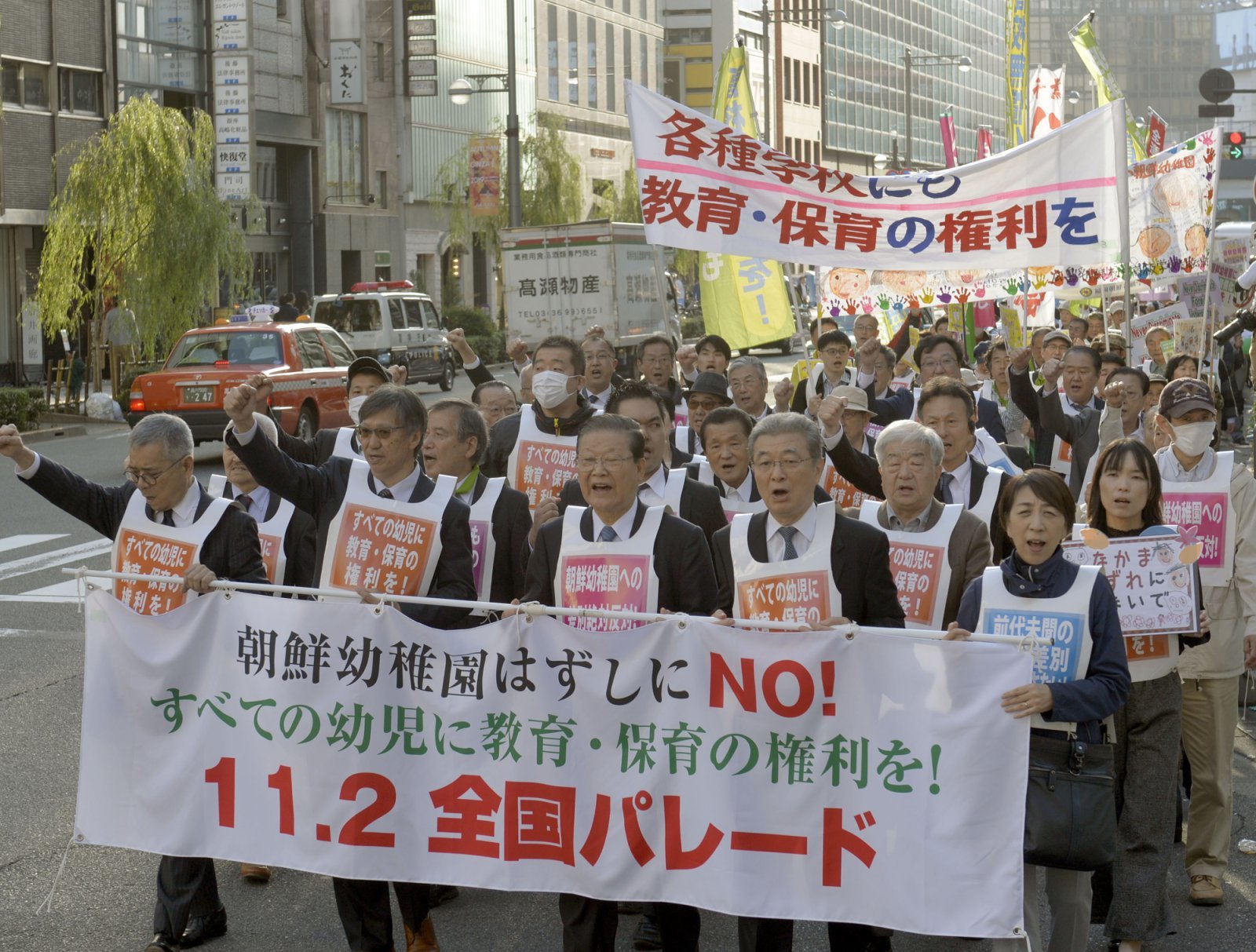
South Korea Eyes Abolishing Rule Classifying Chochongryon Members as North Koreans
Translated from Korean, summarized and contextualized by DistantNews.
At a glance
News
Sources not specified
Ongoing story
- The South Korean government is considering abolishing a provision in the inter-Korean exchange law that classifies members of the General Association of Korean Residents in Japan (Chochongryon) as North Korean residents.
- This change would remove the requirement for South Koreans to report contact with Chochongryon officials to the Unification Ministry.
- The proposed revision aims to ease regulations and address past issues where individuals faced penalties for unannounced contact with Chochongryon-affiliated groups.
South Korea's government is moving to revise a controversial provision in its inter-Korean exchange law that has long classified members of the General Association of Korean Residents in Japan, known as Chochongryon, as North Korean residents. This classification has subjected South Koreans to mandatory reporting requirements when interacting with Chochongryon officials.
If the parliamentary discussion proceeds, we will actively support it.
The proposed amendment, currently under review in the National Assembly's Foreign Affairs and Unification Committee, seeks to remove this classification. If enacted, South Koreans would no longer need to obtain prior approval or file post-contact reports with the Unification Ministry before engaging with Chochongryon members. This would significantly ease restrictions on contact and cooperation.
The current law stipulates that individuals affiliated with organizations operating under North Korea's line are considered North Korean residents. This has led to situations where South Koreans, including artists and civic group representatives, have faced penalties, such as fines, for failing to report their contacts with Chochongryon-related entities. The government acknowledges that the nature and composition of Chochongryon have evolved, and that a blanket classification as North Korean residents is no longer appropriate, especially as some members hold South Korean passports.
The current provision, which uniformly regards Chochongryon members as North Korean residents, is excessive, considering that a considerable number of Chochongryon members hold Republic of Korea passports and their pro-North Korean leanings vary individually.
While proponents argue the change will facilitate smoother exchanges and recognize the diverse affiliations within the Chochongryon community, critics raise concerns about potential implications for national security, given Chochongryon's status as an officially recognized overseas organization of North Korea. The Unification Ministry, however, maintains that the revision is separate from judgments regarding violations of the National Security Act.
The judgment on whether it violates the National Security Act is a separate matter.
DistantNews Editorial
Originally published by Dong-A Ilbo in Korean. Translated, summarized, and contextualized by our editorial team with added local perspective. Read our editorial standards.
More Stories


From Our Blog

What Gets Lost (and Found) When News Is Translated

The Critical Role of Diaspora Media in Global News

What Travellers Should Know About Countries with Restricted Press

A Digital Nomad's Guide to Following Local News

How the Same Story Looks Different in Different Countries
