


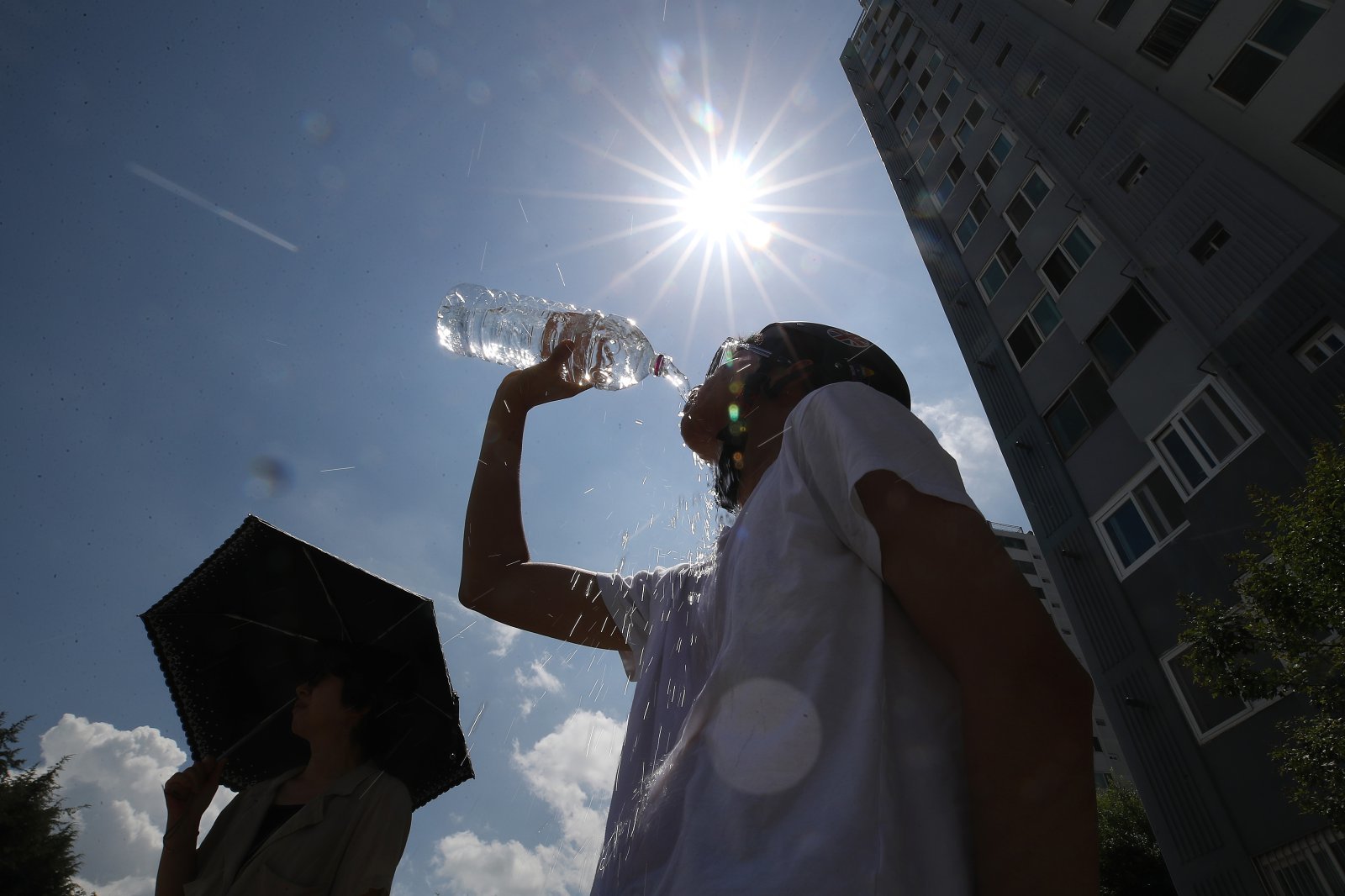
South Korea Faces Severe Heatwave, Health Risks Rise
Translated from Korean, summarized and contextualized by DistantNews.
At a glance
News
Sources not specified
Context piece
- South Korea is experiencing severe heatwaves with temperatures reaching 38 degrees Celsius.
- Heat-related illnesses and livestock deaths are increasing across the country.
- The heatwave is expected to continue until early August, with forecasters warning of prolonged extreme weather.
South Korea is grappling with intense heatwaves, with temperatures soaring and heat-related illnesses and livestock deaths becoming widespread. The monsoon season has effectively ended, and the extreme heat is forecast to persist.
As of July 26, heatwave advisories are in effect across most of the nation, with particularly severe conditions in southern regions. Areas like Gwangyang in South Jeolla Province and Pohang, Gyeongju, and Goryeong in North Gyeongsang Province are experiencing extreme heat, with perceived temperatures reaching 38 degrees Celsius or even 39 degrees Celsius.
The heat has led to a surge in heat-related illnesses. On July 25, a 37-year-old Thai national collapsed and died while applying fertilizer in a field in Haenam County, South Jeolla Province. Police suspect heatstroke and plan to conduct an autopsy to confirm the cause of death. Similar incidents have occurred in Jeju, where a person working on landscaping collapsed with heatstroke symptoms on July 24. Construction sites and other outdoor work locations have also reported cases.
For the time being, most regions nationwide will experience very hot weather with perceived temperatures exceeding 33 degrees Celsius, so please take extreme care for your health.
Livestock are also suffering. As of July 24, over 10,000 animals, including 2,469 pigs and 8,130 poultry, had died from the heat in Gyeongsang Province. In Gwangju, South Jeolla Province, 1,775 pigs and 14,643 poultry had perished by the same date.
The Korea Meteorological Administration predicts daytime temperatures will range from 30 to 38 degrees Celsius nationwide until August 3. Tropical nights, where temperatures do not drop below 25 degrees Celsius, are expected to extend beyond the southern regions to the central areas, including the Seoul metropolitan area. The agency noted that heatwaves and tropical nights are starting earlier and ending later than in previous decades, attributing this trend to the early expansion of the North Pacific high-pressure system and rising sea surface temperatures.
Especially, suspend or postpone outdoor activities and work other than essential tasks, move to a cool place, consume fluids, and check on the safety of family and neighbors.
DistantNews Editorial
Originally published by Dong-A Ilbo in Korean. Translated, summarized, and contextualized by our editorial team with added local perspective. Read our editorial standards.
More Stories


From Our Blog

What Gets Lost (and Found) When News Is Translated

The Critical Role of Diaspora Media in Global News

What Travellers Should Know About Countries with Restricted Press

A Digital Nomad's Guide to Following Local News

How the Same Story Looks Different in Different Countries
