

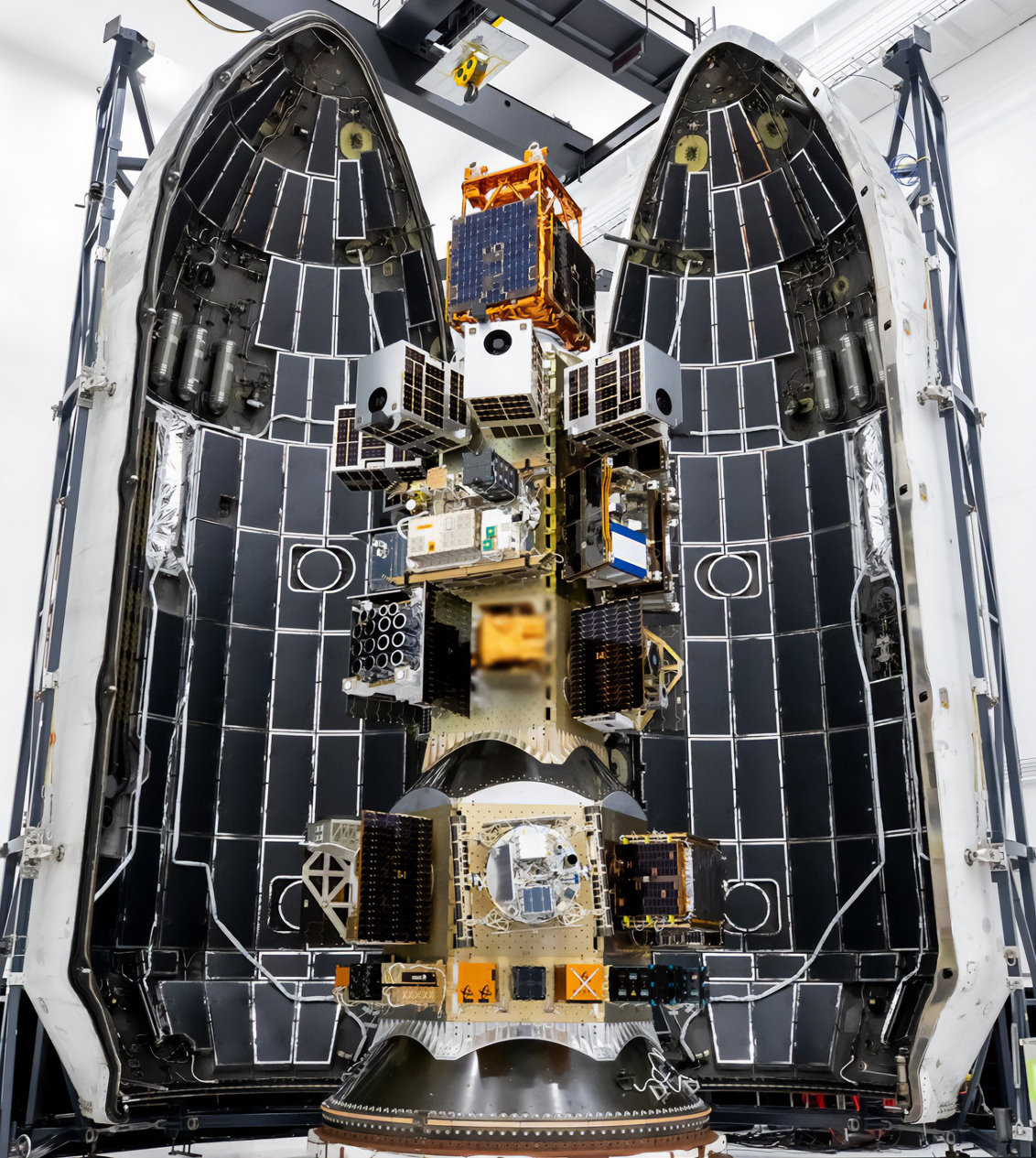

South Korea launches next-generation medium satellite 4 for agricultural and forestry observation
Translated from Korean, summarized and contextualized by DistantNews.
At a glance
News
Sources not specified
New plan
- South Korea successfully launched its next-generation medium satellite, CAS500-4, aboard a SpaceX Falcon 9 rocket from Vandenberg Space Force Base.
- The satellite is designed for agricultural and forestry observation, equipped with optical equipment capable of capturing 5-meter resolution images.
- After initial operations and orbit verification, CAS500-4 is expected to begin its full mission in the first half of 2027.
South Korea's next-generation medium satellite, CAS500-4, has been successfully launched into orbit. The satellite lifted off aboard a SpaceX Falcon 9 rocket from Vandenberg Space Force Base in California at 00:12 AM local time on July 7.
Developed primarily for agricultural and forestry observation, CAS500-4 utilizes a standard 500kg-class platform established during the first phase of the CAS500 project. It is equipped with advanced optical equipment that can distinguish details as small as 5 meters and capture images across a swath of 120 kilometers in a single pass. This capability is expected to support various public demands, including monitoring crop conditions, analyzing farmland, and observing changes in forest ecosystems.
Approximately 2 hours and 22 minutes after launch, the satellite separated from the Falcon 9 rocket. It is scheduled to communicate with the Svalbard ground station in Norway to confirm its successful arrival in the target orbit. CAS500-4 will undergo an initial operational phase for four months in its designated orbit of approximately 888 kilometers before commencing its full mission in the first half of 2027.
The CAS500-4 satellite was developed by Korea Aerospace Industries (KAI) and is part of South Korea's ongoing efforts to enhance its independent satellite technology and Earth observation capabilities.
DistantNews Editorial
Originally published by Hankyoreh in Korean. Translated, summarized, and contextualized by our editorial team with added local perspective. Read our editorial standards.
More Stories


From Our Blog

What Gets Lost (and Found) When News Is Translated

The Critical Role of Diaspora Media in Global News

What Travellers Should Know About Countries with Restricted Press

A Digital Nomad's Guide to Following Local News

How the Same Story Looks Different in Different Countries
