


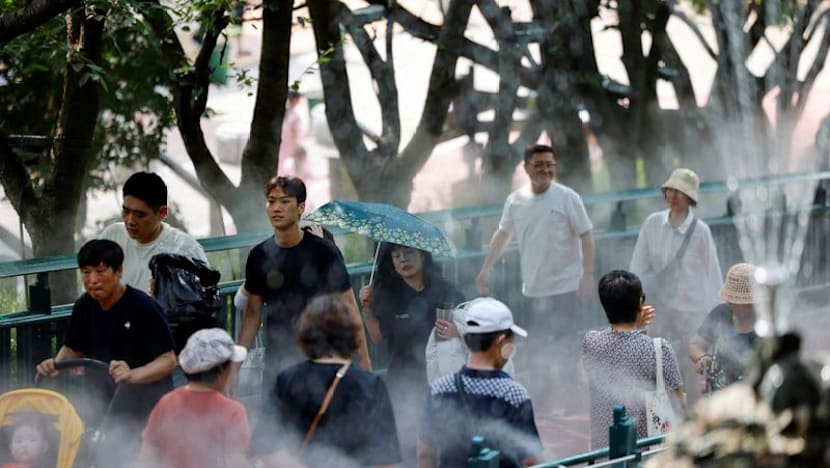
South Korea Orders All-Out Response as Heatwave Peaks
Translated from English, summarized and contextualized by DistantNews.
At a glance
News
Named sources
Ongoing story
- South Korea is experiencing an extreme heatwave, with Seoul forecast to reach 39 degrees Celsius.
- The heatwave has already caused over 20 deaths and is straining resources, prompting President Lee Jae Myung to order an all-out response.
- Authorities are mobilizing personnel and resources to protect vulnerable residents and ensure outdoor workers receive adequate rest breaks.
South Korea is grappling with an unprecedented heatwave, with the capital, Seoul, bracing for temperatures as high as 39 degrees Celsius on Thursday. This extreme weather spell has already claimed more than 20 lives and is being described by President Lee Jae Myung as "extreme heat on a scale we have never experienced." The president emphasized that heatwave conditions, once only seen in foreign news reports, have now become a stark reality for the nation.
In response, President Lee has ordered all government ministries and local authorities to mobilize all available personnel and resources until the heatwave subsides. His directive prioritizes the protection of lives and safety, the implementation of stronger safeguards for vulnerable populations, and the strict enforcement of rest breaks for outdoor workers during the peak heat hours. The forecast temperature for Seoul approaches the city's record high of 39.6 degrees Celsius, set in August 2018 during a previous historic heatwave.
The country is enduring stifling nights, with temperatures in some areas barely dropping below 30 degrees Celsius overnight, according to the Korea Meteorological Administration (KMA). Media reports show citizens seeking refuge in air-conditioned spaces like department stores and even streams to escape the oppressive heat. The Korea Baseball Organization has canceled all scheduled games for Wednesday and Thursday following incidents where spectators fainted due to the heat, including one fan who collapsed during a game in Incheon.
Meteorologists suggest that Typhoon Dolphin, while not directly threatening South Korea, may be exacerbating the scorching conditions. The KMA explained that the typhoon has strengthened easterly winds, which then cross the Korean Peninsula's mountainous terrain. As these winds descend over western regions, they become hot and dry, intensifying the heat in Seoul and other areas.
Extreme heat on a scale we have never experienced is continuing day after day. Heatwave conditions once seen only in foreign news reports have now become our reality.
DistantNews Editorial
Originally published by CNA in English. Translated, summarized, and contextualized by our editorial team with added local perspective. Read our editorial standards.
More Stories


From Our Blog

What Gets Lost (and Found) When News Is Translated

The Critical Role of Diaspora Media in Global News

What Travellers Should Know About Countries with Restricted Press

A Digital Nomad's Guide to Following Local News

How the Same Story Looks Different in Different Countries
