


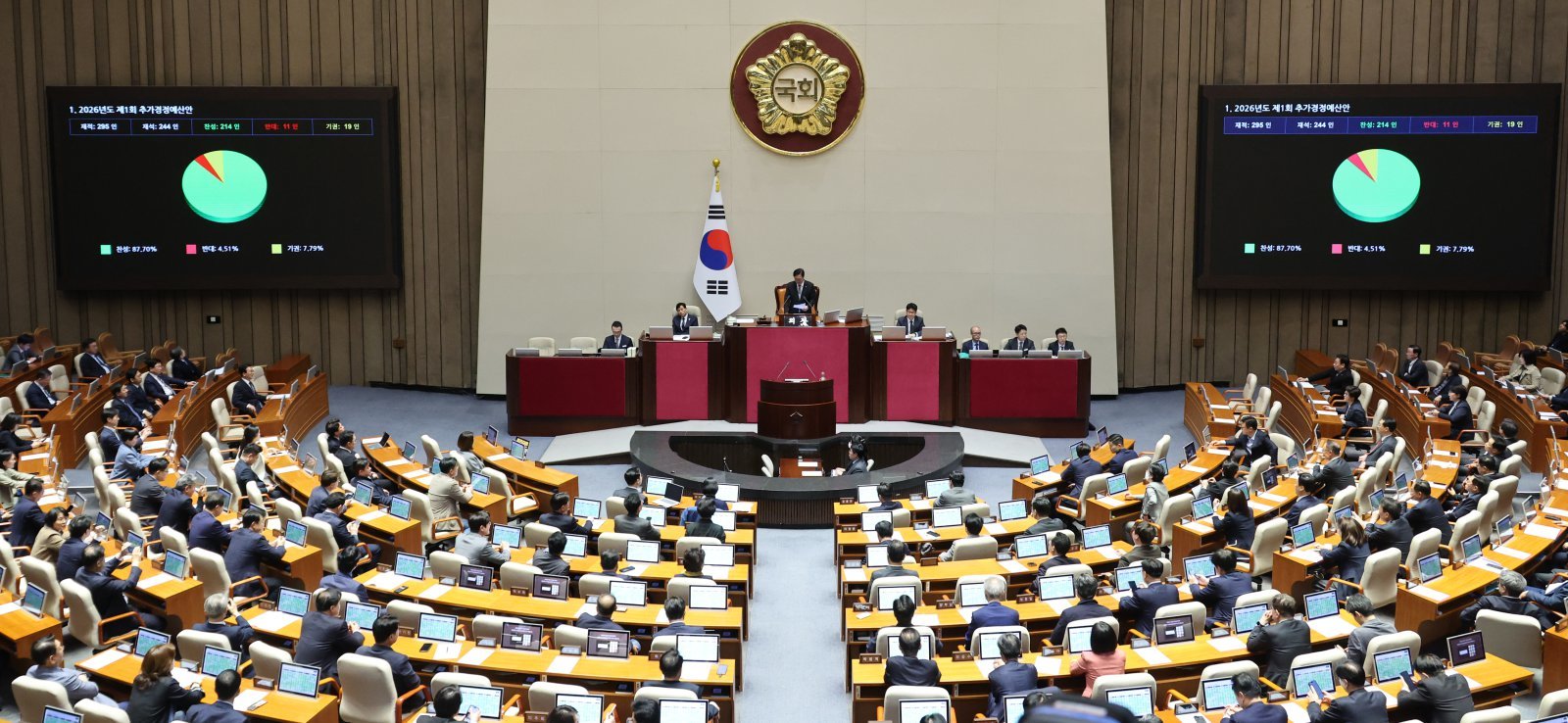
South Korea Passes 26.2 Trillion Won Supplementary Budget, Reallocating Funds to Combat High Oil Prices
Translated from Korean, summarized and contextualized by DistantNews.
TLDR
- South Korea's supplementary budget for 2026, totaling 26.2 trillion won, has been passed by the National Assembly with internal adjustments.
- While the total amount remains unchanged, funds were reallocated from welfare programs to increased support for high oil prices and supply chain stability.
- This shift indicates a policy focus on responding to external shocks like energy price surges and supply chain disruptions, rather than broad economic stimulus.
South Korea's National Assembly has approved the first supplementary budget for 2026, a financial package amounting to 26.2 trillion won. While the headline figure remains consistent with the government's proposal, a closer examination reveals a significant internal restructuring, signaling a strategic pivot in policy priorities. This adjustment, as reported by Dong-A Ilbo, moves away from traditional welfare spending towards a more targeted approach focused on mitigating the impact of global economic volatility.
The core of this supplementary budget lies in its reallocation of funds. Approximately 600 billion won has been shifted, with reductions in some民生 (min-saeng, public livelihood) support programs being compensated by increased allocations for high oil price responses and supply chain stabilization efforts. This deliberate adjustment underscores the administration's heightened concern over external economic shocks, particularly the recent surge in international oil prices and ongoing global supply chain uncertainties, likely exacerbated by geopolitical events such as the Middle East conflict.
From our perspective at Dong-A Ilbo, this 'war-type' fiscal approach is a pragmatic response to the current global climate. Unlike previous supplementary budgets often geared towards broad economic stimulus, this iteration prioritizes resilience. The increase in funds for energy cost reduction, agricultural support (like tax-exempt fuel and fertilizer), and supply chain stability measures reflects a clear intention to directly address the rising cost pressures impacting both households and industries. The emphasis on 'cost-defense support' in agriculture, for instance, aims to curb production cost hikes rather than merely compensating for income loss.
What makes this particularly relevant from a South Korean standpoint is the nation's heavy reliance on imports for energy and raw materials. The government's focus on stabilizing supply chains and mitigating the impact of fluctuating global prices is not just an economic policy; it's a matter of national security and economic stability. While international observers might see this as a standard fiscal adjustment, for South Korea, it represents a critical effort to insulate its export-driven economy from external shocks and maintain competitiveness in a volatile global market. This budget prioritizes where the money goes, reflecting a strategic shift towards navigating immediate crises.
DistantNews Editorial
Originally published by Dong-A Ilbo in Korean. Translated, summarized, and contextualized by our editorial team with added local perspective. Read our editorial standards.
More Stories


From Our Blog

What Gets Lost (and Found) When News Is Translated

The Critical Role of Diaspora Media in Global News

What Travellers Should Know About Countries with Restricted Press

A Digital Nomad's Guide to Following Local News

How the Same Story Looks Different in Different Countries
