


South Korea plans 'Future Response Fund' from AI boom, eyes growth and youth
Translated from Korean, summarized and contextualized by DistantNews.
At a glance
News
Named sources
Context piece
- The South Korean government plans to establish a "Future Response Fund" using increased tax revenues from an AI-driven semiconductor boom.
- The fund will focus on strategic investments in four key areas: the future, youth, regions, and talent, aiming to boost economic growth potential.
- Critics argue the plan lacks specificity on how growth benefits will address widening inequality, urging a dual focus on growth and polarization mitigation.
South Korea's government has unveiled a preliminary plan for a "Future Response Fund," designed to strategically invest surplus tax revenues generated by an AI-driven semiconductor boom. The initiative aims to channel these funds into four critical sectors: the future economy, youth development, regional revitalization, and talent cultivation, with the overarching goal of enhancing the nation's economic growth potential.
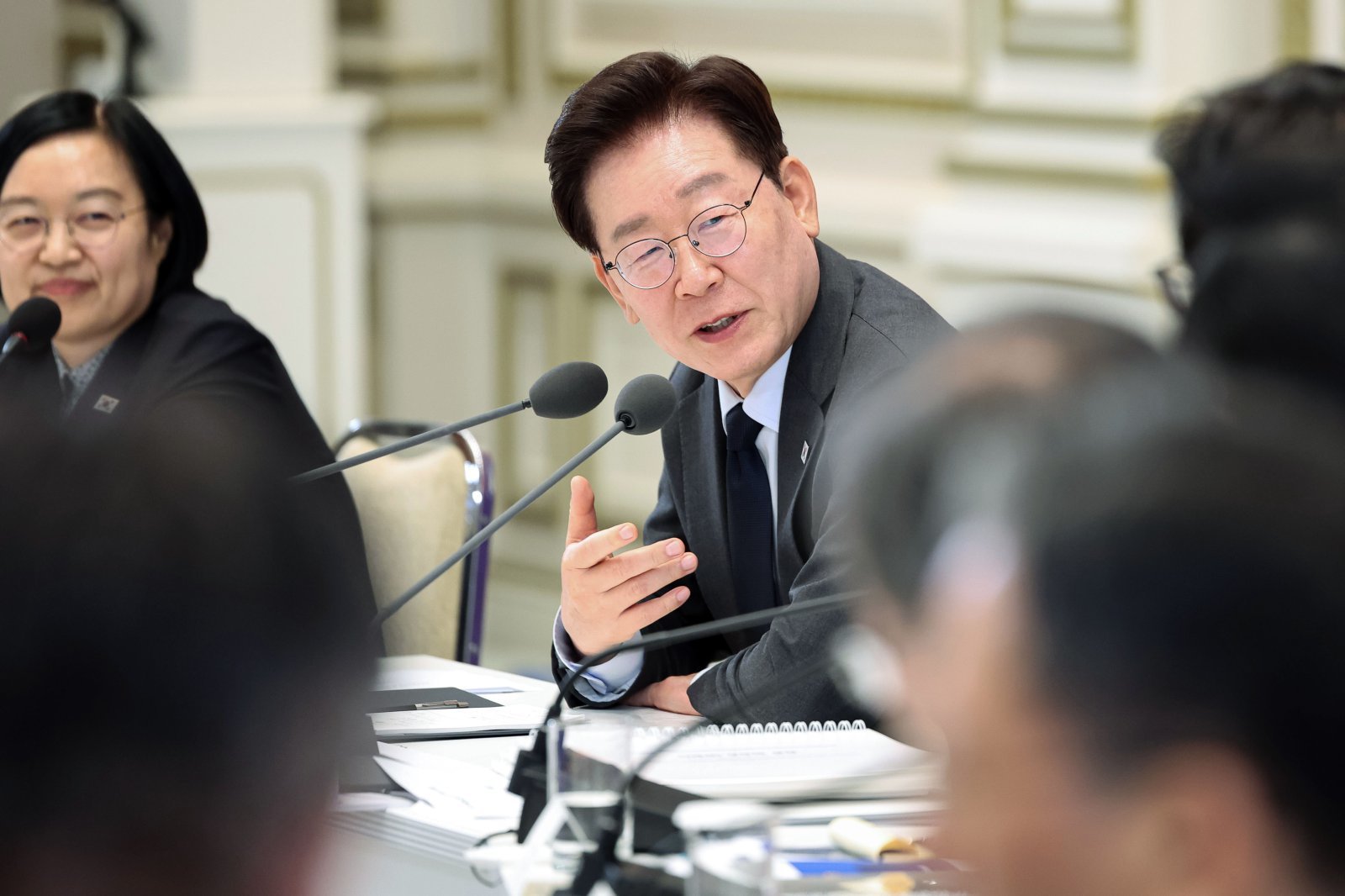
President Lee Jae-myung announced the plan at a national fiscal strategy meeting, stating, "We will utilize the large-scale additional tax revenue as a strategic investment resource for future response." He elaborated that the fund would "concentrate investment in the four areas that determine the nation's future – the future, youth, regions, and education – thereby increasing economic growth potential and ensuring the benefits are returned to the people." Park Hong-geun, Minister of Economy and Finance, projected that next year's tax revenue could exceed 500 trillion won, significantly surpassing the initial forecast of 412 trillion won. The plan involves accumulating tax revenue exceeding long-term trends into the fund, operating it as a medium-to-long-term investment platform beyond annual budget limitations and as a fiscal stabilization tool to mitigate revenue volatility.
While the detailed operational plans remain undisclosed, the initial fund size is expected to reach tens of trillions of won, given the projected revenue increase of nearly 100 trillion won next year. The direction of investing this surplus over several years in priority areas, rather than solely using it for national debt repayment, is considered sound. However, the plan's effectiveness in addressing widening inequality remains a concern. President Lee mentioned support for youth employment, housing, and asset formation, along with strengthening the social safety net for non-regular workers, aiming for "growth for all where no one is left behind." Yet, the overall impression is a reliance on the trickle-down effect, assuming economic growth will naturally benefit society broadly. This tendency could be exacerbated in the AI era, where job growth may not keep pace with economic expansion, as seen in the current reality of stagnant job creation despite the semiconductor boom. Given the deepening polarization, the government is urged to actively consider using the Future Response Fund as a policy tool to mitigate inequality, not just as a growth engine.
We will utilize the large-scale additional tax revenue as a strategic investment resource for future response. We will establish the Future Response Fund and concentrate investment in the four areas that determine the nation's future – the future, youth, regions, and education – thereby increasing economic growth potential and ensuring the benefits are returned to the people.
DistantNews Editorial
Originally published by Hankyoreh in Korean. Translated, summarized, and contextualized by our editorial team with added local perspective. Read our editorial standards.
More Stories


From Our Blog

What Gets Lost (and Found) When News Is Translated

The Critical Role of Diaspora Media in Global News

What Travellers Should Know About Countries with Restricted Press

A Digital Nomad's Guide to Following Local News

How the Same Story Looks Different in Different Countries
