


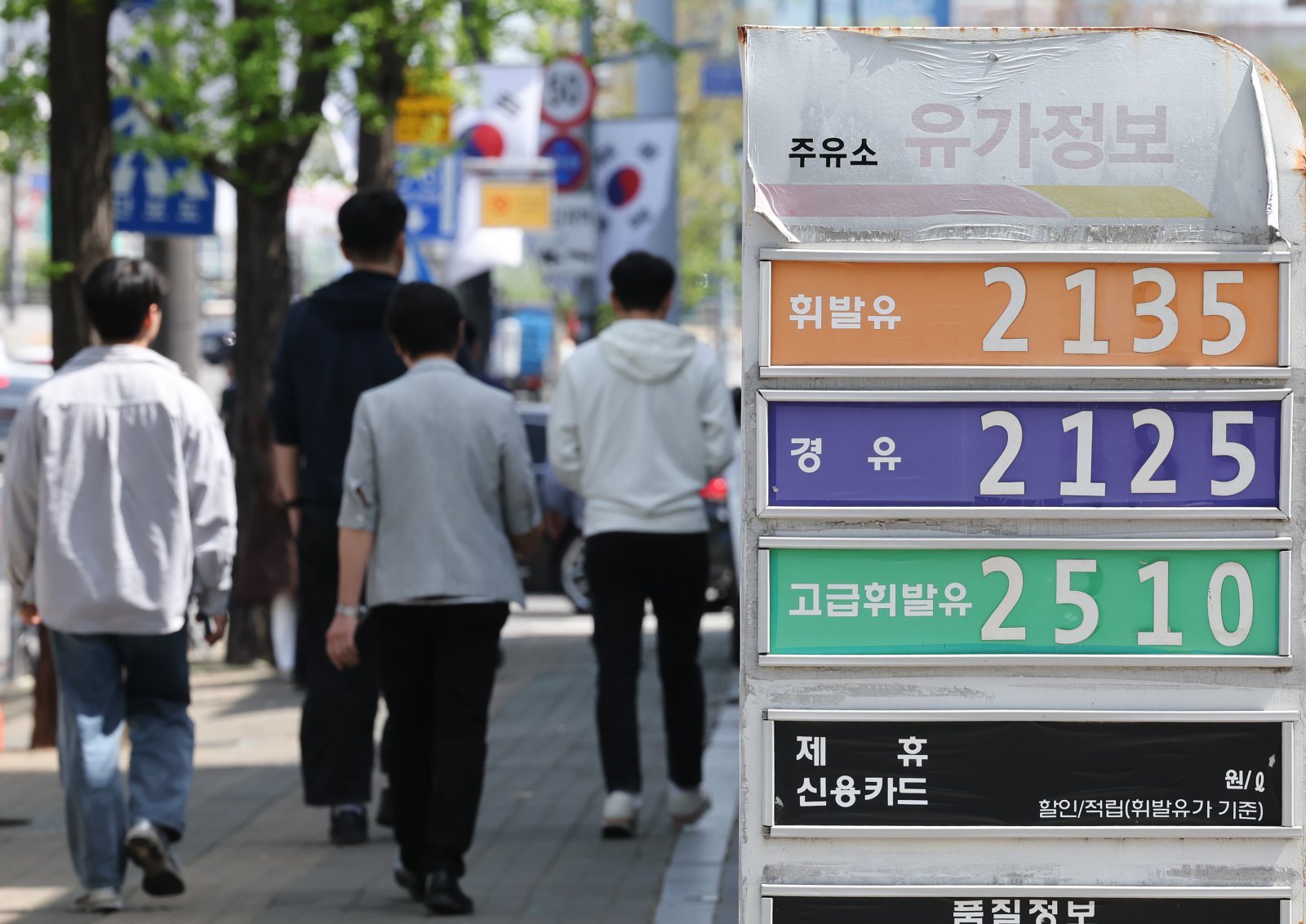
South Korea's Average Gasoline Price Nears 2,000 Won Mark Amid Policy Review
Translated from Korean, summarized and contextualized by DistantNews.
TLDR
- The average price of gasoline in South Korea is nearing 2,000 won per liter, with the national average at 1,999.6 won.
- Several regions, including Seoul, have already surpassed the 2,000 won mark for gasoline.
- The government is considering policy adjustments to the maximum oil price system as fuel prices continue to rise.
South Korea is on the cusp of seeing its average gasoline prices breach the 2,000 won per liter mark, a significant psychological and economic threshold. As of April 17, 2026, the national average stands at a precarious 1,999.6 won, a slight increase from the previous day, according to the Korea National Oil Corporation's Opinet system. This steady climb is causing concern among consumers and policymakers alike, particularly as the government contemplates adjustments to the current maximum oil price system.
The price disparity across regions highlights the varied impact of these rising costs. Seoul continues to record the highest average gasoline prices at 2,029.61 won per liter, while Daegu remains the most affordable at 1,985.75 won. Six regions, including Seoul, Jeju, Chungbuk, Gyeonggi, Chungnam, and Gangwon, have already surpassed the 2,000 won mark. Diesel prices are also following a similar upward trend, with the national average reaching 1,993.63 won per liter.
These price hikes come amid the third implementation phase of the government's maximum oil price system, introduced on March 13th. Despite these measures, which set upper limits for refinery supply prices (1,934 won for gasoline and 1,923 won for diesel under the third phase), the retail prices at the pump continue to edge upwards. The daily increases, though seemingly small, have accumulated, pushing the average closer to the 2,000 won barrier.
The government's consideration of policy adjustments to the maximum oil price system indicates a recognition of the challenges in controlling fuel costs under the current framework. This situation is particularly sensitive given the impact of fuel prices on transportation costs, consumer spending, and the broader economy. The public is keenly watching to see what measures will be taken to stabilize prices without unduly burdening consumers or the energy industry.
From a South Korean perspective, these fluctuating fuel prices are a constant concern, directly impacting household budgets and the cost of goods. While international oil market dynamics play a role, domestic policy interventions like the maximum price system are closely scrutinized. The current trend suggests that achieving price stability remains a complex balancing act for the government, requiring careful consideration of market forces and consumer welfare.
DistantNews Editorial
Originally published by Dong-A Ilbo in Korean. Translated, summarized, and contextualized by our editorial team with added local perspective. Read our editorial standards.
More Stories


From Our Blog

What Gets Lost (and Found) When News Is Translated

The Critical Role of Diaspora Media in Global News

What Travellers Should Know About Countries with Restricted Press

A Digital Nomad's Guide to Following Local News

How the Same Story Looks Different in Different Countries
