


South Korea's 'debt-to-equity' investors face rising interest rates
Translated from Korean and summarized by DistantNews. Read the original for the full story.
At a glance
News
Sources not specified
Context piece
- South Korea's benchmark interest rate has risen to 3%, increasing the financial burden on investors who borrowed money for stock investments.
- Interest rates for margin trading and stock-backed loans are already high and are expected to rise further.
- The total outstanding balance for these types of loans exceeds 58.9 trillion won, with an estimated annual interest increase of 147.2 billion won.
Investors in South Korea who have leveraged borrowed funds for stock market investments, often referred to as 'debt-to-equity' investors, are bracing for a significant increase in their interest expenses. The Bank of Korea's recent decision to raise the benchmark interest rate to 3% marks the second consecutive hike, intensifying concerns for those already navigating market downturns.
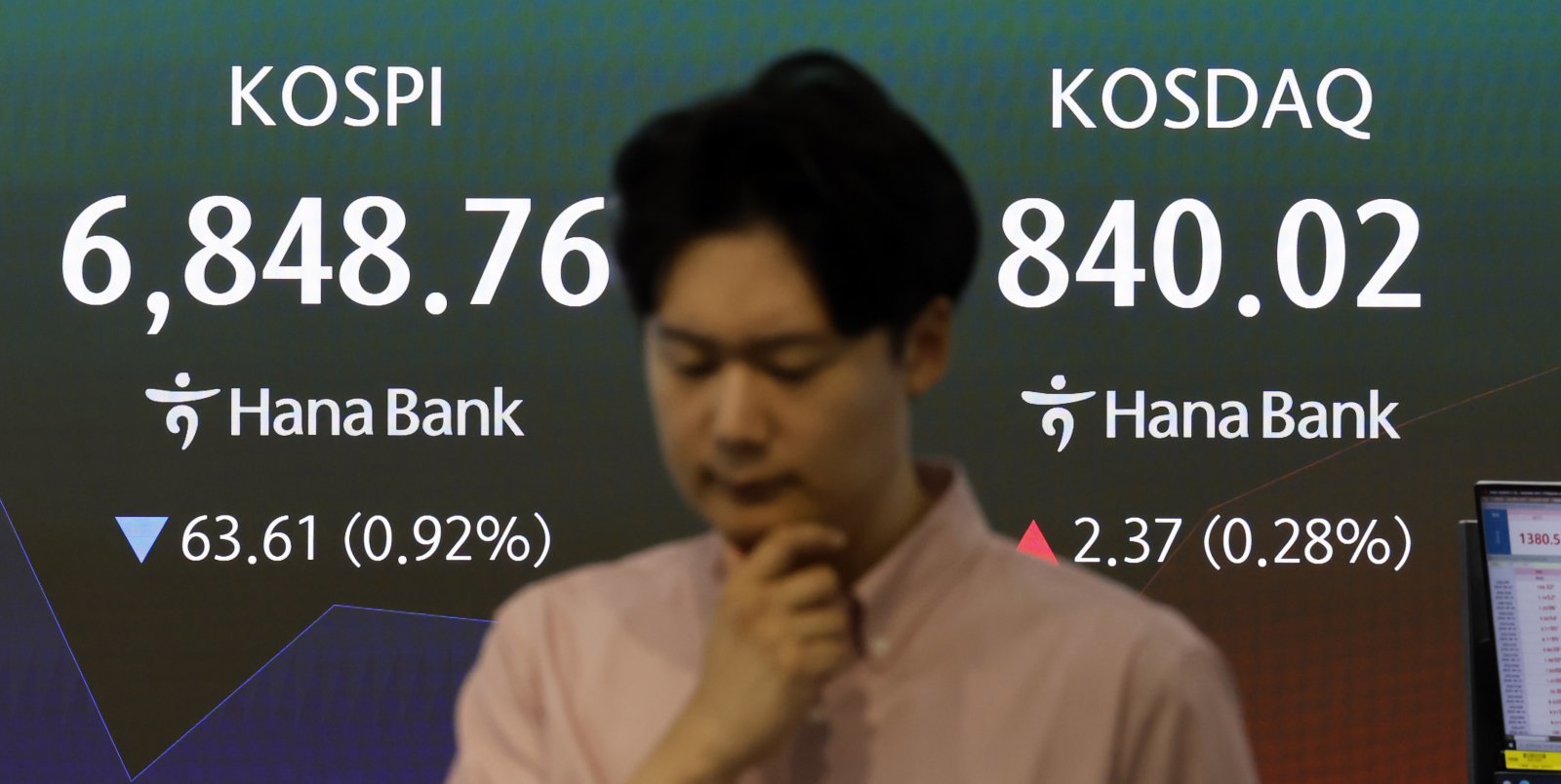
The Kospi index has fallen sharply from its June peak of 9,000 points to below 7,000, placing many investors in a loss-making position. Compounding their difficulties, the interest rates on margin trading and stock-backed loans, which are already hovering around 9%, are projected to rise further. This situation is causing considerable anxiety among investors.
According to financial investment industry data, the upper limit for securities companies' margin trading interest rates has reached 9.95%, while stock-backed loan rates stand at 9.5%. These rates typically increase with longer loan terms, with many domestic securities firms applying rates in the 9% range for extended periods. For instance, Yuanta Securities charges 9.95% for margin loans exceeding 91 days, while Eugene Investment & Securities applies a 9.7% rate.
The liquidity contraction caused by the benchmark interest rate hike has the potential to act as a downward pressure on the domestic stock market.
The total outstanding balance for stock-backed loans and margin trading loans reached approximately 58.8654 trillion won as of August 26th. While this figure has decreased from its late June high of over 64 trillion won, it remains substantial. A simple calculation suggests that a 0.25% point increase in the benchmark rate could lead to an additional annual interest burden of approximately 147.2 billion won for these investors, though the actual increase will vary based on individual loan terms and credit ratings.
Concerns are mounting that the rising interest rates could further dampen market liquidity. As borrowing becomes more expensive, demand for leveraged investments may decrease. Additionally, funds might shift from the stock market to higher-yielding savings accounts or bonds, potentially leading to a contraction of available capital in the equities market. Analysts predict that the liquidity squeeze resulting from interest rate hikes could exert downward pressure on the South Korean stock market.
For debt-to-equity investors already bearing high interest, even a small rate increase can feel significant. If rising rates reduce borrowing demand and market funds withdraw, it could strain market liquidity.
About this summary
Originally published by Dong-A Ilbo in Korean. Translated, summarized, and contextualized automatically by DistantNews, with a note on how the source frames the story. Not individually reviewed before publishing. How this works.
More Stories


From Our Blog

What Gets Lost (and Found) When News Is Translated

The Critical Role of Diaspora Media in Global News

What Travellers Should Know About Countries with Restricted Press

A Digital Nomad's Guide to Following Local News

How the Same Story Looks Different in Different Countries
