


South Korea's Democrats: Unity lost, a new enemy sought?
Translated from Korean, summarized and contextualized by DistantNews.
At a glance
Analysis
Named sources
Context piece
- The article discusses the Democratic Party's strategy for future electoral success, emphasizing the need for unity and expansion over division and exclusion.
- It analyzes the current leadership race for the party's representative, highlighting internal divisions and a focus on personal rivalries rather than policy.
- The author suggests that the party's internal conflict and the absence of a clear unifying enemy are leading to a loss of public support, particularly among younger voters.
The Democratic Party's path to future electoral victories hinges on its ability to foster unity and expand its reach, a lesson drawn from its historical successes and failures. The article posits that when the party unites and broadens its appeal, it wins, but division and exclusion lead to defeat. This pattern is illustrated by past elections, including the 1987 presidential race lost due to the failure of the 'Two Kims' to unify, and the 1997 victory achieved through an alliance with Kim Jong-pil.
The Democratic Party's presidential victory was a history of national unity and outward expansion. We won when we united and expanded, and we lost when we divided and excluded.
President Lee Jae-myung's administration, despite campaigning on coexistence, reconciliation, solidarity, and unity, faces challenges in translating these ideals into practice. The article identifies two main reasons for the lukewarm reception of his efforts: a lack of judgment in personnel selection, with some unqualified individuals being appointed, and insufficient political leadership. President Lee's base is divided between 'soft supporters' who favor pragmatism and coexistence with the opposition, and 'hardcore supporters' who insist on a strict adherence to the party's traditional reformist agenda and a rejection of the opposition.
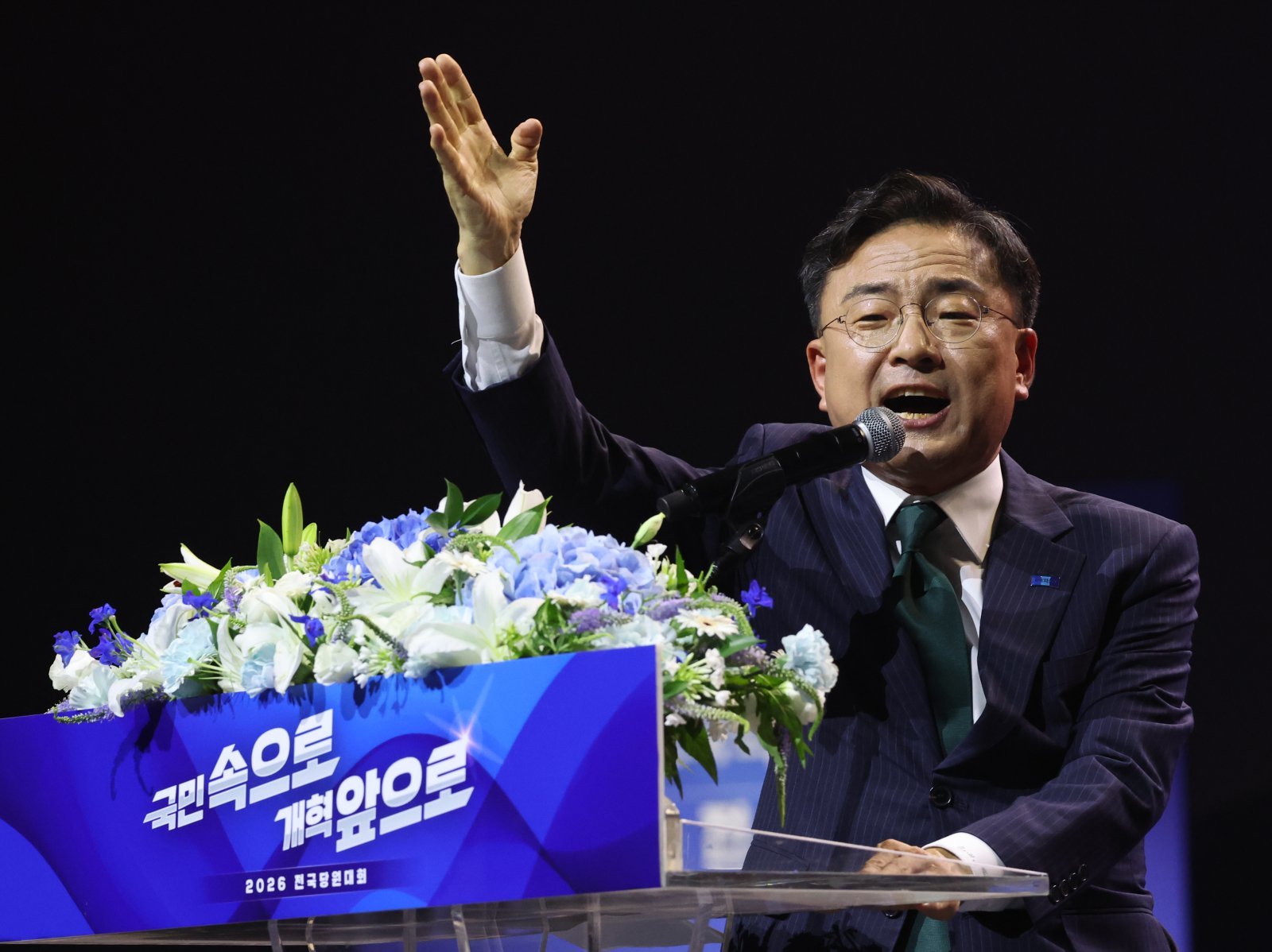
The upcoming August 17 party convention to elect a new leader is characterized by fierce competition among candidates Song Young-gil, Chung Chin-sup, and Kim Min-seok. Their race has devolved into personal attacks and controversies, overshadowing discussions on values, ideology, or policy. Recent polls show a close contest, with Chung Chin-sup and Kim Min-seok leading, though Song Young-gil is gaining. Notably, supporters of the opposing People Power Party seem to favor Chung Chin-sup, viewing him as a more effective adversary to President Lee.
The Democratic Party's presidential victory was a history of national unity and outward expansion. We won when we united and expanded, and we lost when we divided and excluded.
The article suggests that the intense internal bickering among Democrats stems from the absence of a unifying external threat, unlike during the Yoon Suk-yeol administration. This void has led to a fragmentation of the party's base, with different factions now targeting each other. This internal strife, coupled with a perceived lack of focus on national issues and public welfare, is alienating voters, especially those in their 20s and 30s, leading to a gradual decline in public perception of the party.
The real problem for the Democratic Party recently may be the division of party members and supporters. When the Democratic Party was the opposition party, its supporters were firmly united. This was because there was a huge enemy called Yoon Suk-yeol. As the huge enemy disappeared, they began to divide.
DistantNews Editorial
Originally published by Hankyoreh in Korean. Translated, summarized, and contextualized by our editorial team with added local perspective. Read our editorial standards.
More Stories

From Our Blog

What Gets Lost (and Found) When News Is Translated

The Critical Role of Diaspora Media in Global News

What Travellers Should Know About Countries with Restricted Press

A Digital Nomad's Guide to Following Local News

How the Same Story Looks Different in Different Countries
