


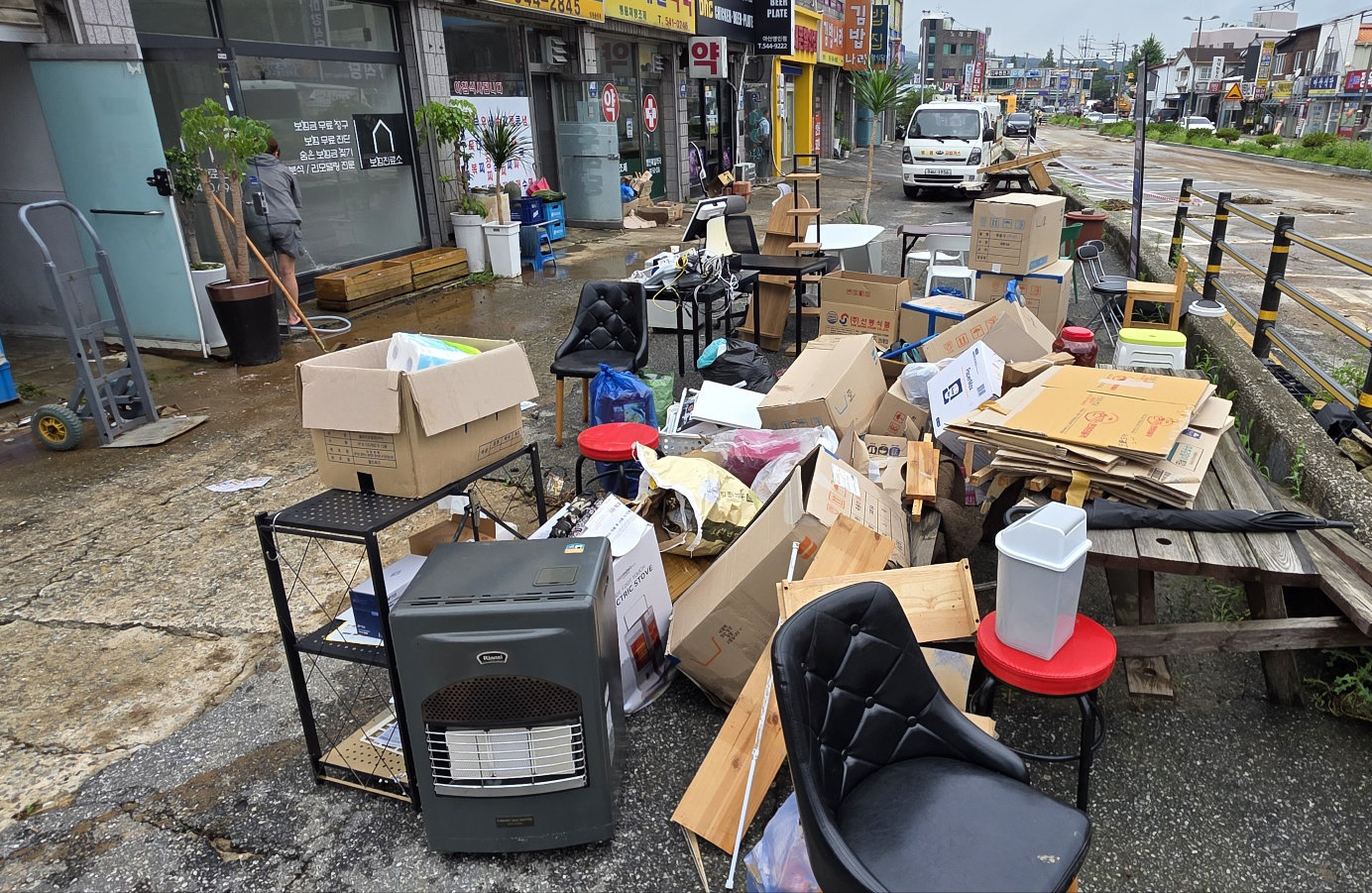
South Korea's Monsoon Season Shortened, Rainfall Polarized: Drought in South, Floods in North
Translated from Korean, summarized and contextualized by DistantNews.
At a glance
News
Documents & data
Context piece
- South Korea experienced a shorter monsoon season this year, starting later and ending earlier than average, with significantly less rainfall nationwide.
- Rainfall was highly concentrated in the Seoul metropolitan area and northern Chungcheong and Gangwon provinces, leading to severe flooding in some regions, while southern areas like Busan, Ulsan, and Gyeongnam faced drought conditions.
- Factors contributing to the unusual pattern include blocking phenomena in the northern hemisphere, a weaker Pacific anticyclone possibly due to El Niño, and the influence of typhoons.
South Korea's monsoon season this year was notably shorter and less intense than usual, with nationwide rainfall falling to 61.1% of the average. The season began later and ended earlier across the country, with Jeju Island experiencing only 20 days of monsoon, and the southern and central regions lasting 26 days each. This brevity is the sixth shortest for Jeju, tenth for the southern regions, and twelfth for the central regions since records began in 1973.
The distribution of rainfall, however, created stark regional disparities. While areas like Daejeon, Sejong, and Chungnam received rainfall close to the average, the Gwangju-Jeonnam region received only 43.6% of its typical monsoon rainfall, and the Busan-Ulsan-Gyeongnam region suffered from severe drought, receiving a mere 17.7% of the average. Conversely, the Seoul metropolitan area and parts of Gangwon province experienced torrential downpours, with some locations receiving over 500mm of rain, leading to significant flooding. Yeoncheon in Gyeonggi Province recorded the highest cumulative rainfall at 700.5mm.
Meteorologists attribute this unusual pattern to several factors. A blocking phenomenon in the high latitudes of the Northern Hemisphere likely hindered the northward expansion of the Pacific anticyclone. Additionally, weakened convective activity in the western tropical Pacific, potentially linked to El Niño, reduced the supply of heat and moisture to the anticyclone. The paths of Typhoons Koinu and Bualoi also played a role by pushing the Pacific anticyclone eastward.
The concentrated rainfall in specific areas, with over half of the total precipitation in some regions falling within just one to three days, exacerbated the flooding risks. For instance, in the Seoul metropolitan area, 51.3% of the total rainfall occurred over just three days. Similarly, in the Daejeon-Sejong-Chungnam region, 52.6% of the rain fell within three days. This intense, short-duration rainfall overwhelmed drainage systems, leading to widespread damage in the hardest-hit areas.
DistantNews Editorial
Originally published by Dong-A Ilbo in Korean. Translated, summarized, and contextualized by our editorial team with added local perspective. Read our editorial standards.
More Stories


From Our Blog

What Gets Lost (and Found) When News Is Translated

The Critical Role of Diaspora Media in Global News

What Travellers Should Know About Countries with Restricted Press

A Digital Nomad's Guide to Following Local News

How the Same Story Looks Different in Different Countries
