

South Korea's stock market becomes 'roller coaster of fear' for investors, says WSJ
Translated from Korean, summarized and contextualized by DistantNews.
At a glance
News
From a news agency
Context piece
- South Korea's stock market, once the world's hottest due to AI chip enthusiasm, is now drawing international attention for its extreme volatility, described as a 'roller coaster of fear' by the Wall Street Journal.
- Individual investors, who drive 60-70% of daily trading volume, heavily invested in Samsung Electronics and SK Hynix, leading to a surge but also significant losses for many.
- The market's wild swings, fueled by AI chip demand and the introduction of leveraged products, have led to investor protests and regulatory tightening, though some analysts remain optimistic about the long-term prospects of Korean memory chip stocks.
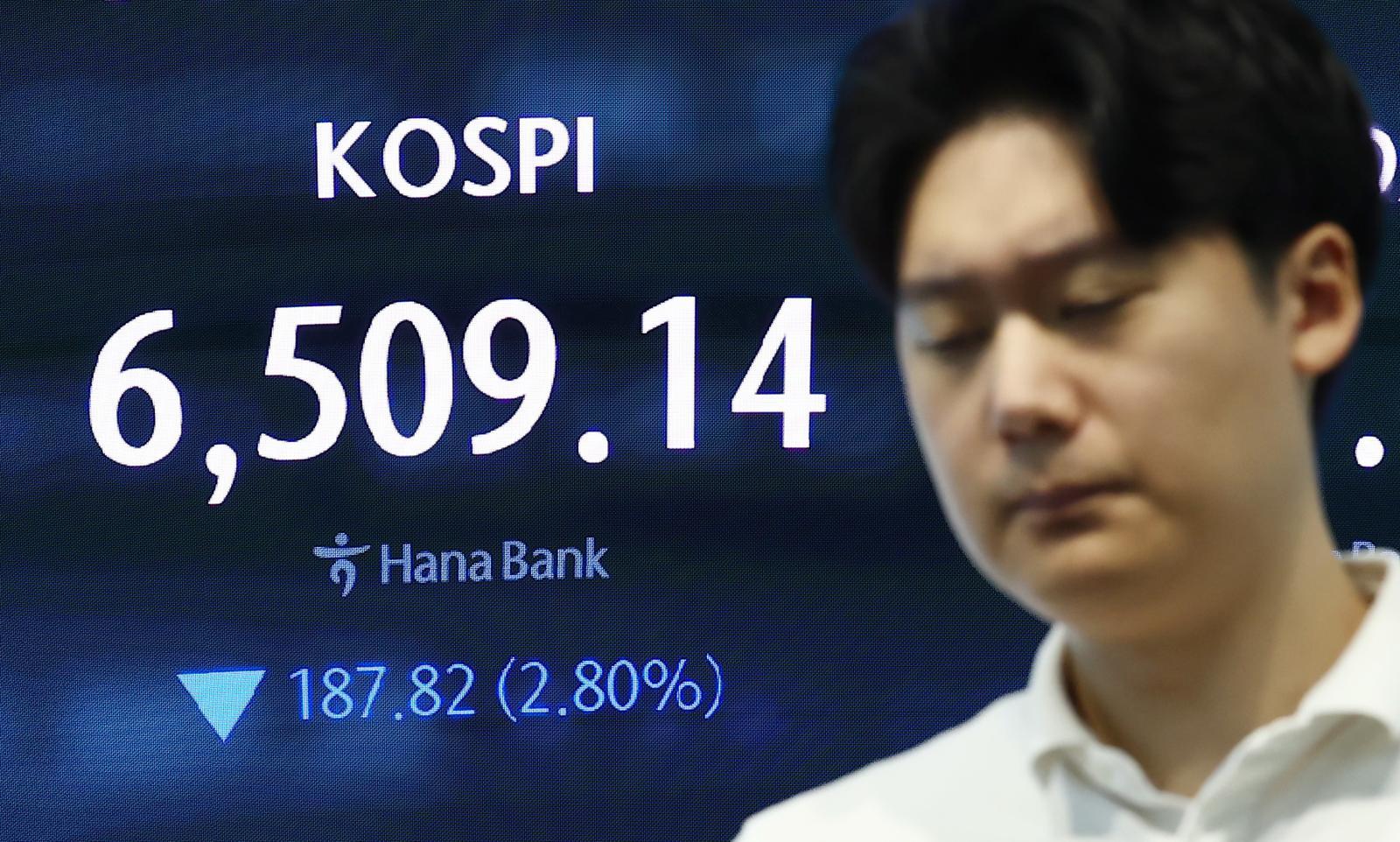
The South Korean stock market, which soared to become the world's hottest on the back of the AI semiconductor boom, is now capturing global attention for its dramatic volatility. The Wall Street Journal (WSJ) likened the market's sharp rises and falls, particularly impacting individual investors, to a "fright ride" or "roller coaster of fear."
The volatility is too severe. It's not sound investment; it's a gambling den, a casino.
Once lauded for its rapid ascent, with the KOSPI index tripling over the past year, the market experienced a sharp 40% decline over six weeks in June and July, erasing approximately $2.5 trillion in market capitalization. While the index has since rebounded about 20% from its low, the extreme fluctuations have shaken investor confidence. The WSJ highlighted that individual investors account for 60-70% of daily trading volume, with a strong focus on tech giants Samsung Electronics and SK Hynix.
Korea was the hottest stock market in the world for most of last year, fueled by the AI boom. Then it crashed.
Personal stories illustrate the market's harsh impact. English instructor Yoon Jae-yi, 30, lost $19,000 and now cuts back on expenses. Audio engineer Yoon Kyung-min, 44, invested half his severance pay in semiconductor stocks, losing $7,200 within a week and concealing the full extent of his losses from his wife. Even cautious investors like Jake Chung, 30, a Seoul-based accountant, were drawn in by FOMO (fear of missing out), investing in leveraged products after seeing rapid gains, only to suffer a 69% loss.
I lost $19,000 in stock investments. I'm saving money by taking fewer taxis and reducing travel.
The introduction of single-stock leveraged products in May, which double daily returns, amplified the market's volatility. These high-risk instruments, despite warnings from financial authorities, saw immense investor interest. The subsequent downturn, driven by concerns over AI demand sustainability and competition from Chinese chipmakers, led to rapid losses on these products. Investor frustration boiled over, with some sending funeral wreaths to the National Assembly to protest the market's impact on retail investors, famously known as 'ants' in Korea. In response, regulators have paused approvals for new leveraged products and increased margin deposit requirements.
My principle was that if too many people bragged about stock profits, it meant the peak had arrived. But I lost to FOMO (fear of missing out).
DistantNews Editorial
Originally published by Dong-A Ilbo in Korean. Translated, summarized, and contextualized by our editorial team with added local perspective. Read our editorial standards.
More Stories

From Our Blog

What Gets Lost (and Found) When News Is Translated

The Critical Role of Diaspora Media in Global News

What Travellers Should Know About Countries with Restricted Press

A Digital Nomad's Guide to Following Local News

How the Same Story Looks Different in Different Countries
