

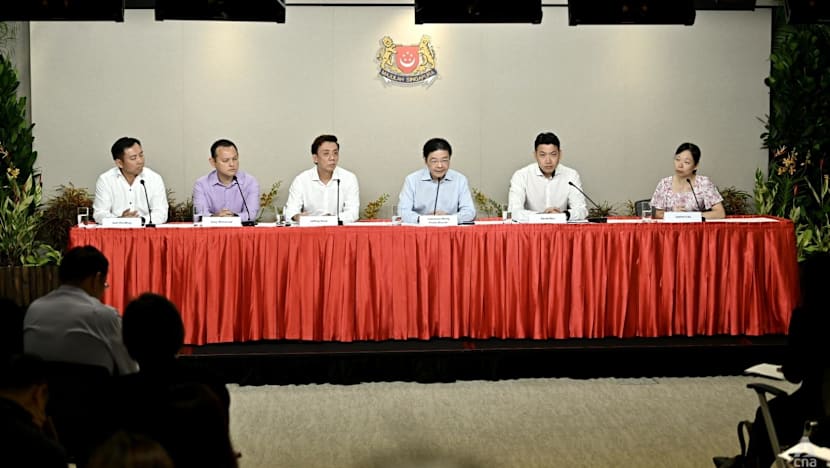

South Korea shifting to ‘peace first’ North Korea policy, retains denuclearisation goal
Summarized and contextualized by DistantNews.
At a glance
News
Named sources
Context piece
- South Korea is shifting its North Korea policy from a "denuclearisation first" approach to a "peace first" strategy, while maintaining the ultimate goal of a nuclear-free Korean Peninsula.
- The new strategy prioritizes an initial halt to North Korea's nuclear activities, aiming to freeze the program rather than demanding immediate denuclearisation, which has previously stalled dialogue.
- This policy shift occurs amid North Korea's continued nuclear development and its declaration of itself as a separate hostile state, complicating inter-Korean relations.
South Korea is pivoting from a long-standing "denuclearisation first" policy toward North Korea to a "peace first" approach, according to Unification Minister Chung Dong-young. While the ultimate objective of a nuclear-free Korean Peninsula remains, Seoul now prioritizes an initial freeze of Pyongyang's nuclear activities.
Minister Chung explained that demanding complete denuclearisation at the outset of talks had historically prevented dialogue, especially during the seven years of suspended inter-Korean relations. The new strategy aims to circumvent this by seeking a halt to North Korea's nuclear program, acknowledging that delays allow Pyongyang to expand its arsenal. North Korea continues to operate uranium enrichment facilities and a plutonium-producing reactor, increasing its capacity to produce nuclear warheads.
The ultimate goal of denuclearisation has not been abandoned, but denuclearisation first has.
Despite President Lee Jae Myung's efforts to ease tensions, including suspending loudspeaker broadcasts and curbing propaganda leaflets, North Korea has remained hostile. Pyongyang has expressed no interest in Seoul's proposals or resuming dialogue, accusing the South of maintaining a confrontational policy through its close ties with the United States.
If denuclearisation first is placed at the entrance to dialogue, the reality is that dialogue cannot begin.
Chung sees a "strategic demand" for renewed talks in both North Korea and the United States, highlighting potential opportunities in upcoming meetings between U.S. President Donald Trump and Chinese President Xi Jinping. He stressed the need for intensified diplomacy from Seoul beforehand.
The policy shift also comes after North Korean leader Kim Jong Un's late 2023 declaration of the two Koreas as "separate hostile states," a significant departure from previous unification-focused rhetoric. Chung has been advocating for a transitional "peaceful two-state" relationship, using North Korea's preferred term "Choson," as a step toward eventual unification. Discussions on this terminology are ongoing.
Pyongyang has said it has no interest in Seoul's proposals or in resuming dialogue, and accused Lee of continuing a confrontational policy by maintaining close ties with the United States.
DistantNews Editorial
Originally published by The Straits Times. Summarized and contextualized by our editorial team with added local perspective. Read our editorial standards.
More Stories
From Our Blog

What Gets Lost (and Found) When News Is Translated

The Critical Role of Diaspora Media in Global News

What Travellers Should Know About Countries with Restricted Press

A Digital Nomad's Guide to Following Local News

How the Same Story Looks Different in Different Countries
