


South Korea to Include 'No Nuclear Weapons' Clause in Submarine Law
Translated from Korean, summarized and contextualized by DistantNews.
At a glance
News
Named sources
New plan
- South Korea's government will specify a 'no nuclear weapons development or possession' principle in a special law for acquiring nuclear-powered submarines.
- This marks the first time a domestic law will directly include a clause prohibiting nuclear weapons development.
- The move aims to alleviate international concerns about nuclear proliferation and ensure the stable progression of the submarine project.
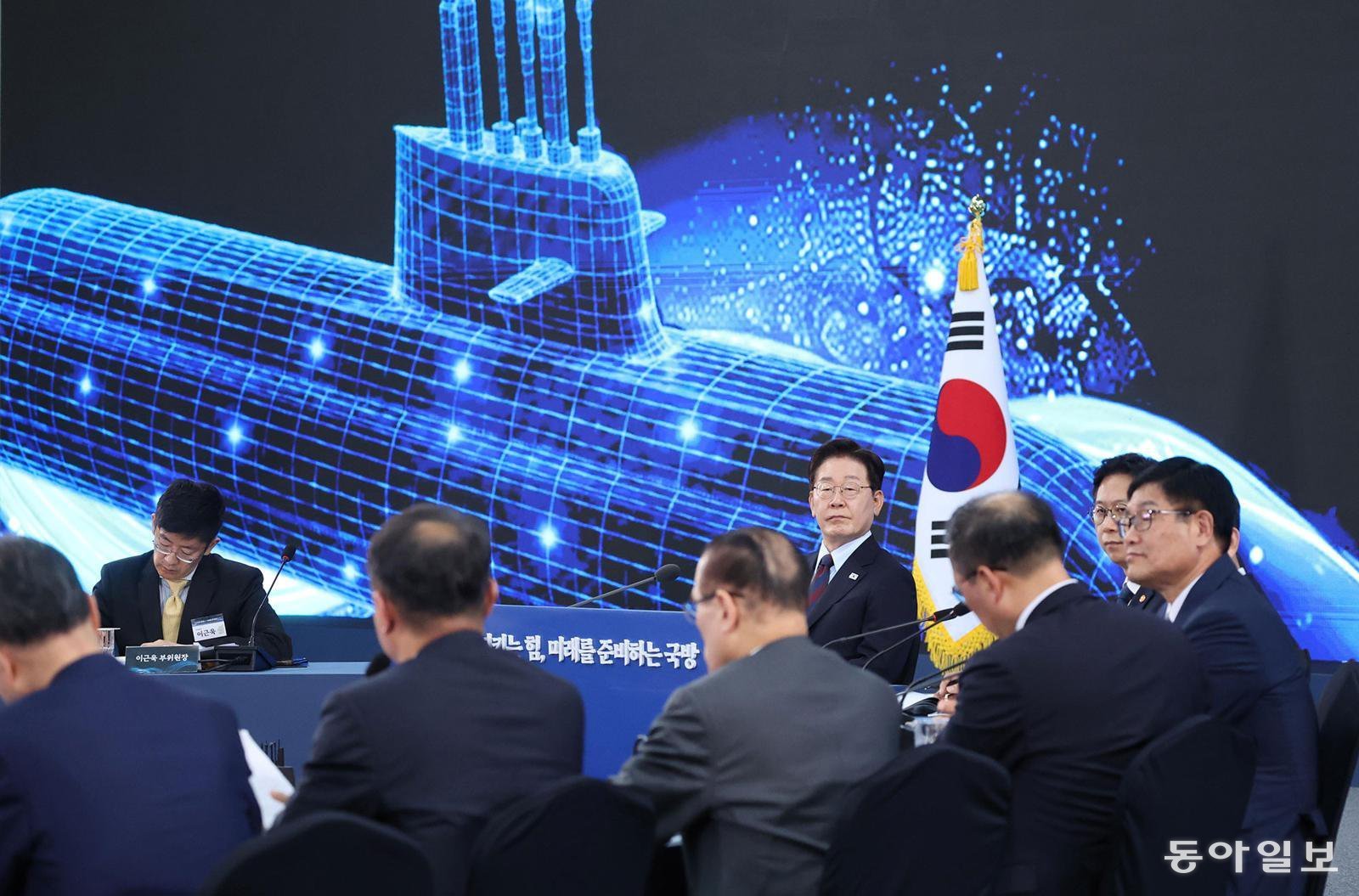
South Korea's government plans to enshrine a principle of "no nuclear weapons development, manufacture, or possession" within a special law governing the acquisition of nuclear-powered submarines. This move signifies the first instance of a domestic law directly stipulating a prohibition on nuclear weapons development. The government aims to preemptively address international concerns regarding potential nuclear proliferation and to establish a stable legal and institutional foundation for the long-term submarine project.
The proposed "Special Act on the Acquisition, Operation, and Safety Management of Nuclear-Powered Submarines" is expected to be announced for legislative preview as early as July 29. This initiative follows the government's announcement of a "Basic Plan for South Korea's Nuclear-Powered Submarines" in May, which already outlined the principle of non-development and non-possession of nuclear weapons. The special law will codify these principles.
According to sources within the military, the special law will explicitly state that the project "does not aim for the development, manufacture, possession, or use of nuclear weapons, nor engage in acts that undermine the reliability of nuclear material diversion or non-proliferation systems." It will also include provisions for compliance with the Nuclear Non-Proliferation Treaty (NPT), cooperation with international organizations like the IAEA, ensuring public safety and environmental protection from radioactive materials, and establishing nuclear safety standards for the submarines.
To expedite the project, the law will include special measures such as exempting the acquisition project from feasibility studies, shortening research and development and test evaluation periods, and applying special cost calculation rules for defense contracts. It will also allow for post-contractual adjustments to timelines, costs, and conditions if delays occur in securing nuclear fuel, international negotiations, or site designations for facilities. A "Nuclear-Powered Submarine Strategy Committee," chaired by the Prime Minister, will be established to deliberate on key matters including facility locations and funding. The Minister of National Defense will serve as vice-chair, with the Chief of Naval Operations as an ex-officio member. Safety management plans, including radioactive waste disposal and disaster prevention, will be established every 10 years.
The government is pursuing the development of indigenous nuclear-powered submarines, codenamed 'Project Jangbogo-N,' as a response to North Korea's threats. The plan involves using low-enriched uranium (LEU) with an enrichment level below 20% as fuel, with the principle of domestic development and construction. The military aims to build around three submarines, comparable in size to the U.S. Navy's Virginia-class attack submarines (7,800 tons), with the first vessel to be launched in the mid-2030s and commissioned from the late 2030s onwards.
DistantNews Editorial
Originally published by Dong-A Ilbo in Korean. Translated, summarized, and contextualized by our editorial team with added local perspective. Read our editorial standards.
More Stories


From Our Blog

What Gets Lost (and Found) When News Is Translated

The Critical Role of Diaspora Media in Global News

What Travellers Should Know About Countries with Restricted Press

A Digital Nomad's Guide to Following Local News

How the Same Story Looks Different in Different Countries
