

South Korean Army Launches Hybrid-Manned Squad Pilot Unit
Translated from Korean, summarized and contextualized by DistantNews.
At a glance
News
Official statement
New plan
- The South Korean Army launched a pilot unit for a "hybrid-manned squad" integrating soldiers with drones, robots, and autonomous vehicles.
- This initiative aims to test the effectiveness of combining human soldiers with various unmanned systems in combat scenarios.
- The pilot unit will experiment with different combinations of unmanned systems for various missions, including reconnaissance and support.
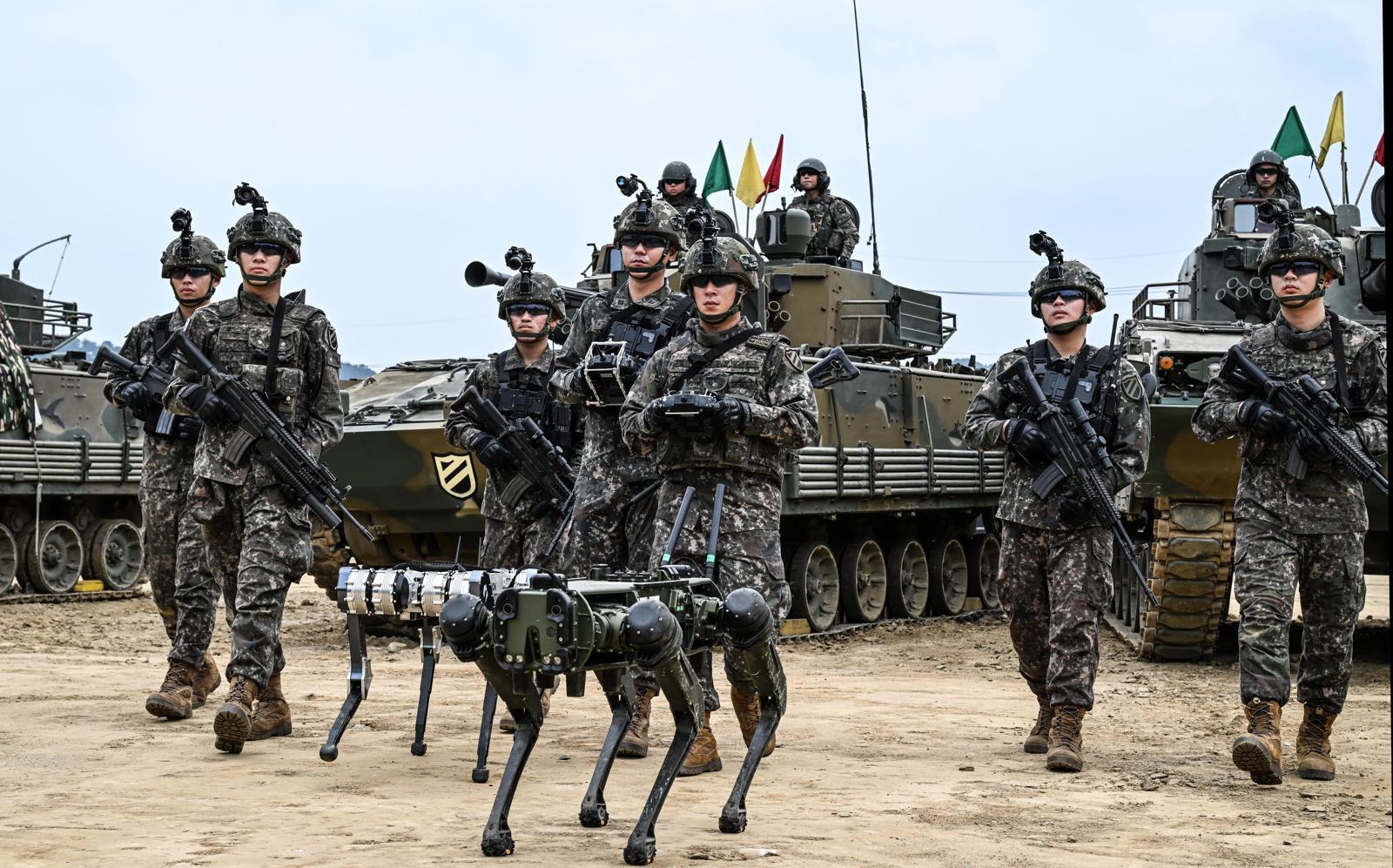
South Korea's Army has launched a pilot unit for a "hybrid-manned squad," a new concept that integrates human soldiers with a variety of unmanned systems. The unit will test the operational effectiveness of combining soldiers with drones, legged robots, multi-purpose unmanned vehicles, and autonomous vehicles in combat situations.
The launch ceremony for the "Hybrid-Manned Squad Demonstration Unit" took place on August 29 at the 11th Maneuver Division in Hongcheon, Gangwon Province. This marks the first time the Army has integrated soldiers and unmanned systems at the squad level for practical testing.
The hybrid-manned squad is structured around the existing squad framework, comprising four human soldiers and four operators for unmanned systems. The demonstration unit will experiment with various configurations, assigning drones and legged robots for basic missions, while employing multi-purpose unmanned vehicles and legged robots for reconnaissance tasks. For support missions, the unit plans to test combinations of legged robots and autonomous vehicles.
According to the Army, unmanned systems will be deployed ahead of human soldiers into dangerous areas to identify threats and obstacles. The information gathered will then be shared with the soldiers, enabling them to conduct surveillance and reconnaissance more effectively and safely.
DistantNews Editorial
Originally published by Dong-A Ilbo in Korean. Translated, summarized, and contextualized by our editorial team with added local perspective. Read our editorial standards.
More Stories



From Our Blog

What Gets Lost (and Found) When News Is Translated

The Critical Role of Diaspora Media in Global News

What Travellers Should Know About Countries with Restricted Press

A Digital Nomad's Guide to Following Local News

How the Same Story Looks Different in Different Countries
