


South Korean Delegation Traces History from Mongolia to Siberia, Meeting Korean Diaspora
Translated from Korean and summarized by DistantNews. Read the original for the full story.
At a glance
In-depth
Named sources
Context piece
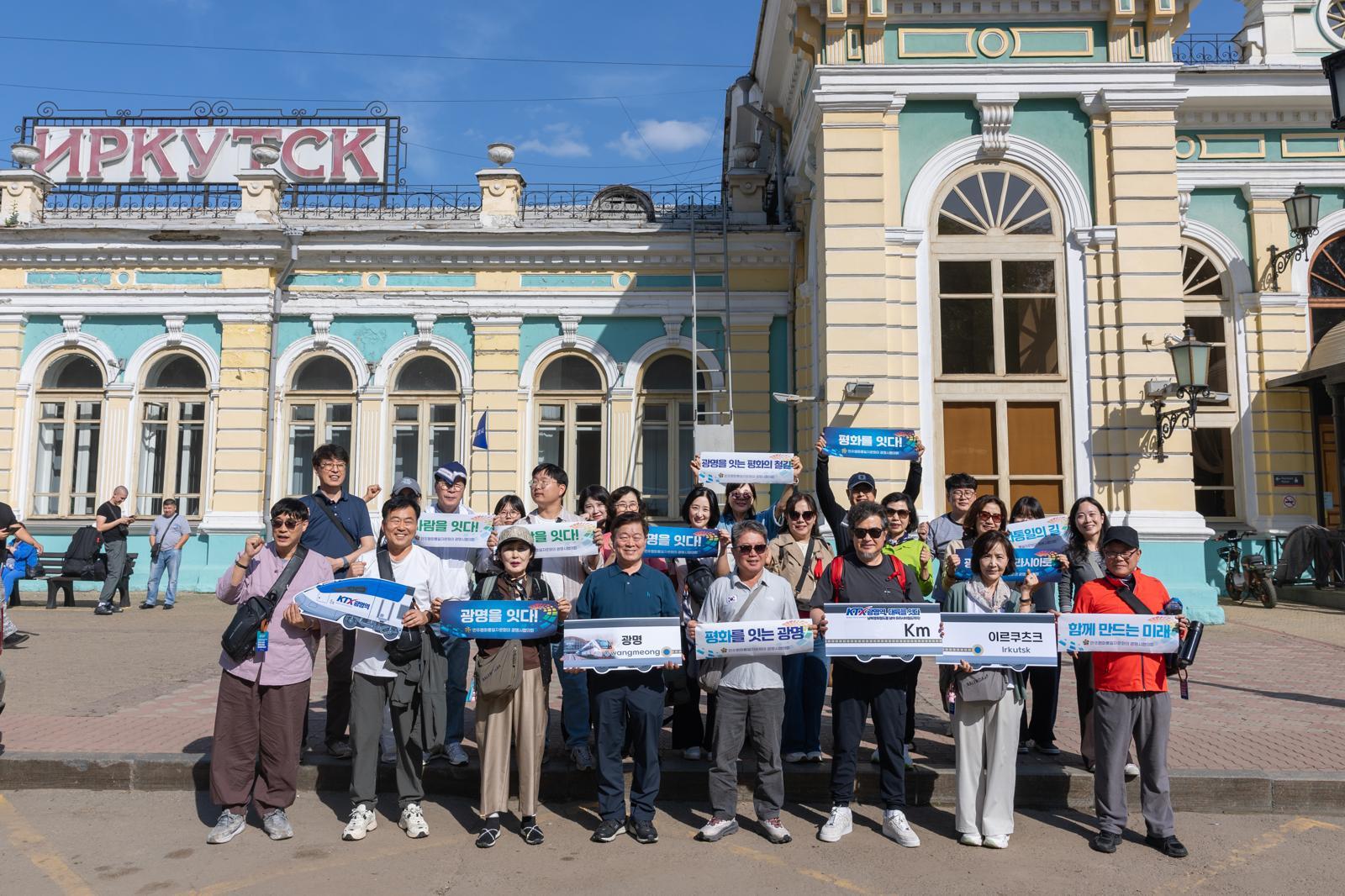
- A South Korean delegation, the 'Eurasia Peace Rail Gwangmyeong Expedition Team,' arrived in Irkutsk, Russia, after a journey through Mongolia and via the Trans-Siberian Railway.
- The team met with ethnic Koreans living in Irkutsk, learning about their lives and enduring connections to their ancestral homeland.
- The expedition aims to connect cities across Eurasia through rail, fostering exchanges in culture, tourism, and youth initiatives, while honoring the history of the Korean diaspora.
After a long journey that began in Gwangmyeong, South Korea, and traversed Mongolia before boarding the Trans-Siberian Railway, the 'Eurasia Peace Rail Gwangmyeong Expedition Team' arrived in Irkutsk, Russia. The team's arrival marked a significant point in their exploration of historical and cultural connections across Eurasia.
In Irkutsk, the expedition met with approximately 1,000 to 1,500 ethnic Koreans who have established roots in the region. Although these individuals were born and raised in Russia, speaking Russian as their primary language, the expedition found that traces of Korean heritage persist through family names, cuisine, and memories. Gwangmyeong Mayor Park Seung-won expressed deep respect and gratitude for the Korean diaspora's efforts in preserving their community in a foreign land.
Your lives themselves are a part of our history. I express my deep respect and gratitude to you for preserving your community through numerous hardships in a foreign land.
The expedition's journey began by retracing the footsteps of independence activist Lee Tae-jun in Mongolia, delving into the stories of those who dedicated their lives to Korea's independence from afar. Crossing the border into Siberia, the team encountered another significant chapter of Korean history: the story of the Korean diaspora. Mayor Park Seung-won engaged with eight ethnic Koreans in Irkutsk, listening to their experiences and recollections of their homeland.
It is gratifying that you remember us in Korea and have come to visit directly. I hope exchanges between Korea and Russia will increase, and that our descendants can better understand their roots.
The history of Koreans in Russia dates back to the late 19th century, driven by economic necessity and later by the need to escape Japanese oppression. They established communities, built schools, and farmed the land, contributing to the independence movement. However, in 1937, Soviet policies led to their forced relocation to Central Asia, a traumatic event that caused significant loss of life. Those who remained in Irkutsk rebuilt their lives, forming the community that exists today.
Mayor Park Seung-won envisions KTX Gwangmyeong Station as a starting point for continental railways connecting the Korean Peninsula with Eurasia. He aims to foster exchanges not just in transportation but also in culture, tourism, youth, and environmental initiatives. The meeting with the Korean diaspora in Irkutsk underscored the expedition's goal: to connect not only cities but also people, history, and culture through the railway. He emphasized that a future connected railway would symbolize not just the movement of goods and people, but a "peace train" for reuniting scattered communities and reaffirming shared history.
The train that started from the Korean Peninsula and runs through Eurasia will not simply be a train carrying people and goods. It will be a peace train where people scattered 100 years ago meet again and confirm each other's history.
About this summary
Originally published by Dong-A Ilbo in Korean. Translated, summarized, and contextualized automatically by DistantNews, with a note on how the source frames the story. Not individually reviewed before publishing. How this works.
More Stories



From Our Blog

What Gets Lost (and Found) When News Is Translated

The Critical Role of Diaspora Media in Global News

What Travellers Should Know About Countries with Restricted Press

A Digital Nomad's Guide to Following Local News

How the Same Story Looks Different in Different Countries
