

South Korean EdTech Firm Develops AI Literacy Courseware for Elementary Students
Translated from Korean and summarized by DistantNews. Read the original for the full story.
At a glance
In-depth
Sources not specified
Context piece
- South Korean EdTech company AkuerEdu has developed 'RUMI,' an AI literacy courseware for elementary students, addressing the challenge of teaching AI effectively.
- RUMI shifts from theoretical explanations to hands-on learning, allowing students to use AI, verify results, and develop critical judgment skills.
- The courseware aims to enhance AI literacy by teaching students how to formulate prompts, understand AI's limitations, and consider ethical implications, while also easing the burden on teachers.
As generative AI becomes increasingly integrated into daily life, South Korean elementary schools face a new challenge: how to teach artificial intelligence. While young students are encountering AI tools earlier than ever, understanding the underlying mechanisms of AI-generated results and developing the ability to critically assess their reliability remain significant hurdles.
Traditional AI education often struggles to bridge the gap between theoretical concepts and practical application. Simply explaining AI's operating principles, data, prompts, or ethics can result in lessons that are too abstract for young learners. Conversely, allowing unfettered access to generative AI services might lead students to focus solely on producing outputs without grasping the 'why' behind their usage. The South Korean government, recognizing this, emphasizes 'experiential learning' in its AI education policies.
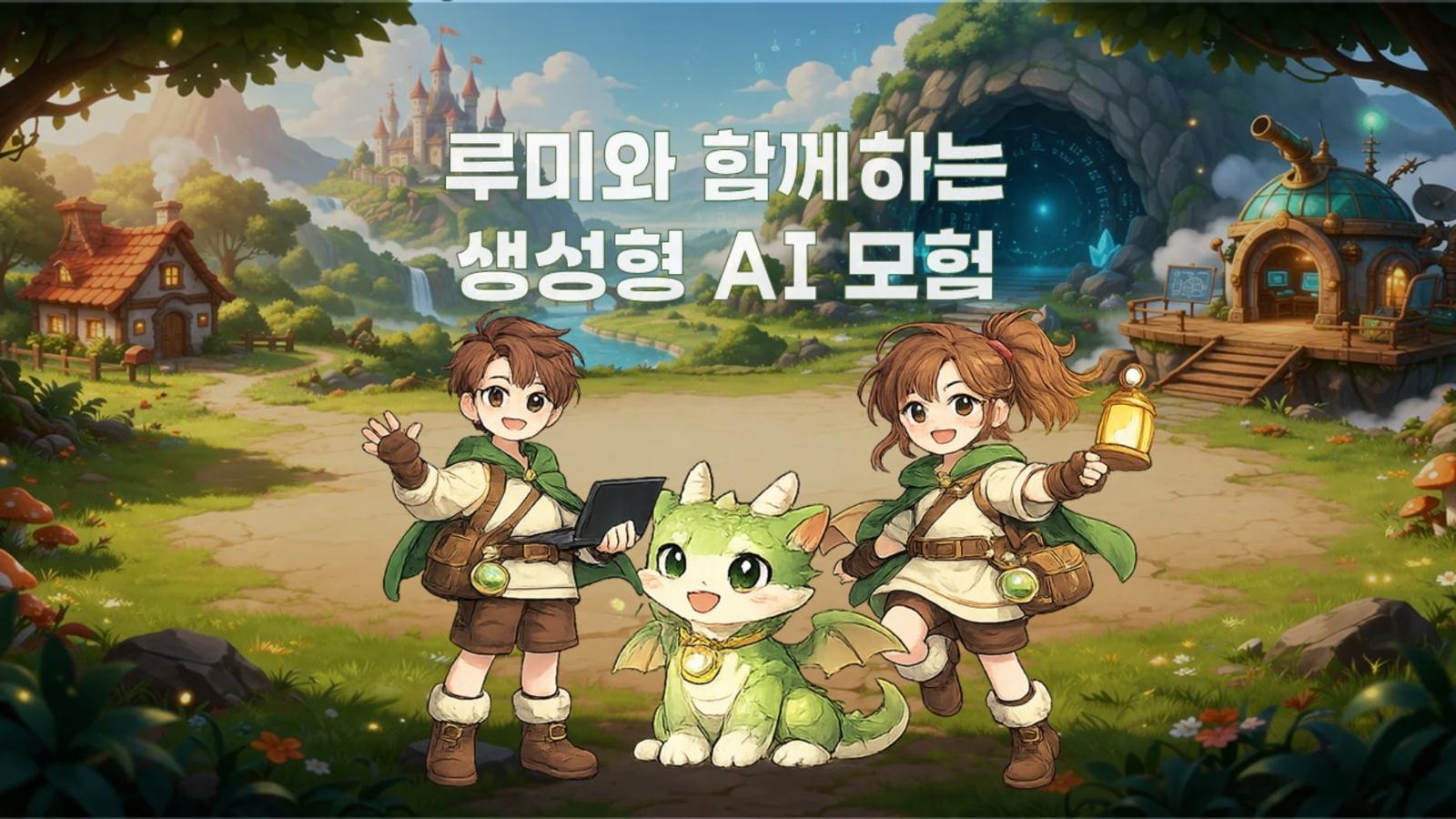
To address these challenges, EdTech company AkuerEdu has developed 'RUMI,' an AI literacy courseware specifically designed for elementary students. RUMI moves beyond passive learning by integrating a 'learn, use, and judge' approach. Students engage with AI through interactive stories and missions, learning AI concepts and then immediately applying them using AI functions. This cyclical process aims to connect conceptual understanding with practical application within a single learning experience.
The RUMI courseware is structured in up to eight sessions, progressively covering generative AI basics, operating principles, responsible AI use, and result creation. It aligns with the 2022 revised national curriculum and offers adjustable difficulty levels for different age groups and learning abilities. This approach fosters a shift from students passively receiving knowledge about AI to actively making choices, executing tasks, and evaluating outcomes.
Ultimately, RUMI aims to cultivate 'AI literacy' rather than just basic AI usage skills. Students learn to craft effective prompts, understand that AI is not infallible, and consider crucial issues like personal information, copyright, and ethics when using AI-generated content. AkuerEdu believes this approach is vital, especially as AI increasingly automates tasks like coding, making the ability to direct AI and critically verify its outputs more important than ever. The program also supports teachers by reducing the burden of preparing new technical materials and offering a web-based platform that requires no additional software installation.
About this summary
Originally published by Dong-A Ilbo in Korean. Translated, summarized, and contextualized automatically by DistantNews, with a note on how the source frames the story. Not individually reviewed before publishing. How this works.
More Stories


From Our Blog

What Gets Lost (and Found) When News Is Translated

The Critical Role of Diaspora Media in Global News

What Travellers Should Know About Countries with Restricted Press

A Digital Nomad's Guide to Following Local News

How the Same Story Looks Different in Different Countries
