


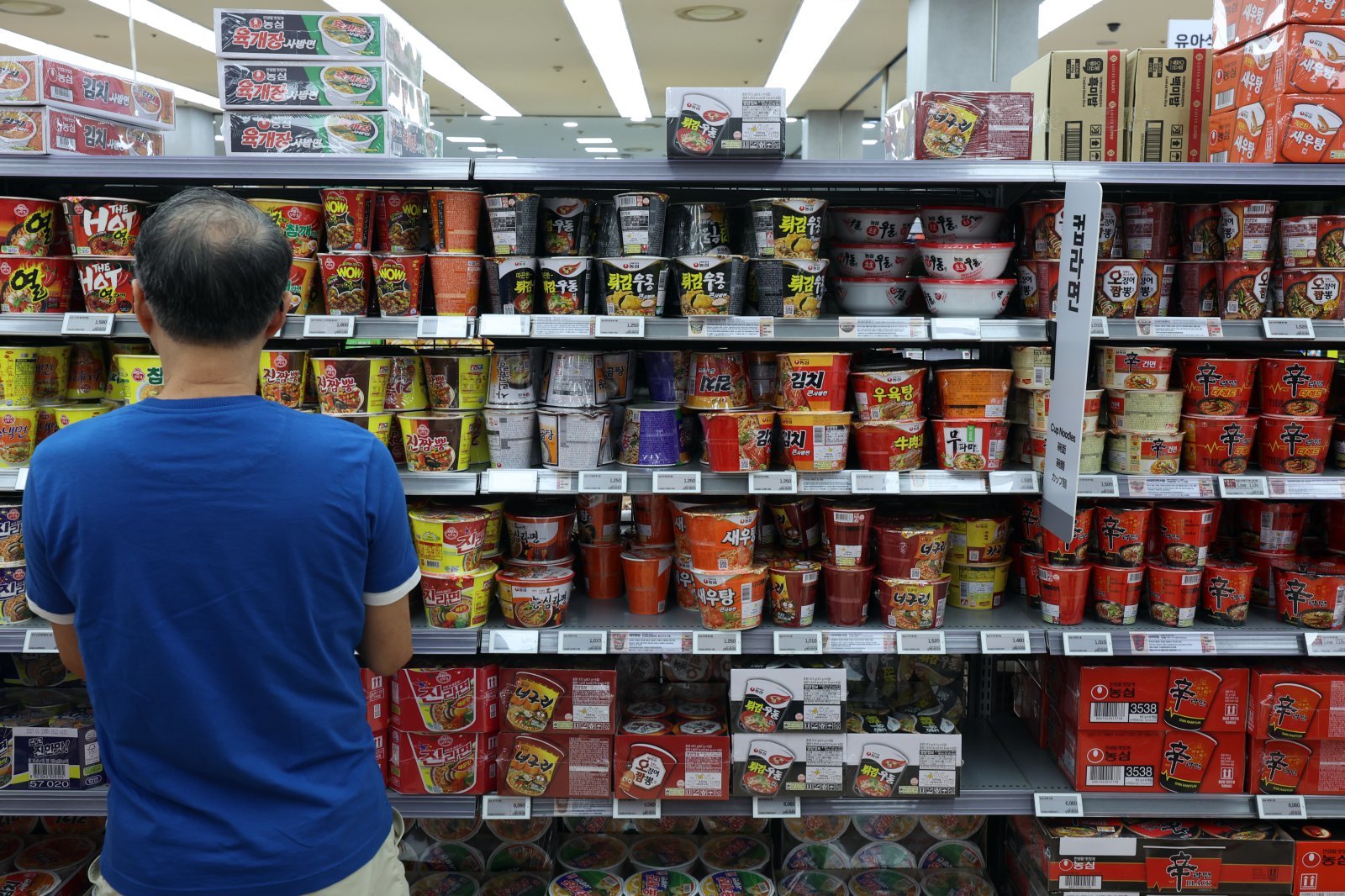
South Korean food companies hike prices amid soaring ingredient costs
Translated from Korean, summarized and contextualized by DistantNews.
At a glance
News
Documents & data
New plan
- South Korean food companies are raising prices due to soaring costs of raw materials like flour, palm oil, and packaging.
- Major companies including Nongshim, Ottogi, and Lotte Chilsung Beverage have announced price hikes for various products.
- Global geopolitical instability and currency fluctuations are expected to further impact ingredient costs and potentially lead to more price increases.
South Korean food manufacturers are implementing price increases across a range of products, citing a significant rise in the cost of essential raw materials and packaging. This move comes as companies grapple with the dual pressures of high global oil prices and a weakening currency.
Analysis of semi-annual reports reveals a substantial increase in the cost of key ingredients. For instance, Nongshim reported a 9.2% rise in the price of imported wheat and a similar 9.2% increase in imported palm oil compared to the previous year. Ottogi experienced an even steeper 15.7% surge in the average purchase price of its imported edible oils, including soybean and palm oil.
The rising costs are not limited to basic ingredients. Lotte Chilsung Beverage noted a nearly 5% increase in the price of sweeteners and additives, and a significant 28.8% jump in the price of concentrates. Packaging costs have also climbed, with beverage containers seeing a 13.6% price hike and liquor containers rising by 9.6%.
The average unit price of concentrates increased due to rising international market prices and exchange rates.
Companies attribute these price adjustments to various factors. Lotte Chilsung Beverage explained that while sweetener prices saw a slight decrease, fluctuations in the mix of purchased additives led to an overall average cost increase. The rise in concentrates was attributed to global market prices and currency exchange rates. For packaging, the increased costs of raw materials like aluminum cans and PET resin in the international market were cited as the primary reasons.
Looking ahead, the global geopolitical landscape, particularly ongoing conflicts in the Middle East, is expected to create further volatility in commodity prices. Nongshim anticipates that wheat prices will remain highly sensitive to geopolitical events. Similarly, palm oil prices are projected to be influenced by the direction of the US-Iran conflict, global renewable fuel policies, and El Niño's impact on production. This anticipated instability suggests that the current wave of price increases may not be the last, as the industry braces for continued cost pressures.
Wheat prices are expected to become more volatile due to geopolitical issues such as the recent Middle East war.
DistantNews Editorial
Originally published by Dong-A Ilbo in Korean. Translated, summarized, and contextualized by our editorial team with added local perspective. Read our editorial standards.
More Stories


From Our Blog

What Gets Lost (and Found) When News Is Translated

The Critical Role of Diaspora Media in Global News

What Travellers Should Know About Countries with Restricted Press

A Digital Nomad's Guide to Following Local News

How the Same Story Looks Different in Different Countries
