


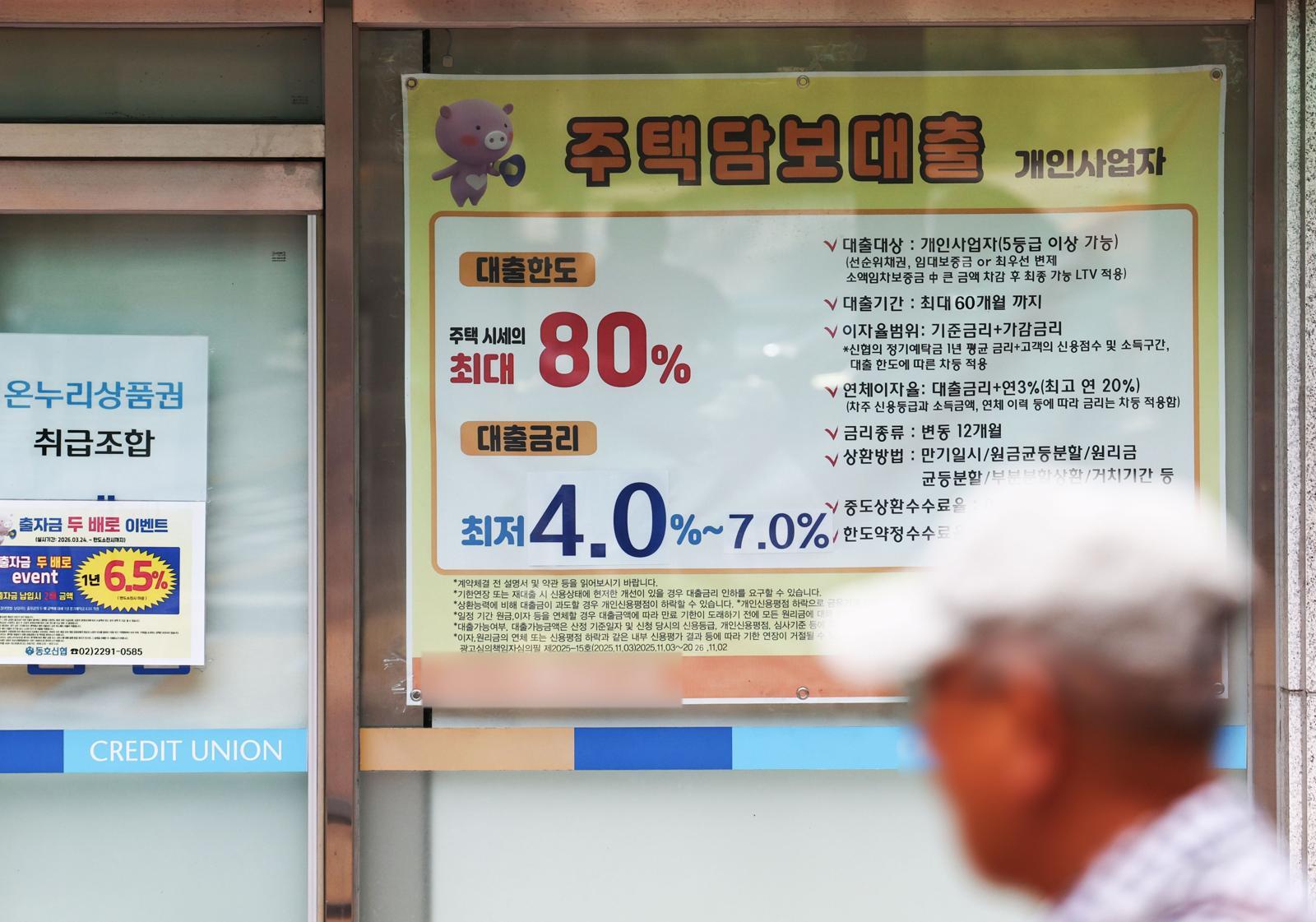
South Korean household loans surge, mortgages see biggest jump in 11 months
Translated from Korean, summarized and contextualized by DistantNews.
At a glance
News
Sources not specified
New plan
- South Korean household loans increased by nearly 4 trillion won last month, with mortgage lending seeing its largest rise in 11 months.
- The surge in mortgage lending is attributed to continued demand for housing in the Seoul metropolitan area amid rising property prices.
- Banks are tightening lending standards, with some reducing mortgage limits or halting new applications through certain channels.
South Korean household debt continued its upward trend last month, with total loans from major commercial banks increasing by nearly 4 trillion won. Mortgage lending, in particular, experienced its most significant expansion in 11 months, signaling sustained demand in the housing market.
According to financial sector data, the outstanding balance of household loans at the five major commercial banks (KB Kookmin, Shinhan, Hana, Woori, and NH Nonghyup) reached 778.78 trillion won as of July 30. This marks a 3.82 trillion won increase from the end of June, continuing a pattern of approximately 4 trillion won growth seen since May.
The rise in mortgage lending, up 2.28 trillion won to 617.42 trillion won, is largely attributed to ongoing housing purchase demand in the Seoul metropolitan area, where property prices continue to climb. This trend suggests that despite concerns about household debt, the desire for homeownership remains strong.
Meanwhile, the balance of overdraft accounts, often used for investment purposes, also reached its highest point since August 2022, increasing by 1.18 trillion won to 44.46 trillion won. This surge, particularly in the last week of July, coincided with a significant stock market downturn, indicating that individual investors may have used these funds for bargain hunting.
In response to the growing household debt, commercial banks are beginning to tighten their lending criteria. KB Kookmin Bank has halved its mortgage loan limit from 600 million won to 300 million won. Other banks are also reportedly suspending mortgage applications through certain channels and restricting access to mortgage insurance products, signaling a cautious approach to further credit expansion.
The digital transformation does not diminish the value of traditional markets but brings more modern and transparent management tools.
DistantNews Editorial
Originally published by Dong-A Ilbo in Korean. Translated, summarized, and contextualized by our editorial team with added local perspective. Read our editorial standards.
More Stories


From Our Blog

What Gets Lost (and Found) When News Is Translated

The Critical Role of Diaspora Media in Global News

What Travellers Should Know About Countries with Restricted Press

A Digital Nomad's Guide to Following Local News

How the Same Story Looks Different in Different Countries
