


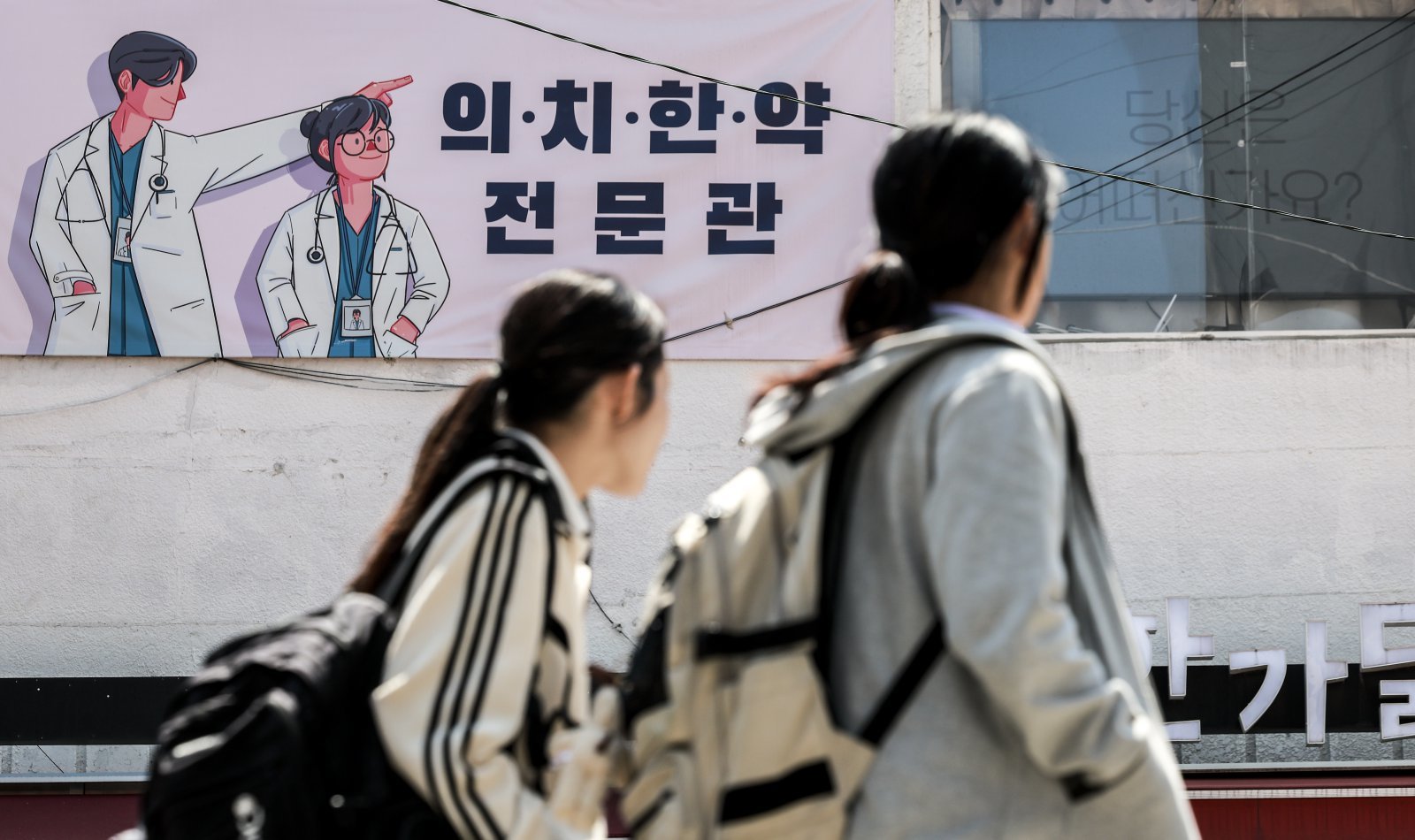
South Korean medical schools set 1.0 GPA minimum for early admissions; 5-grade system to increase competition
Translated from Korean, summarized and contextualized by DistantNews.
At a glance
News
From a news agency
Context piece
- At least six South Korean universities have minimum admission requirements of a 1.0 GPA for their medical school's early admission track.
- This indicates that the current 9-grade system's 1.45 GPA average is equivalent to a 1.0 in the proposed 5-grade system.
- Experts predict that with the shift to a 5-grade system in 2028, students with a 1.0 GPA may not be admitted to medical school, increasing competition.
The admission standards for medical schools in South Korea's early admission track are exceptionally high, with at least six universities requiring a minimum GPA of 1.0. This data, analyzed by Jongro Academy based on the 2026 academic year's student record-based comprehensive track, reveals that the average GPA for admission across 31 of the 32 universities that disclosed their scores is within 1.45.
Under the current 9-grade system, a 1.45 GPA is considered highly competitive. However, when converted to the proposed 5-grade system, which is set to be implemented in the 2028 academic year, this average GPA is effectively equivalent to a 1.0. This means that the top 4% of students currently receive a 1st-grade rating, but under the new system, the top 10% will fall into this category.
Experts predict that this shift will intensify competition, as students who achieve a perfect 1.0 GPA under the new system might still face difficulties gaining admission to medical school. The analysis shows that 5 universities have admission lines between 1.01 and 1.09, and 11 universities between 1.11 and 1.19. Only one university, Daegu Catholic University, has an admission line above 1.50.
Im Seong-ho, CEO of Jongro Academy, advised that students aiming for medical school must consider not only their GPA but also qualitative assessment factors such as document screening and interviews. The impending changes to the grading system are expected to create significant uncertainty for top-tier students, necessitating a more complex and comprehensive preparation strategy.
DistantNews Editorial
Originally published by Dong-A Ilbo in Korean. Translated, summarized, and contextualized by our editorial team with added local perspective. Read our editorial standards.
More Stories



From Our Blog

What Gets Lost (and Found) When News Is Translated

The Critical Role of Diaspora Media in Global News

What Travellers Should Know About Countries with Restricted Press

A Digital Nomad's Guide to Following Local News

How the Same Story Looks Different in Different Countries
