


South Korean Opposition Slams Defense Minister for Quoting Mao Zedong
Translated from Korean, summarized and contextualized by DistantNews.
At a glance
News
Sources not specified
Context piece
- A South Korean opposition leader criticized the Defense Minister for quoting Mao Zedong's motto.
- The minister reportedly cited Mao's phrase "stay calm in the face of change" as his motto during a visit to the Air Force Academy.
- The opposition leader called the minister's actions a mockery of the military and demanded his dismissal, questioning his loyalty given the Korean War history.
South Korea's opposition leader has fiercely criticized the Defense Minister for reportedly adopting a motto attributed to Chinese Communist leader Mao Zedong. The controversy erupted after Defense Minister Ahn Kyong-hwan allegedly cited Mao's phrase "stay calm in the face of change" (처변불경) during a visit to the Air Force Academy in June.
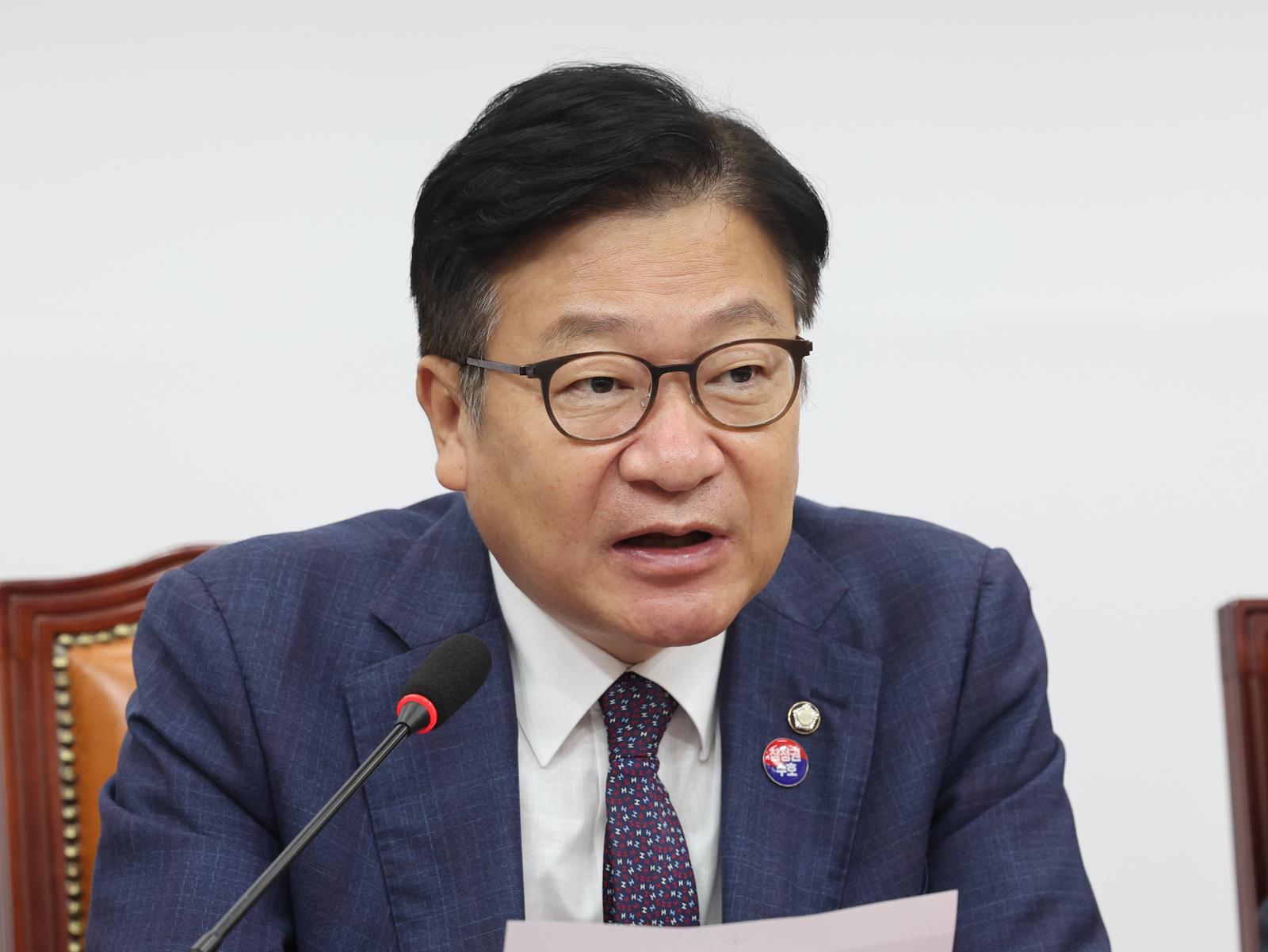
Rep. Chung Jin-suk, the floor leader of the People Power Party, described the minister's actions as a "mockery of the military itself." He questioned Ahn's loyalty, particularly given the historical context of the Korean War, which he noted was initiated by North Korea with support from China and the Soviet Union. "This is the army of which country, and the minister of which country?" Chung asked during a party meeting, highlighting the perceived insensitivity of quoting a Chinese leader in a military context.
The Defense Ministry later issued a clarification, stating that the minister's remark was intended as a "humanistic metaphor" to emphasize the importance of responding to changes without wavering, and that there was no intention to endorse any specific political figure or ideology. However, Chung dismissed this explanation, sarcastically suggesting that if such actions constitute humanism, then North Korean sympathizers should be hailed as great humanists.
Chung also pointed to other instances of perceived insensitivity from the Defense Ministry, including the use of the phrase "Resist America, Aid North Korea" (항미원조) in an educational program by the War Memorial of Korea Foundation, which he likened to Japan's "Naesen Ilche" (internal unity between Japan and Korea) slogan during its colonial rule. He further questioned the accuracy of the quote's attribution, noting that some suggest it was originally said by Taiwan's Chiang Kai-shek, implying the minister did not even verify the source of his supposed motto.
DistantNews Editorial
Originally published by Dong-A Ilbo in Korean. Translated, summarized, and contextualized by our editorial team with added local perspective. Read our editorial standards.
More Stories


From Our Blog

What Gets Lost (and Found) When News Is Translated

The Critical Role of Diaspora Media in Global News

What Travellers Should Know About Countries with Restricted Press

A Digital Nomad's Guide to Following Local News

How the Same Story Looks Different in Different Countries
