

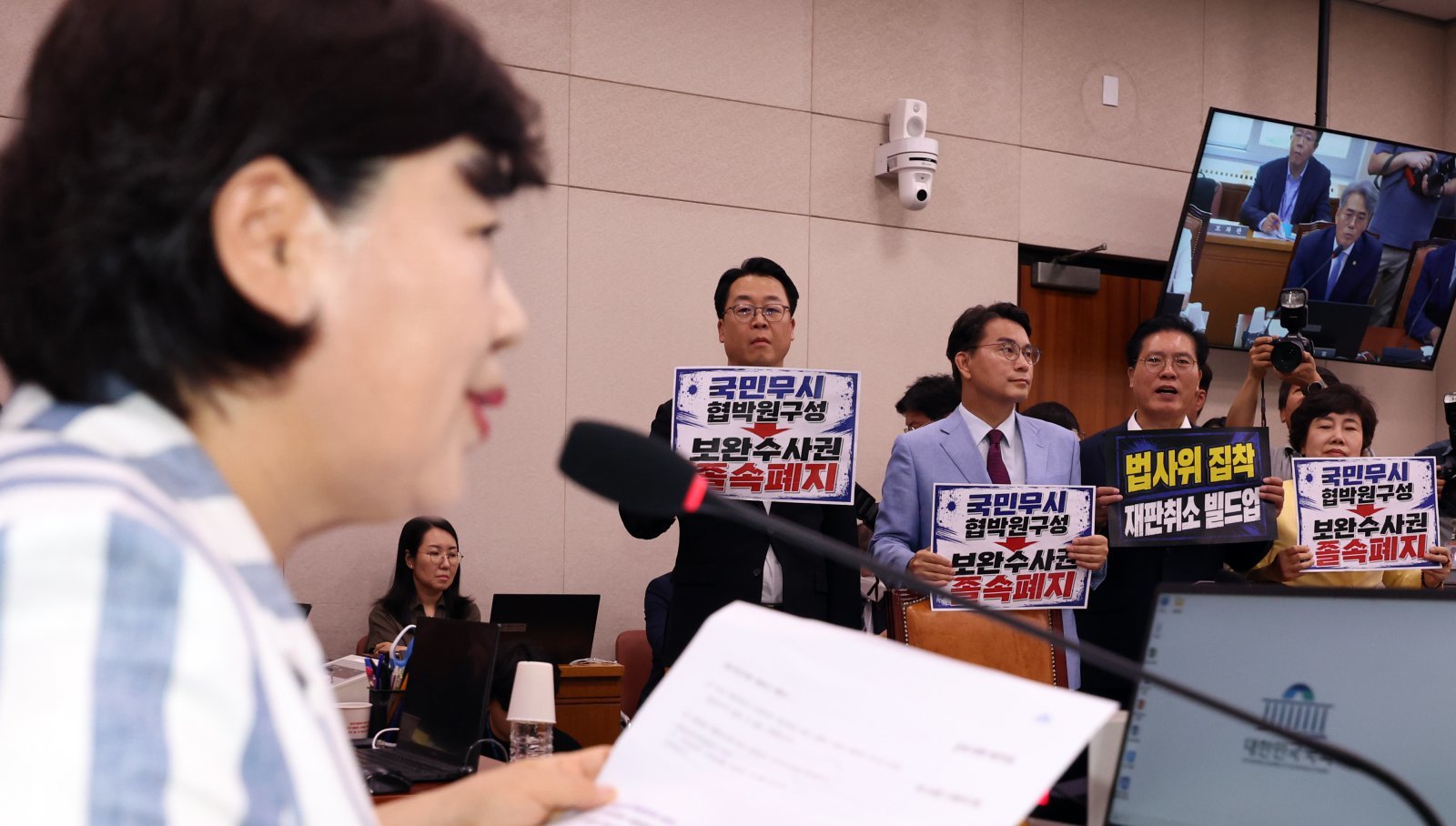

South Korean party rules spark debate among leadership hopefuls
Translated from Korean, summarized and contextualized by DistantNews.
At a glance
News
Named sources
Ongoing story
- Democratic Party leadership hopeful Kim Min-seok stated that party rules should not be debated based on advantage or disadvantage.
- He emphasized respecting decisions once rules are set, referencing the preference voting system adopted for the party leadership election.
- The party's election committee decided to use a preference voting system instead of a runoff, a move met with internal dissent.
Kim Min-seok, a contender for the leadership of South Korea's Democratic Party, has urged party members to refrain from debating election rules based on perceived advantages or disadvantages. He stressed the importance of respecting decisions once they are finalized.
"It is best to respect the rules as they are once they are set, regardless of whether they are advantageous or disadvantageous," Kim told reporters on Tuesday. He noted that the party's election committee had already decided on the rules, including the schedule for regional primaries, some of which he believes might be unfavorable to his campaign.
It is best to respect the rules as they are once they are set, regardless of whether they are advantageous or disadvantageous.
The party's election committee recently decided to adopt a preference voting system for the leadership election, replacing a runoff system. Under this new system, if no candidate secures a majority of the vote on August 17, the lowest-ranking candidate will be eliminated, and their votes will be redistributed to their second-choice candidate to determine the winner on the same day.
There is no reason to debate the rules based on advantage or disadvantage.
This decision has sparked internal conflict. Lee Sung-yoon and Moon Jung-bok, supreme council members from the pro-Chung faction, argued that the preference voting system violates the party's constitution and bylaws. Cho Seung-rae, former secretary-general, also stated on social media that adopting preference voting for the party leader election is a violation of party regulations and requires a revision of the party constitution.
Song Young-gil, another leadership candidate, expressed respect for the election committee's decision, suggesting it creates an atmosphere where voters can confidently choose him. However, Go Min-jung, also running for leadership, criticized the situation as creating an impression of unfairness, suggesting it reflects a lack of confidence within the party. Former party leader Jung Chung-rae, initially supportive of the decision, later expressed surprise, stating that party rules, like laws, cannot be violated.
It is not possible to do something that violates the party constitution and bylaws, just as it is not possible to violate the constitution and laws.
DistantNews Editorial
Originally published by Dong-A Ilbo in Korean. Translated, summarized, and contextualized by our editorial team with added local perspective. Read our editorial standards.
More Stories


From Our Blog

What Gets Lost (and Found) When News Is Translated

The Critical Role of Diaspora Media in Global News

What Travellers Should Know About Countries with Restricted Press

A Digital Nomad's Guide to Following Local News

How the Same Story Looks Different in Different Countries
