


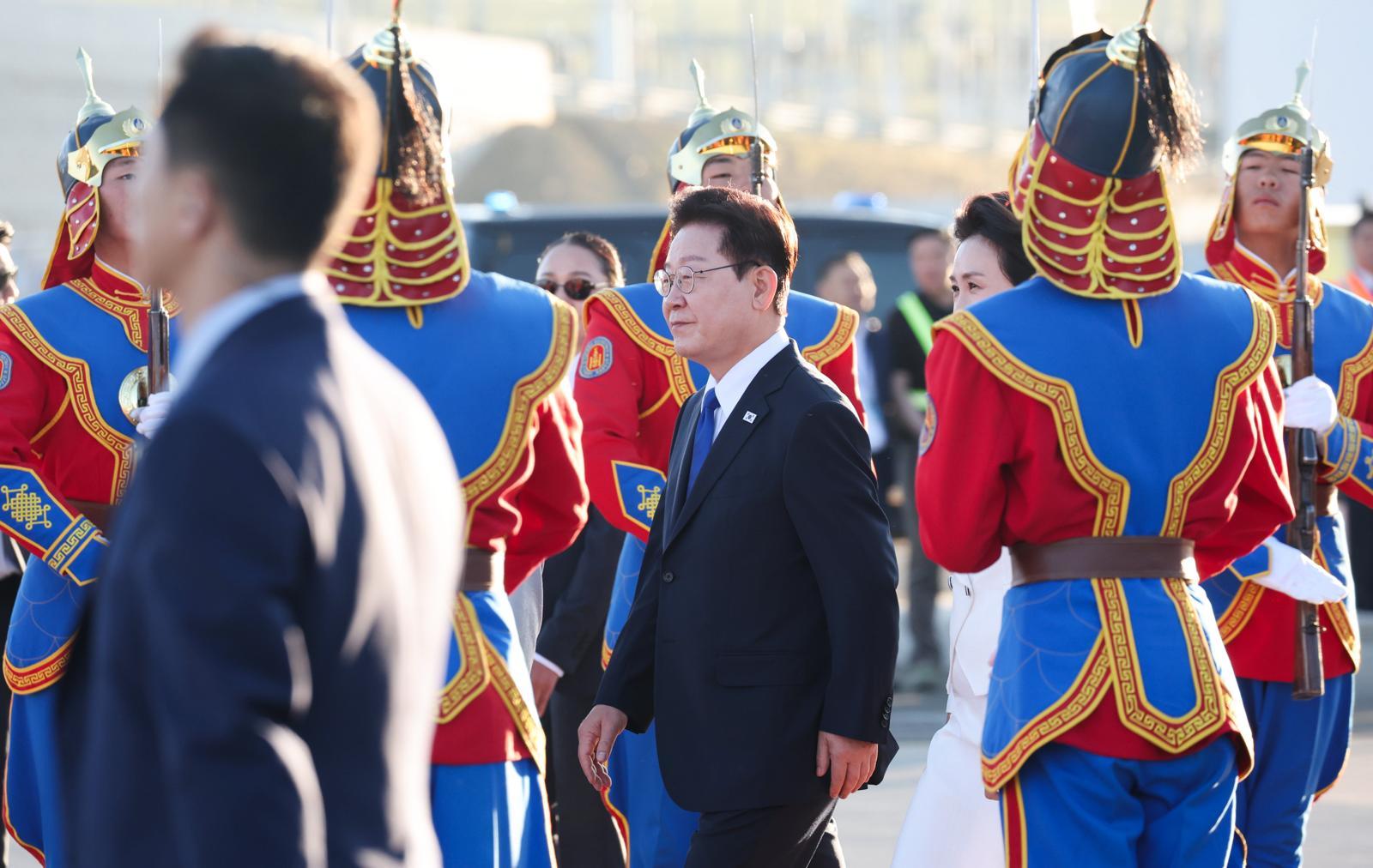
South Korean President arrives in Mongolia for summit on minerals, peace
Translated from Korean, summarized and contextualized by DistantNews.
At a glance
News
Named sources
New plan
- South Korean President Lee Jae-myung arrived in Ulaanbaatar for a state visit, marking the first such visit in 15 years.
- President Lee will hold a summit with Mongolian President Khurelsukh Ukhnaa to discuss critical minerals, supply chains, and Korean Peninsula peace.
- The visit aims to strengthen cooperation in resource-rich Mongolia, particularly in rare earth elements and fostering peace initiatives.
South Korean President Lee Jae-myung has arrived in Ulaanbaatar for a state visit, the first by a South Korean president in 15 years. His arrival on July 9, 2026, marks the beginning of a significant diplomatic engagement aimed at strengthening bilateral ties.
President Lee is scheduled to attend an official welcoming ceremony at the Mongolian government headquarters. Following this, he will hold a summit with Mongolian President Khurelsukh Ukhnaa. Key discussion points are expected to include cooperation on critical minerals and supply chains, as well as peace on the Korean Peninsula.
Mongolia's status as a resource-rich nation, particularly in critical minerals like rare earth elements, makes it a crucial partner for South Korea. Officials highlighted the potential for this visit to enhance supply chain cooperation, a vital area for global economic stability. The summit is anticipated to lay the groundwork for future collaborative projects in this sector.
Furthermore, the discussions will touch upon peace initiatives for the Korean Peninsula. Given Mongolia's historical relationship with North Korea, having been its second treaty signatory nation, Seoul sees potential for Ulaanbaatar to play a constructive role in inter-Korean relations and regional stability. The visit aims to build a partnership that supports peace efforts.
DistantNews Editorial
Originally published by Dong-A Ilbo in Korean. Translated, summarized, and contextualized by our editorial team with added local perspective. Read our editorial standards.
More Stories


From Our Blog

What Gets Lost (and Found) When News Is Translated

The Critical Role of Diaspora Media in Global News

What Travellers Should Know About Countries with Restricted Press

A Digital Nomad's Guide to Following Local News

How the Same Story Looks Different in Different Countries
