


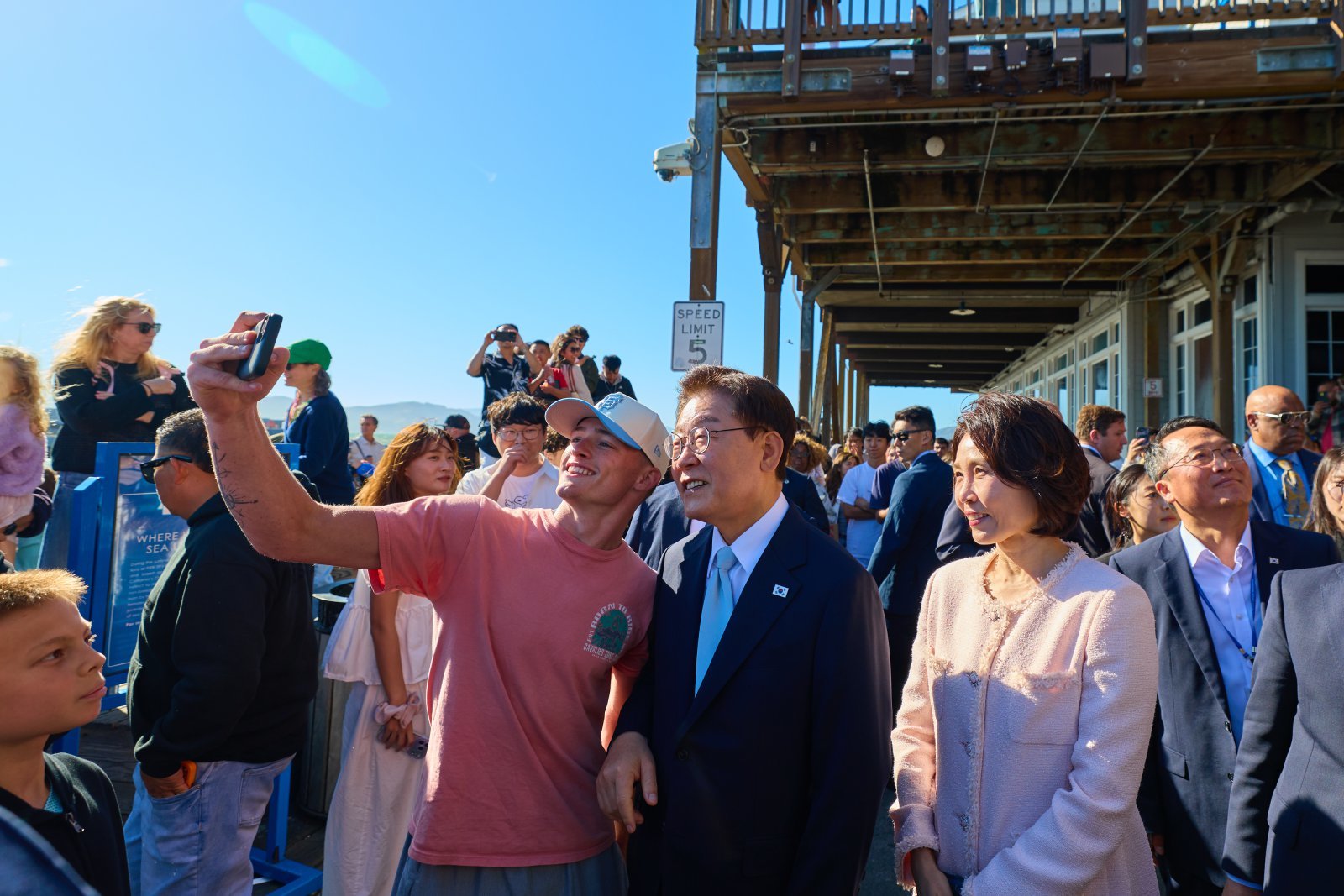
South Korean President Lee Visits San Francisco's Pier 39, Interacts with Public
Translated from Korean, summarized and contextualized by DistantNews.
At a glance
News
Named sources
Context piece
- South Korean President Lee Jae-myung and his wife visited San Francisco's Pier 39 to interact with citizens and tourists.
- The couple toured the revitalized pier, observed sea lions, and engaged in informal exchanges with the public.
- They concluded their visit with a traditional dinner, emphasizing direct communication with people in their daily lives.
South Korean President Lee Jae-myung and his wife, Kim Hye-kyung, visited San Francisco's iconic Pier 39, engaging with citizens and tourists in a casual setting. The visit aimed to foster direct communication outside formal events, allowing the presidential couple to connect with people in their everyday lives.
Accompanied by Consul General Lim Jeong-taek, the president and first lady toured Pier 39, a successful example of urban regeneration that transformed a former industrial pier into a vibrant tourist destination. They observed the sea lions basking on the rocks and piers, and learned about the area's marine ecosystem. The pier, which attracts approximately 15 million visitors annually, was bustling with crowds on the weekend of their visit.
Locals and tourists greeted the president and first lady with enthusiasm, calling out "Mr. President" and offering greetings in Korean. The couple shook hands, shared high-fives, and took commemorative photos with the public. One tourist expressed her daughter's desire to study in Korea, highlighting a growing interest in the country. The visit concluded with a dinner at the traditional San Francisco restaurant Scoma's, where they enjoyed local dishes like clam chowder and pasta.
Presidential spokesperson Ahn Gyu-baek stated the visit was designed for "natural interaction within the daily lives of local citizens and direct communication with tourists from around the world, moving beyond formal event venues."
The visit was arranged to naturally interact within the daily lives of local citizens and communicate directly with tourists from around the world, moving beyond formal event venues.
DistantNews Editorial
Originally published by Dong-A Ilbo in Korean. Translated, summarized, and contextualized by our editorial team with added local perspective. Read our editorial standards.
More Stories


From Our Blog

What Gets Lost (and Found) When News Is Translated

The Critical Role of Diaspora Media in Global News

What Travellers Should Know About Countries with Restricted Press

A Digital Nomad's Guide to Following Local News

How the Same Story Looks Different in Different Countries
