


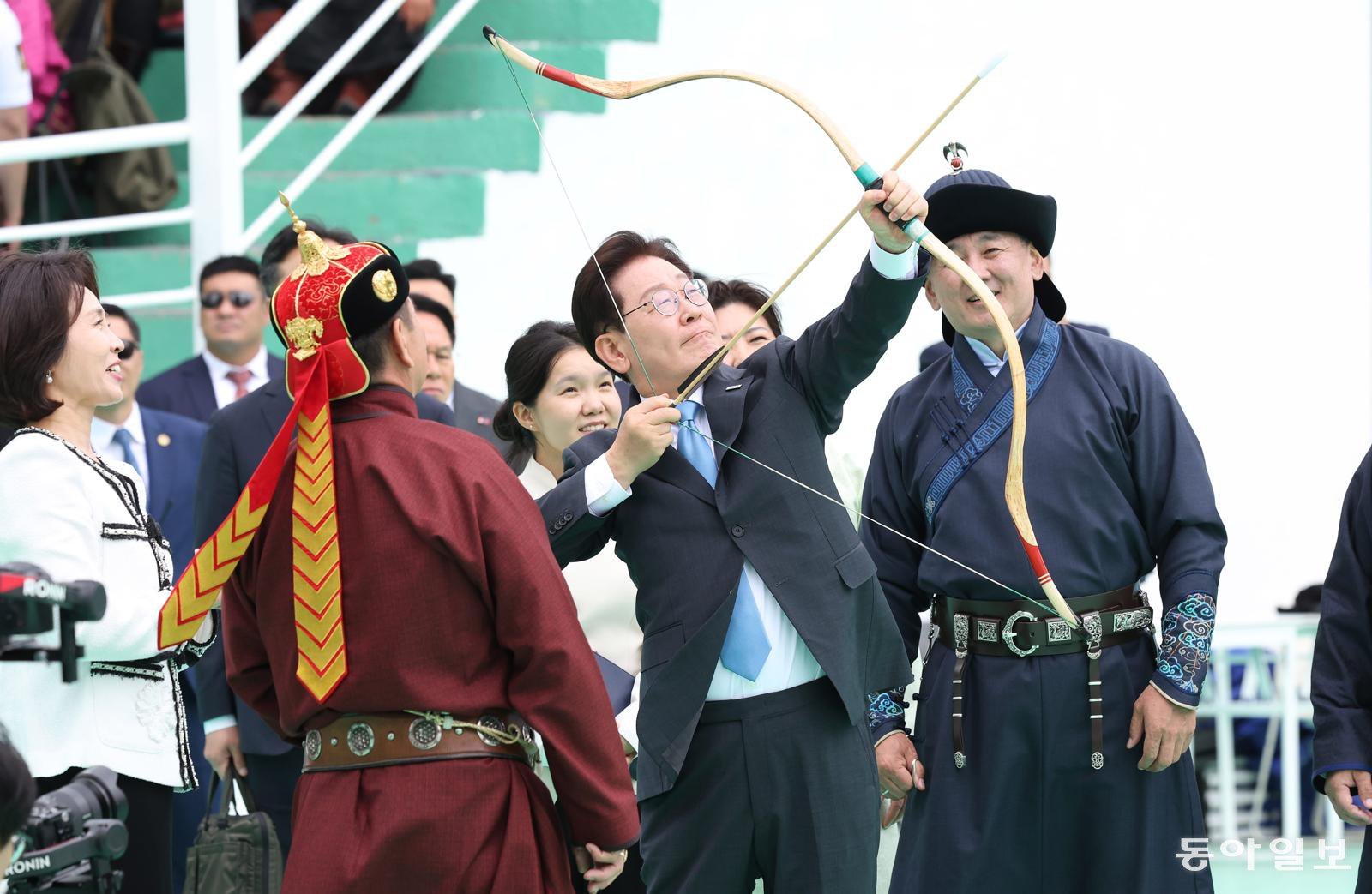
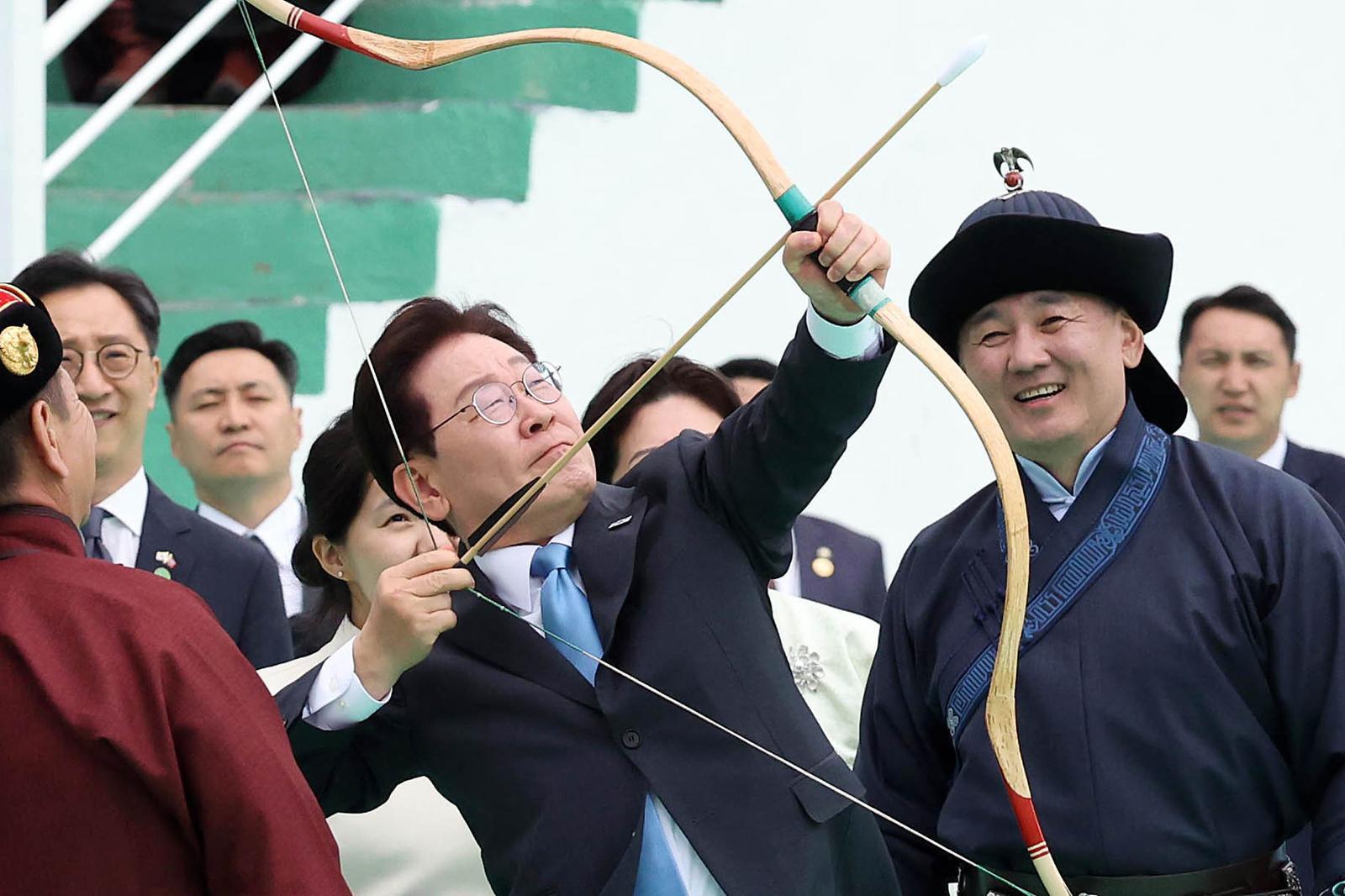
South Korean President tries traditional Mongolian archery at Naadam Festival
Translated from Korean, summarized and contextualized by DistantNews.
At a glance
News
Sources not specified
Context piece
- South Korean President Lee Jae-myung and his wife, Kim Hye-kyung, experienced traditional Mongolian archery during a state visit.
- The activity was part of the Naadam Festival, a celebration of Mongolian culture and independence.
- Both leaders noted the shared 'Oriental archery method' using the thumb, highlighting potential for bilateral cooperation.
South Korean President Lee Jae-myung and his wife, Kim Hye-kyung, participated in traditional Mongolian archery during their state visit to Mongolia. The experience took place on the sidelines of the Naadam Festival's opening ceremony, a significant national event celebrating Mongolian freedom and independence.
Mongolian President Ukhnaagiin Khurelsukh explained the history and significance of the traditional archery to the South Korean presidential couple before demonstrating the technique himself. President Lee then took his turn, drawing the bowstring to the applause and cheers of the Mongolian president and the assembled crowd. His wife, Kim Hye-kyung, also stepped forward to try her hand at the sport.
The archery range distances were set at 75 meters for men and 65 meters for women. During their archery experience, both leaders discussed the commonalities between Korean traditional archery (Gukgung) and Mongolia's archery practices, specifically mentioning the shared use of the 'Oriental archery method,' which involves drawing the bowstring with the thumb. This shared technique was seen as a point of connection, leading to discussions about enhancing cooperation between the two nations in the field of sports.
The Naadam Festival itself is a cornerstone of Mongolian heritage, featuring traditional nomadic sports such as wrestling, horse racing, and archery. Recognized for its value in preserving nomadic culture, the festival was inscribed on UNESCO's Representative List of the Intangible Cultural Heritage of Humanity in 2010.
DistantNews Editorial
Originally published by Dong-A Ilbo in Korean. Translated, summarized, and contextualized by our editorial team with added local perspective. Read our editorial standards.
More Stories

From Our Blog

What Gets Lost (and Found) When News Is Translated

The Critical Role of Diaspora Media in Global News

What Travellers Should Know About Countries with Restricted Press

A Digital Nomad's Guide to Following Local News

How the Same Story Looks Different in Different Countries
