


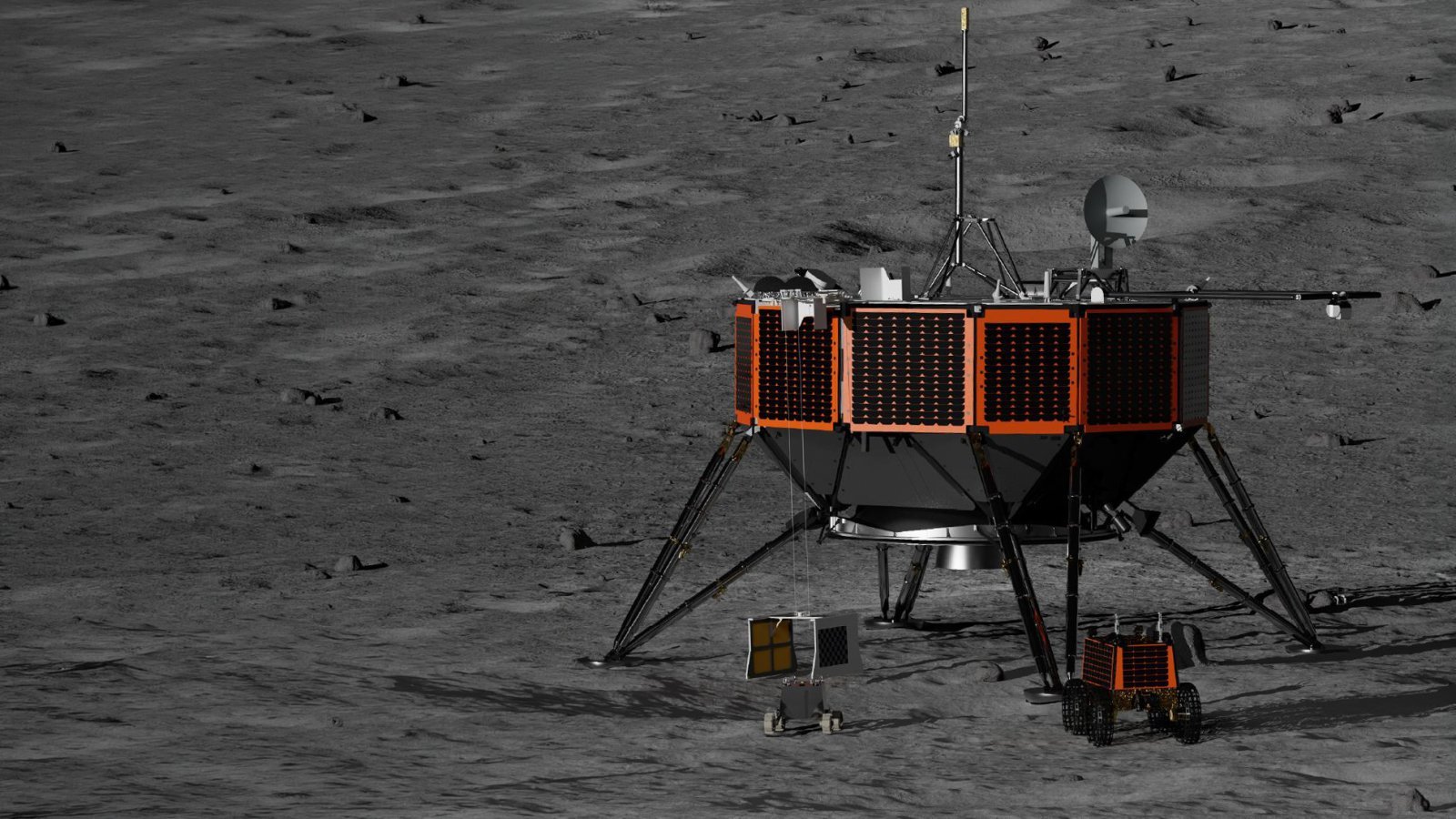
South Korean radiation detector to fly to moon's south pole on NASA lander in 2030
Translated from Korean, summarized and contextualized by DistantNews.
At a glance
News
Sources not specified
New plan
- South Korea will send a radiation detector to the moon's south pole on a NASA-affiliated lunar lander, with a planned launch in 2030.
- The Lunar Vehicle Radiation Dosimeter (LVRAD) will measure space radiation on the lunar surface, aiding research on its impact on future human and robotic missions.
- The agreement between the Korean Space Agency and NASA solidifies future lunar base cooperation and enhances South Korea's contributions to space science.
South Korea's radiation detector is set to journey to the moon's south pole aboard a NASA-affiliated private lunar lander, with a potential launch in 2030. The Lunar Vehicle Radiation Dosimeter (LVRAD), developed in South Korea, will measure space radiation on the lunar surface. This data will be crucial for understanding the radiation environment and its effects on future human and robotic exploration.
The Korean Space Agency announced on April 17 that it signed an implementation agreement with NASA. This pact allows for the LVRAD to be included as a payload on a lander selected through NASA's Commercial Lunar Payload Services program. The agency aims to complete the flight model development by 2027 and will then transport it to the U.S. for integration with the lander.
This implementation agreement will serve as an opportunity to further solidify future lunar base cooperation between the Korean Space Agency and NASA.
NASA will manage the launch, operation of the detector on the lunar surface, and data transmission. The launch is currently scheduled for 2030, though this timeline is subject to change based on NASA's schedule. The LVRAD comprises a space radiation dose and spectrometer to measure radiation penetration and a neutron spectrometer for neutron environment measurements.
Intuitive Machines is developing the private lunar lander that will carry the South Korean instrument, along with six other payloads. Oh Tae-seok, head of the Korean Space Agency, stated that the agreement strengthens future cooperation on lunar bases between the two agencies. He added that South Korea plans to continue expanding international collaboration to advance lunar exploration technologies and bolster its contributions to global space science.
We will continue to expand international cooperation to advance lunar exploration technologies and further strengthen our contributions to the international community in space science.
DistantNews Editorial
Originally published by Dong-A Ilbo in Korean. Translated, summarized, and contextualized by our editorial team with added local perspective. Read our editorial standards.
More Stories



From Our Blog

What Gets Lost (and Found) When News Is Translated

The Critical Role of Diaspora Media in Global News

What Travellers Should Know About Countries with Restricted Press

A Digital Nomad's Guide to Following Local News

How the Same Story Looks Different in Different Countries
