


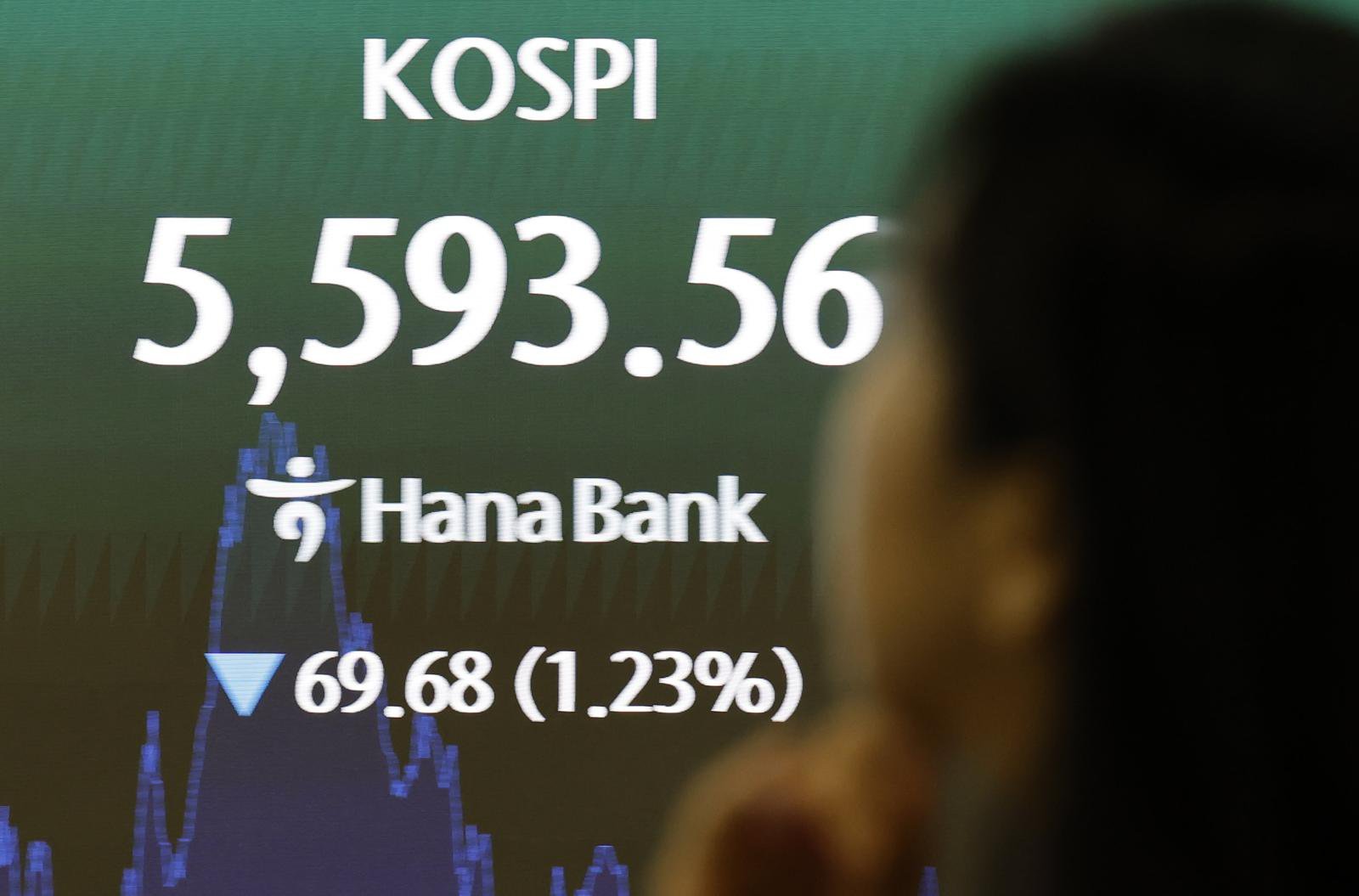
South Korean stocks plunge as individual investors panic-sell
Translated from Korean, summarized and contextualized by DistantNews.
At a glance
News
Sources not specified
Context piece
- South Korea's KOSPI index fell for a third consecutive day, losing 1,162.19 points due to continued panic selling by individual investors.
- Despite Samsung Electronics announcing record quarterly profits, concerns about a semiconductor industry downturn led to a market decline.
- Foreign media described the volatile South Korean stock market as a
South Korea's KOSPI index plummeted for a third straight day on July 30, as individual investors continued their 'panic selling,' failing to spark a rebound. Even Samsung Electronics' announcement of record second-quarter profits could not quell fears of a semiconductor industry 'peak out.'
The KOSPI closed down 1.23% at 5,593.56 on July 30, marking a total drop of 1,162.19 points, or 17%, over three days. Samsung Electronics, despite a strong intraday surge, ultimately closed down 0.72% at 207,000 won, unable to withstand the selling pressure from individual investors. These investors offloaded 1.4219 trillion won worth of stocks on the KOSPI, dragging the index down. Foreign and institutional investors bought 1.3253 trillion won and 74.3 billion won respectively, but their efforts were insufficient to lift the market.
state capitalism and market speculation in extreme combination, a grand experiment
Both semiconductor giants, Samsung Electronics (-0.72%) and SK Hynix (-5.64%), ended the day lower. Leveraged products based on these stocks also saw significant declines, some up to 12%. The day marked the last chance to trade single-stock leveraged ETFs with a minimum deposit of 10 million won; from July 31, this requirement increases to 30 million won. Concerns about increasing volatility in single-stock leveraged products have been mounting.
despair and frustration spreading rapidly among South Korean retail investors
International media have highlighted the market's instability. The Economist described the South Korean market as a "grand experiment" combining "state capitalism and market speculation," noting the extreme risk for investors. Bloomberg reported that the KOSPI had fallen about 33% in July, with "despair and frustration spreading rapidly among South Korean retail investors." The Financial Investment Association reported that margin deposits, which had fallen below 1 trillion won, increased to 1.1999 trillion won as of July 29, indicating a rise in short-term borrowing for investment.
Bae Jae-gyu, CEO of Korea Investment Management, advised against investing in leveraged products, suggesting they should be "naturally phased out" rather than delisted. Separately, a single, small trade of SK Hynix on the alternative trading exchange Nextrade (NTX) on July 28 reportedly triggered a cascade of liquidations worth 80 billion won in overseas virtual asset derivatives markets, exposing a structural vulnerability where minor market events can cause significant shocks in derivatives markets.
It is best not to invest in it. It should be naturally phased out, not delisted. It is possible with the help of asset management companies, liquidity providers, and some institutional support.
DistantNews Editorial
Originally published by Dong-A Ilbo in Korean. Translated, summarized, and contextualized by our editorial team with added local perspective. Read our editorial standards.
More Stories


From Our Blog

What Gets Lost (and Found) When News Is Translated

The Critical Role of Diaspora Media in Global News

What Travellers Should Know About Countries with Restricted Press

A Digital Nomad's Guide to Following Local News

How the Same Story Looks Different in Different Countries
