


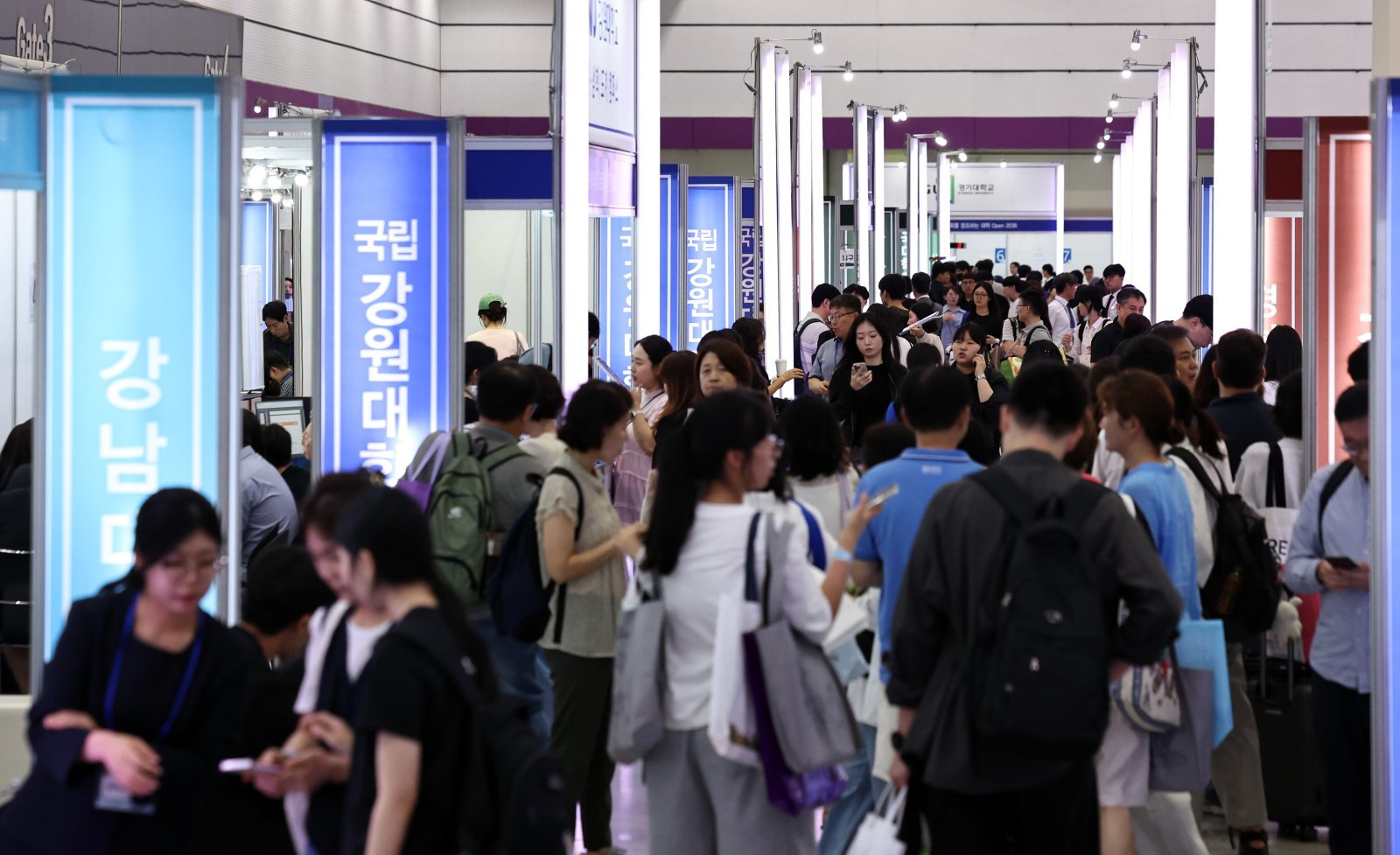
South Korean Students Struggle to Finalize College Applications with Deadline Looming
Translated from Korean, summarized and contextualized by DistantNews.
At a glance
News
Sources not specified
Context piece
- With just three weeks until the early admission college application deadline, only 10% of South Korean students have finalized all six of their application choices.
- Over half of students have decided on three or fewer universities, struggling with the balance of aspirational, appropriate, and safe choices.
- Key concerns include difficulty assessing their chances of admission based on their grades and strategizing the optimal combination of applications.
With the early admission college application deadline approximately three weeks away, a significant majority of South Korean students are still undecided about their choices. A survey by admissions information platform Jinhaksa found that only 10% of 743 surveyed students have finalized all six of their available application slots.
More than half of the students have decided on three or fewer universities. Specifically, 40.2% have decided on two to three choices, while 37.6% have decided on four to five. A combined 53.4% of students have decided on three or fewer applications, indicating widespread indecision.
There are more applicants, it can be more difficult to decide on the final six applications. Now, rather than continuing to add universities, it is necessary to categorize the candidate pool into aspirational, appropriate, and safe choices and set priorities.
The primary reason cited for this hesitation is the difficulty in strategizing the optimal combination of aspirational, appropriate, and safe applications, with 38.5% of students struggling with this balance. Another significant concern, mentioned by 25.7% of respondents, is the difficulty in assessing which universities are realistically within reach based on their academic performance. Many are also waiting to see their results from the September mock evaluation, with 25.6% planning to decide after this.
Woo Yeon-cheol, head of Jinhaksa's admissions strategy research institute, advised students to move beyond simply adding more options. He stressed the importance of categorizing potential applications into aspirational, appropriate, and safe choices and prioritizing them. He also recommended that students consider not only the possibility of admission for safe choices but also their genuine intent to attend those institutions if accepted. Evaluating backup options in aspirational applications can help clarify the role of each of the six application slots.
Especially for safe applications, you should not just look at the possibility of admission, but also consider whether you actually intend to attend the university if admitted. If you don't get the desired results in aspirational applications, checking if you have cards to secure admission possibilities can help clarify the role of each of the six applications.
DistantNews Editorial
Originally published by Dong-A Ilbo in Korean. Translated, summarized, and contextualized by our editorial team with added local perspective. Read our editorial standards.
More Stories



From Our Blog

What Gets Lost (and Found) When News Is Translated

The Critical Role of Diaspora Media in Global News

What Travellers Should Know About Countries with Restricted Press

A Digital Nomad's Guide to Following Local News

How the Same Story Looks Different in Different Countries
