


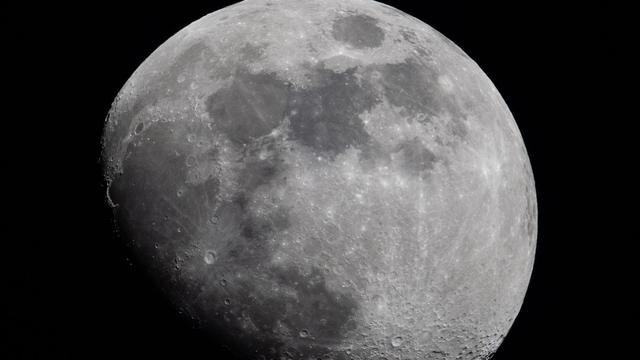
SpaceX Rocket Part May Unintentionally Crash on Moon
Translated from German, summarized and contextualized by DistantNews.
At a glance
News
From a news agency
Ongoing story
- A piece of a SpaceX Falcon 9 rocket is expected to crash onto the moon on August 5, 2026.
- The rocket's upper stage was launched in January 2025 carrying two lunar landers.
- Scientists are uncertain if the impact will be visible from Earth, with confirmation potentially taking days via probe data.
A segment of a SpaceX Falcon 9 rocket, launched approximately 18 months ago, is predicted to make an unplanned impact on the moon on August 5, 2026. The collision is scheduled for 8:35 AM MESZ, according to calculations by U.S. astronomer Bill Gray and NASA. The object in question is the upper stage of the rocket, which was part of a mission in January 2025 that deployed two landers to the lunar surface.
I think it will be very, very difficult to see, if not impossible.
It remains uncertain whether the impact will be observable from Earth. William Cooke, a manager at NASA, expressed doubt, stating, "I think it will be very, very difficult to see, if not impossible." Astronomer Gray, speaking to The New York Times, noted that the object is heading towards a location where "there is at least a little hope that we can observe it." If direct observation proves impossible, confirming the impact might take several hours or even days, relying on data from probes that could photograph any resulting crater.
The object is heading towards a location where there is at least a little hope that we can observe it.
NASA's Lunar Reconnaissance Orbiter is scheduled to fly over the anticipated impact site in the coming days. The Falcon 9 rocket launched on January 15, 2025, carrying Firefly Aerospace's 'Blue Ghost' and Japan's ispace 'Resilience' landers. 'Blue Ghost' successfully landed on the moon about two months later, while 'Resilience' failed shortly after, crashing onto the lunar surface. The lower stage of the Falcon 9 rocket returned to Earth.
But for high energy missions we have to do a different maneuver to ensure the upper stage is safe with the corresponding rules and regulations.
SpaceX representatives explained that while upper rocket stages often burn up in Earth's atmosphere during such missions, high-energy missions require different maneuvers to ensure safety, adhering to regulations. In this specific case, a "combination of solar activity and gravitational forces" propelled the stage onto a trajectory toward the moon. Although unplanned, NASA acknowledges that a lunar impact can be a "recognized option for disposal, offering a predictable, trackable, and safer approach to the end of a mission." The agency assured that there is "no danger to Earth." Scientists plan to continue monitoring the rocket stage's trajectory and the impact site for scientific reasons.
And what happened is a mixture of solar activity and gravitational forces that put them on a path to the moon.
DistantNews Editorial
Originally published by Die Zeit in German. Translated, summarized, and contextualized by our editorial team with added local perspective. Read our editorial standards.
More Stories



From Our Blog

What Gets Lost (and Found) When News Is Translated

How the Same Story Looks Different in Different Countries

The Critical Role of Diaspora Media in Global News

What Travellers Should Know About Countries with Restricted Press

A Digital Nomad's Guide to Following Local News
