


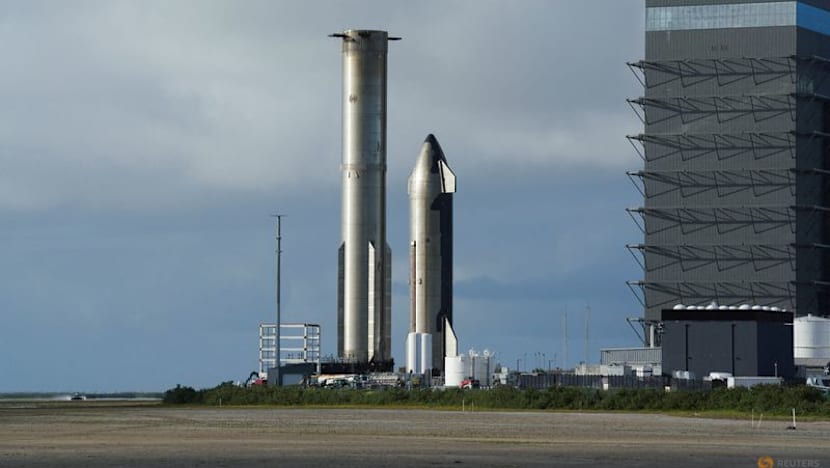
SpaceX's near-term AI payoff seen tethered to Earth, not outer space
Summarized and contextualized by DistantNews.
At a glance
News
Named sources
Context piece
- Wall Street analysts believe SpaceX's near-term financial gains from AI will come from terrestrial infrastructure, not space-based operations.
- SpaceX is monetizing its compute power through deals with AI companies like Anthropic, generating significant revenue that is expected to surpass other business segments.
- The company has invested heavily in terrestrial AI infrastructure, positioning itself as a major compute operator, while its orbital AI plans remain a long-term prospect dependent on Starship development.
While Elon Musk envisions a future where space technology powers artificial intelligence, Wall Street analysts assert that SpaceX's immediate financial success in AI is firmly rooted on Earth. The company is building crucial infrastructure that underpins the current AI boom, particularly data centers, which are set to benefit immensely as businesses and consumers adopt AI applications.
SpaceX is already capitalizing on its compute capabilities by securing deals with enterprise clients, including Anthropic, for its Colossus supercomputer clusters. Revenue from these terrestrial compute contracts is projected to significantly exceed sales from other SpaceX segments this year. J.P. Morgan forecasts that SpaceX will expand its terrestrial AI compute capacity to approximately 9 gigawatts by 2029, a capacity comparable to four times the power generated by the Hoover Dam. Beyond 2029, the brokerage anticipates SpaceX will shift focus to orbital compute for additional capacity while maintaining its existing terrestrial operations.
The narrative that (orbital) will fundamentally disrupt terrestrial data centers is a little bit overblown. Any kind of displacement of terrestrial data centers is 10 years plus out.
These lucrative deals with companies like Anthropic, Google, and Reflection AI for its Colossus compute facilities are expected to yield over $28 billion in annual revenue. This figure substantially outpaces SpaceX's projected 2025 AI revenue of around $3.2 billion and individually surpasses the revenue generated by its launch and Starlink connectivity businesses. Analysts, however, caution that these contracts include termination clauses, meaning they should not be considered guaranteed long-term recurring income. SpaceX's substantial investment of nearly $18 billion in AI infrastructure and development in 2025, with a significant portion allocated to capital expenditure and R&D, highlights its strategic focus on terrestrial AI. The company's Colossus and Colossus II systems currently offer about one gigawatt of AI compute capacity, placing SpaceX among the leading global AI compute operators, with expectations of considerable expansion in the coming years. The recent $60 billion acquisition of AI coding startup Cursor further suggests SpaceX's ambition to move beyond infrastructure into enterprise software, enabling it to monetize both AI applications and the underlying computing power.
Beyond 2029, we expect SpaceX to pivot to orbital compute for incremental capacity additions, while continuing to operate and maintain its terrestrial compute clusters.
DistantNews Editorial
Originally published by CNA. Summarized and contextualized by our editorial team with added local perspective. Read our editorial standards.
More Stories


From Our Blog

What Gets Lost (and Found) When News Is Translated

The Critical Role of Diaspora Media in Global News

What Travellers Should Know About Countries with Restricted Press

A Digital Nomad's Guide to Following Local News

How the Same Story Looks Different in Different Countries
