


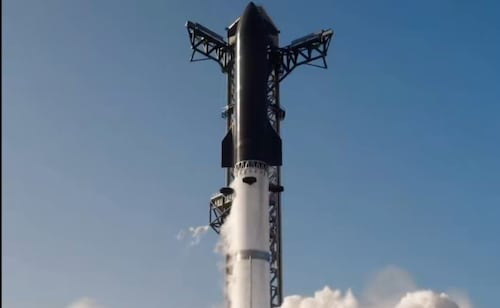
SpaceX Successfully Completes 13th Starship Launch in Texas; Mission Includes Technical Adjustments
Translated from Spanish, summarized and contextualized by DistantNews.
At a glance
News
Sources not specified
Context piece
- SpaceX successfully conducted its 13th Starship launch from Texas, completing its mission with technical adjustments.
- The flight tested improvements to the Super Heavy booster and the Starship spacecraft, including thermal protection and potential satellite deployment systems.
- Data gathered from this test flight will inform future design modifications for SpaceX's reusable Starship vehicle.
SpaceX successfully executed its thirteenth Starship launch from its Texas facility, completing a mission that incorporated technical adjustments based on lessons learned from previous flights. The approximately 90-minute test flight involved the Starship-Super Heavy system performing ascent, stage separation, booster return maneuvers, and a controlled re-entry.
A primary objective of this mission was to evaluate enhancements made to the Super Heavy booster. Following difficulties with engine ignition during separation in the previous flight (Flight 12), SpaceX modified its ignition and control systems to improve stability during this critical phase. The Starship spacecraft also underwent key tests, including a simulation for the future deployment of 20 Starlink V3 satellites, a new version designed to expand the satellite internet network's capacity. These test satellites were placed on a suborbital trajectory before their re-entry process.
Furthermore, the mission aimed to gather crucial data on the spacecraft's thermal protection system. Some satellites were equipped with cameras to observe the thermal tiles' condition, while Starship itself incorporated new materials and sensors to analyze their resilience during flight. In the prior test, Starship lost one Raptor engine shortly after separating from the booster but managed to continue its planned trajectory. Changes were implemented in the propulsion system for this launch to prevent similar failures.
This flight is part of SpaceX's ongoing Starship development program, which aims to create a fully reusable vehicle for future space missions. The company plans to continue utilizing the data obtained from these tests to refine the design before subsequent launches, pushing the boundaries of space exploration technology.
DistantNews Editorial
Originally published by El Universal in Spanish. Translated, summarized, and contextualized by our editorial team with added local perspective. Read our editorial standards.
More Stories



From Our Blog

What Press Freedom Means for the News You Read

What Gets Lost (and Found) When News Is Translated

The Critical Role of Diaspora Media in Global News

What Travellers Should Know About Countries with Restricted Press

A Digital Nomad's Guide to Following Local News
