



Spain cannot be expelled from Schengen, expert clarifies amid Finnish minister's remarks
Translated from Finnish, summarized and contextualized by DistantNews.
At a glance
News
Named sources
Context piece
- Finnish Interior Minister Mari Rantanen suggested suspending Spain's Schengen agreement participation due to the influx of migrants into Ceuta.
- An academic expert suggests Rantanen's statement is likely pressure on the EU Commission to temporarily reinstate internal border controls within the Schengen framework.
- Such a move could involve individual EU countries or a coordinated EU-level decision, but Spain would not be expelled from Schengen as no such mechanism exists.
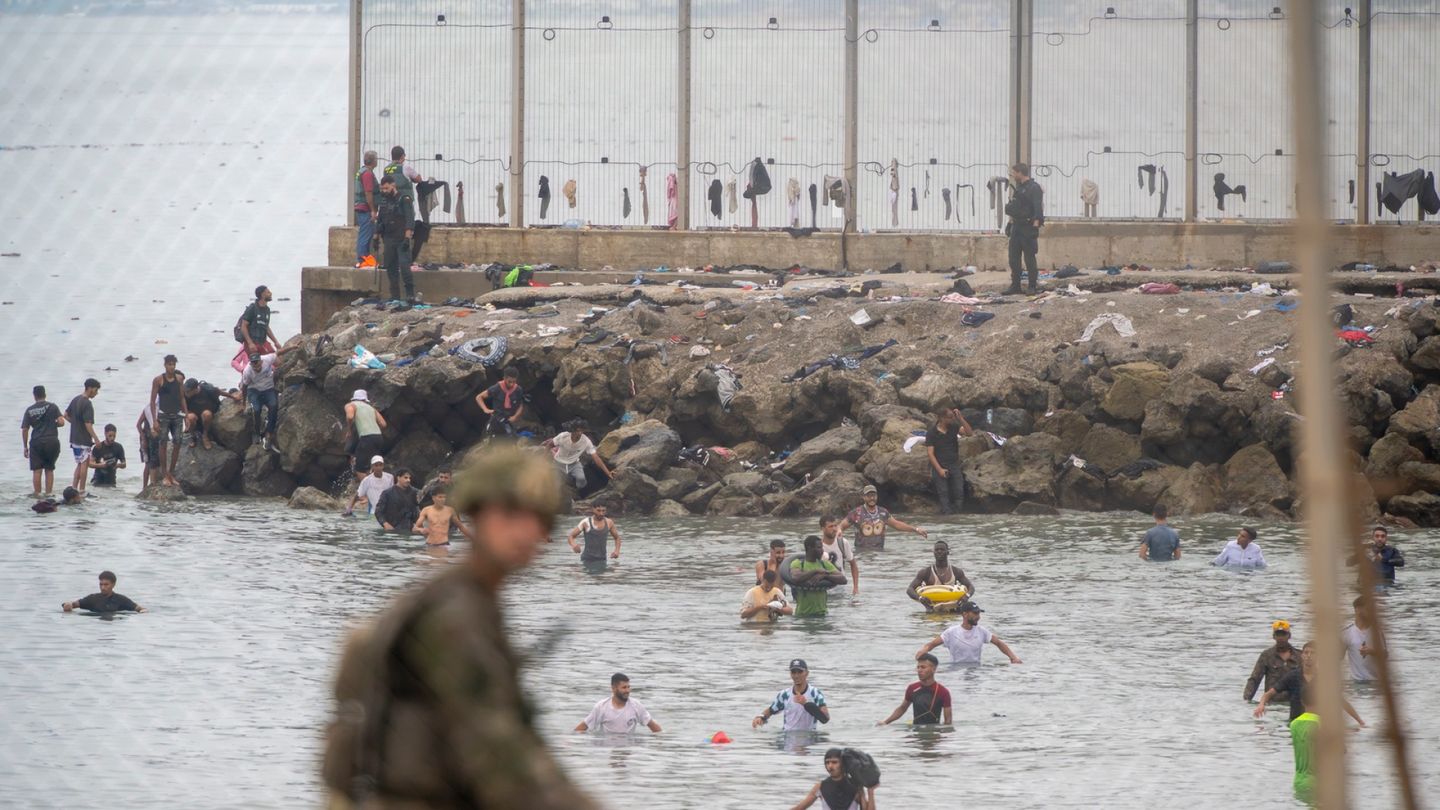
Finnish Interior Minister Mari Rantanen has proposed suspending Spain's participation in the Schengen agreement, a statement likely intended to exert pressure on the European Commission. The proposal comes amid a significant influx of over 50,000 people into Ceuta, a Spanish autonomous city in North Africa, from Morocco in recent days.
In practice, it means the temporary reintroduction of internal border controls in traffic coming from Spain.
Timo Miettinen, an academy researcher, interprets Rantanen's remarks as a colloquial call for the temporary reintroduction of internal border checks within the Schengen framework. This could manifest in two ways: either individual Schengen countries, like Finland, could reinstate checks on traffic arriving from Spain if facing a serious threat to public order or internal security, or a coordinated EU-level decision could be made. Miettinen suggests the latter, involving a Commission initiative and legal assessment, might be the intended goal to pressure the Commission.
Perhaps the intention is to build pressure towards the Commission.
While Italy's Prime Minister Giorgia Meloni also proposed suspending the Schengen agreement earlier, Miettinen clarifies that Spain would not be expelled from the Schengen zone, as no such mechanism exists. He explains that if serious and persistent deficiencies in Spain's external border control were identified, potentially jeopardizing the entire Schengen area's functioning, the Commission could recommend the reintroduction of internal border checks to the Council of the EU. However, Miettinen notes that the Commission might not view Spain's border control issues as systemic or permanent, possibly considering it a localized crisis.
There is no clear mechanism for expelling Spain from the Schengen area.
Miettinen also suggested alternative forms of assistance for Spain, such as providing border personnel or aid through the European Border and Coast Guard Agency (Frontex). He emphasized that any potential reintroduction of internal border checks would likely have minimal impact on the daily lives of ordinary citizens, such as Finnish travelers, whose passports might be checked more frequently on flights from Spain.
One could also consider measures to help Spain.
DistantNews Editorial
Originally published by Helsingin Sanomat in Finnish. Translated, summarized, and contextualized by our editorial team with added local perspective. Read our editorial standards.
More Stories


From Our Blog

What Gets Lost (and Found) When News Is Translated

The Critical Role of Diaspora Media in Global News

What Travellers Should Know About Countries with Restricted Press

A Digital Nomad's Guide to Following Local News

How the Same Story Looks Different in Different Countries
