

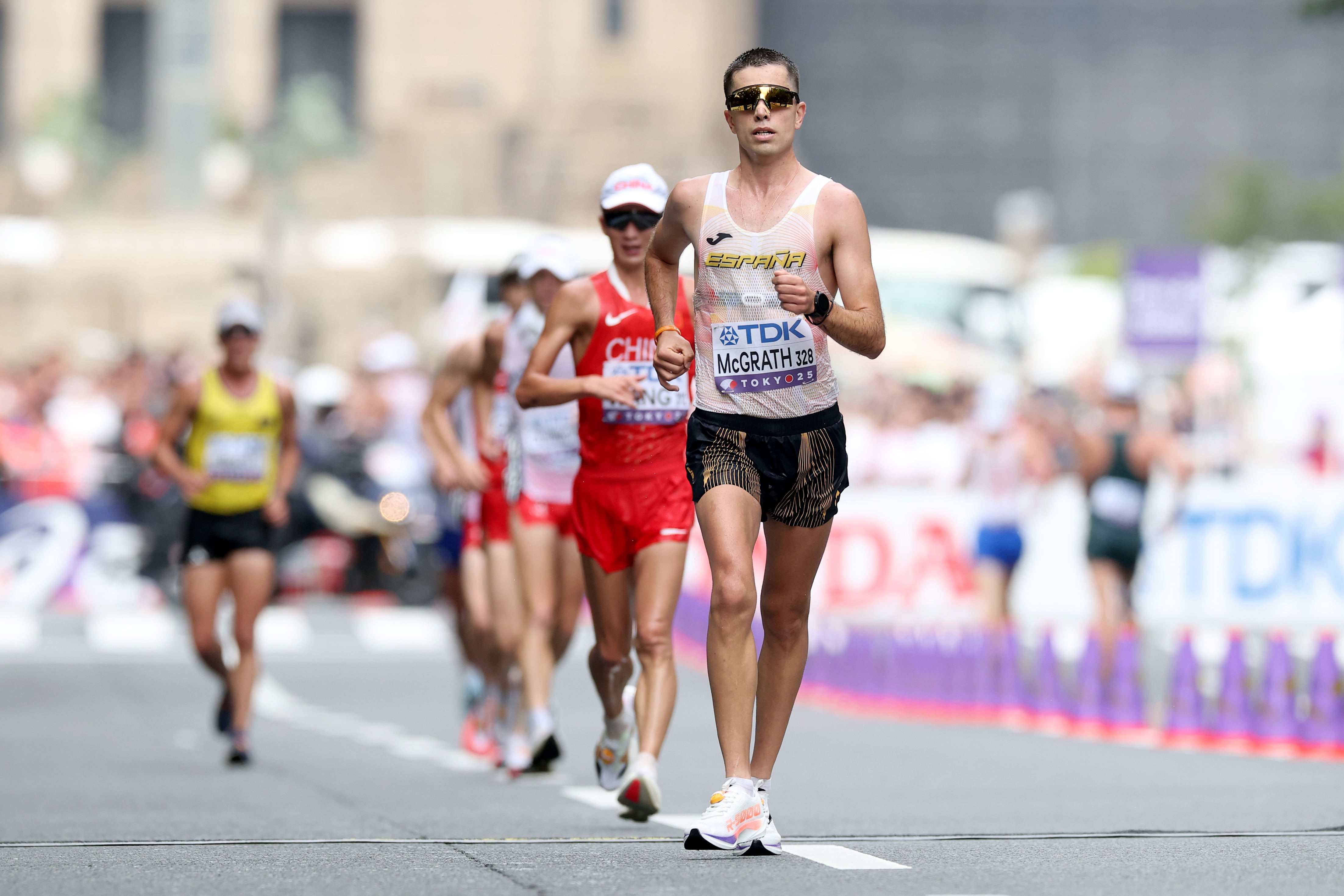

Spain Eyes Opportunity in 'Terrifying' Birmingham Marathon
Translated from Spanish, summarized and contextualized by DistantNews.
At a glance
News
Named sources
Context piece
- Spanish marathon runners face a challenging course in Birmingham with significant elevation changes.
- The "terrifying" circuit features nearly 500 meters of elevation gain over 42.195 kilometers.
- Runners anticipate high dropout rates and are focusing on survival and team classification.
The Spanish athletics team is preparing for what they describe as a "terrifying" marathon in Birmingham, a course notorious for its demanding profile. With nearly 500 meters of elevation gain spread across the 42.195-kilometer race, the circuit presents a significant challenge, even compared to the Olympic marathon in Paris. Runners are adapting to unconventional training spaces, with some using city streets for warm-ups.
The circuit is terrifying
Juan del Campo, a coach, characterized the course as tougher than the Paris Olympic marathon, predicting many participants will not finish. The significant elevation changes will test leg muscles and patience, making it difficult to maintain a consistent pace. The temptation to push too hard on the few flat sections could lead to exhaustion, impacting subsequent races like those in Berlin, Chicago, or Valencia.
It is tougher than the Olympic marathon course in Paris
Meritxell Soler, a Catalan runner, noted the unprecedented difficulty of the course, anticipating that "whoever breaks will break big." Coaches like Antonio Serrano are emphasizing survival tactics, while others, like Carolina Robles and Carlos Mayo, have undertaken rigorous training on hilly terrain to prepare for the impact on their musculature. The focus for the Spanish team is on team classification and enduring the grueling race.
I believe there will be many dropouts, and for those who finish, we will see how they do and how they recover to run in Berlin (September 27), Chicago (October 11), or Valencia (December 6)
Despite the harsh conditions, the challenging course is also seen as an "opportunity." The significant elevation gain might allow Spanish runners to compete with rivals who typically boast much faster times on flatter courses. The strategy will involve shortening strides and staying low to the ground to manage the constant ascents and descents. The race is scheduled to start at 7:30 a.m. for women and 8:10 a.m. for men, with temperatures expected to be around 14 degrees Celsius.
It is going to be a race of survival
DistantNews Editorial
Originally published by El País in Spanish. Translated, summarized, and contextualized by our editorial team with added local perspective. Read our editorial standards.
More Stories


From Our Blog

What Gets Lost (and Found) When News Is Translated

The Critical Role of Diaspora Media in Global News

What Travellers Should Know About Countries with Restricted Press

A Digital Nomad's Guide to Following Local News

How the Same Story Looks Different in Different Countries
