


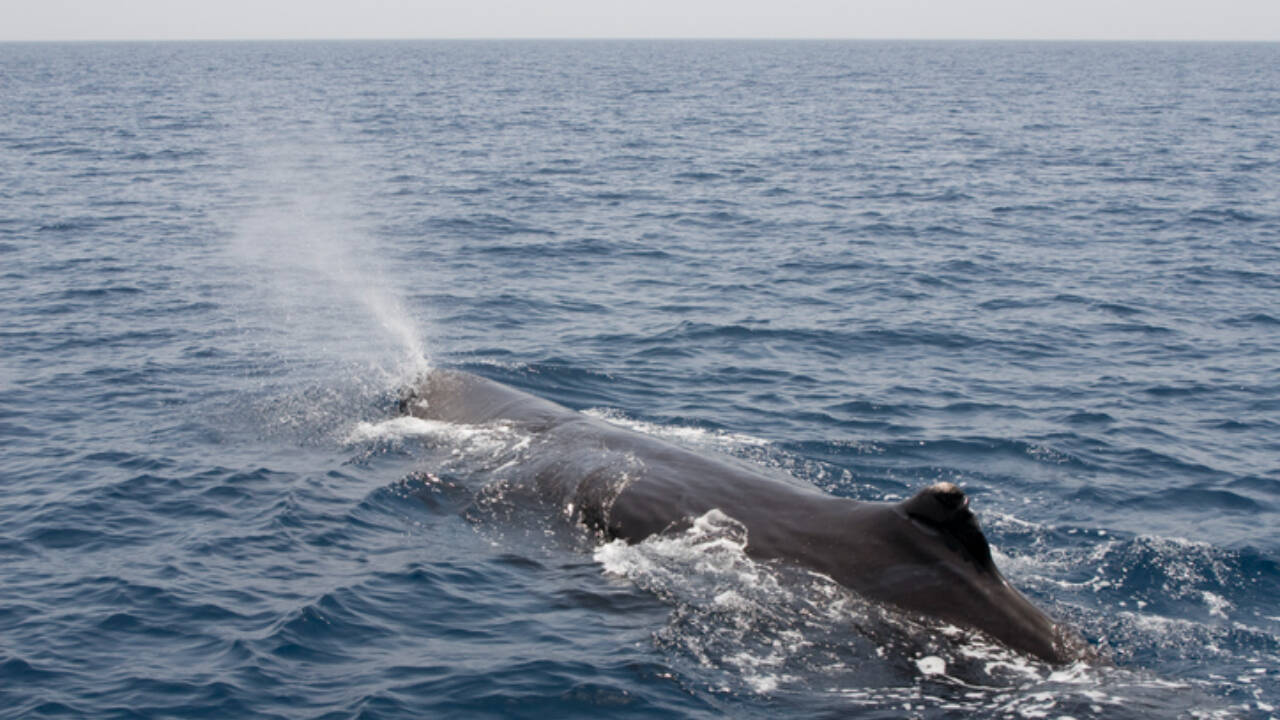
Sperm Whales Sleep Vertically, Releasing Bubbles to Regulate Buoyancy, Study Reveals
Translated from English, summarized and contextualized by DistantNews.
At a glance
News
Sources not specified
Context piece
- Scientists have discovered that sperm whales sleep vertically, a unique behavior among whale species.
- They use a mechanism of releasing gas bubbles to regulate buoyancy while resting near the surface.
- Research using suction-cup tags provided rare insights into this behavior and the whales' physiology.
Sperm whales possess a remarkable and little-understood resting mechanism, sleeping vertically in the water column, a behavior unique among known whale species. Researchers from the University of St Andrews and Université de Neuchâtel have shed new light on this extraordinary phenomenon, offering a rare glimpse into the lives of these intelligent marine giants.
Unlike most marine mammals, sperm whales adopt an upright posture when they sleep, remaining almost motionless just below the ocean's surface. This unusual sleeping position offers several advantages. It allows the whales to remain close to the surface for easy breathing upon waking and may help them avoid being disturbed by ocean waves. Additionally, it could conserve energy by preventing them from drifting into deeper, colder waters.
The challenge for sperm whales lies in their natural buoyancy. Their large heads contain a spermaceti organ filled with a waxy substance that makes them positively buoyant, causing them to naturally float upwards. As deep-diving animals that hold their breath, the gases in their lungs change under varying pressures. To counteract the tendency to rise uncontrollably as gases expand near the surface, sperm whales release small amounts of gas in the form of bubbles. This controlled release helps them maintain a near-weightless suspension in the water.
Scientists gathered crucial data by attaching small, non-harmful suction-cup tags to sperm whales off the coast of Norway. These tags meticulously recorded the whales' movements and sounds, capturing distinct bubble-release sounds during the animals' rest periods. By correlating this acoustic information with movement data, researchers were able to confirm and detail this unique resting style, revealing a fascinating adaptation in the physiology and behavior of these magnificent creatures.
DistantNews Editorial
Originally published by Times of India in English. Translated, summarized, and contextualized by our editorial team with added local perspective. Read our editorial standards.
More Stories



From Our Blog

What Press Freedom Means for the News You Read

What Gets Lost (and Found) When News Is Translated

The Critical Role of Diaspora Media in Global News

What Travellers Should Know About Countries with Restricted Press

A Digital Nomad's Guide to Following Local News
