


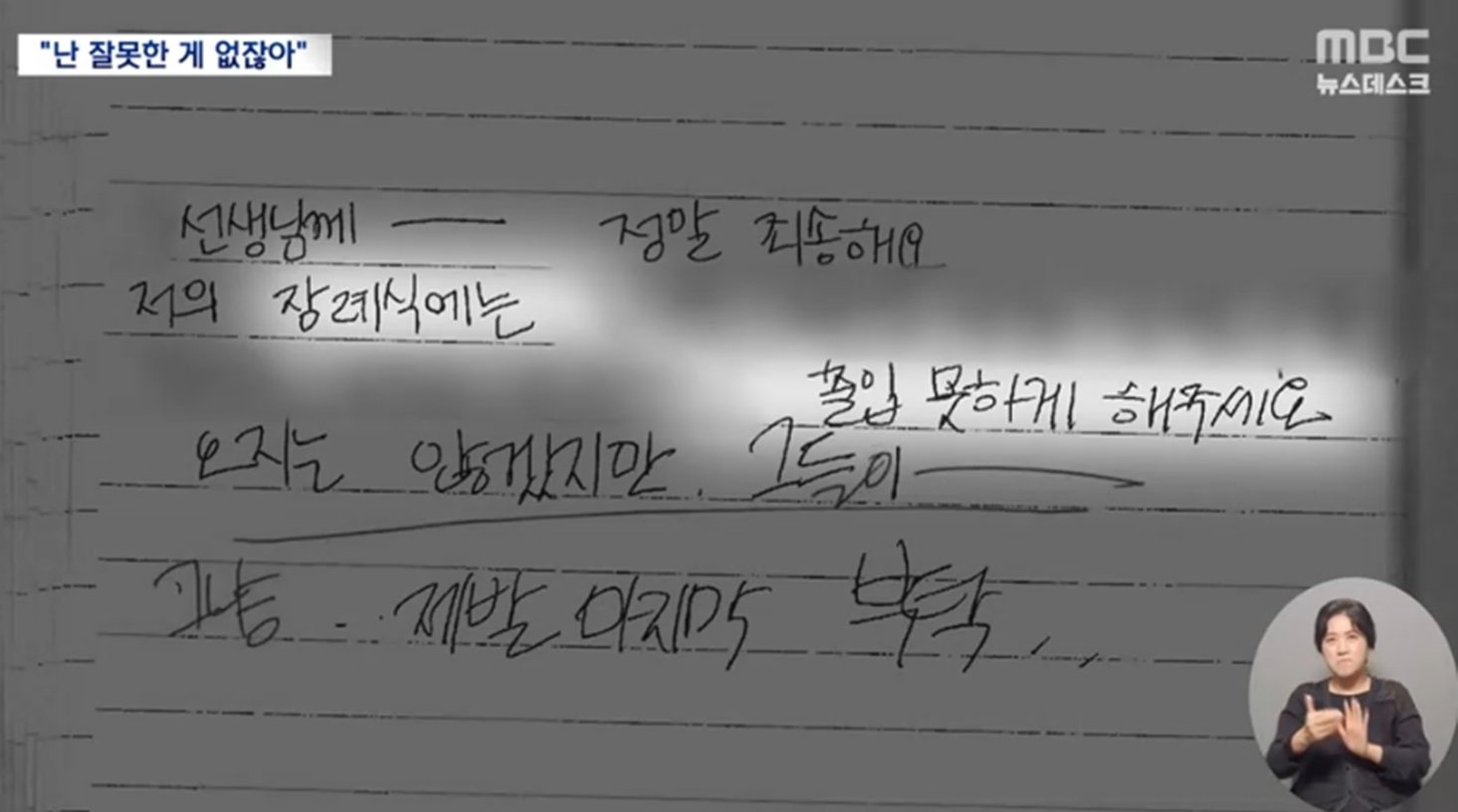
‘Staring and Burning’: Nurse’s Death at Gwangju Hospital Sparks New Abuse Allegations
Translated from Korean, summarized and contextualized by DistantNews.
At a glance
News
Named sources
Under investigation
- A 27-year-old nurse died after enduring severe workplace bullying, known as 'taeeum,' at a hospital in Gwangju, South Korea.
- Following public outrage and a presidential directive for strict action, another former nurse from the same hospital has come forward with similar allegations of abuse.
- The investigation into the nurse's death has intensified, with police forming a dedicated task force to address the systemic issues of workplace harassment in the medical field.
A 27-year-old nurse died after suffering extreme workplace bullying at a hospital in Gwangju, South Korea, a practice known locally as 'taeeum.' This term, translating to 'burning until the soul turns to ash,' describes a culture of harassment where senior nurses torment new staff. The tragic death of the nurse, identified as Kang Soo-bin, has ignited public anger and prompted a strong response from the government.
Taeeum is horrific violence that can never be justified.
President Lee Jae-myung condemned the bullying as 'unjustifiable and horrific violence' and ordered a swift and thorough investigation. In response, the police have established a special investigative team to delve into the circumstances surrounding Kang's death and the alleged systemic abuse within the hospital. This incident has brought the pervasive issue of workplace bullying in South Korea, particularly in demanding professions like nursing, into sharp national focus.
Adding to the outcry, another former nurse from the same Gwangju hospital has shared her own harrowing experiences. The 27-year-old, identified only as Kim, contacted MBC to report enduring similar 'taeeum' after joining the hospital's emergency room in June 2022. Kim detailed escalating abuse, including being ordered to clean up medical instruments scattered on the floor after making a mistake and being physically dragged into a CPR room for perceived 인사 (in-sa, or proper greetings).
When I made a mistake, the senior nurse would scatter medical instruments like needles on the floor and order me to clean them all up.
Kim's testimony suggests that Kang's case may not be an isolated incident, but rather indicative of a deeper, unresolved problem within the hospital's management and culture. The revelations have intensified calls for accountability and reform within the healthcare sector, aiming to prevent future tragedies and protect vulnerable employees from such toxic work environments.
She would drag me into the CPR room for not greeting her properly.
DistantNews Editorial
Originally published by Dong-A Ilbo in Korean. Translated, summarized, and contextualized by our editorial team with added local perspective. Read our editorial standards.
More Stories


From Our Blog

What Gets Lost (and Found) When News Is Translated

The Critical Role of Diaspora Media in Global News

What Travellers Should Know About Countries with Restricted Press

A Digital Nomad's Guide to Following Local News

How the Same Story Looks Different in Different Countries
