


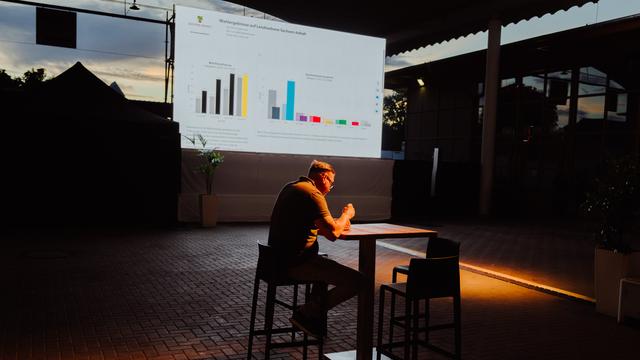

State election leaves Saxony-Anhalt facing a maze of unanswered questions
Translated from German and summarized by DistantNews. Read the original for the full story.
At a glance
Explainer
Named sources
Ongoing story
- The AfD won nearly 44% of the vote in Saxony-Anhalt but lacks enough seats to govern alone.
- A CDU-led government opposing the AfD would require cooperation among the CDU, SPD, Greens, Left and Sahra Wagenknecht Alliance, an arrangement the article describes as highly unlikely.
- AfD leader Ulrich Siegmund still claims a mandate to govern, while speculation continues about defections from the CDU and possible support from the BSW.
Saxony-Anhalt's voters have made the AfD the clear winner, but they have not produced a clear government. The party took nearly 44% of the vote, yet that was not enough for an outright majority in the state parliament.
The CDU of Minister-President Sven Schulze won just over 17%. The Left, Greens and Social Democrats each stood at around 9%, while the Sahra Wagenknecht Alliance narrowly entered parliament with just over 5%. The FDP failed to win seats.
Are there individual lawmakers who could make this possible?
A government led by the CDU and formed against the AfD would require all the other parties to cooperate, from the CDU through the SPD, Greens, Left and BSW. Such a five-party arrangement would be highly unusual and extremely complicated. The CDU has already ruled out cooperation with both the Left and the AfD through party congress resolutions. The Left says it could support informal cooperation, but only in return for substantive concessions. The BSW, meanwhile, campaigned on the promise of bringing down the CDU.
Is there a party somewhere that will bring about a change of course?
AfD top candidate Ulrich Siegmund continues to argue that his party has received the mandate to govern. He said on election night that he currently saw no natural partner for addressing fundamental issues such as migration policy, but suggested that individual politicians or parties might reconsider their positions in the coming days. He asked: "Are there individual lawmakers who could make this possible?" and "Is there a party somewhere that will bring about a change of course?"
Rumors have circulated for months about CDU state lawmakers possibly defecting to the AfD. Some AfD politicians claim talks have taken place, but they have provided no names or evidence. Siegmund has dismissed the BSW as unstable and said it is part of the problem, not the solution, after BSW founder Sahra Wagenknecht suggested her party might help an AfD minister-president take office by abstaining in the decisive vote. AfD federal leader Tino Chrupalla raised the possibility of a minority government supported by the BSW, though the supplied article ends before that proposal is developed.
part of the problem, not the solution
About this summary
Originally published by Die Zeit in German. Translated, summarized, and contextualized automatically by DistantNews, with a note on how the source frames the story. Not individually reviewed before publishing. How this works.
More Stories
From Our Blog

News in Translation: What Gets Lost, and How We Keep the Framing

The Same Story, Different Countries: How Coverage Changes at the Border

Diaspora Media: How Communities Follow News From Home

Traveling Where the Press Is Not Free: How to Read the News There

The Digital Nomad's Guide to Local News
