


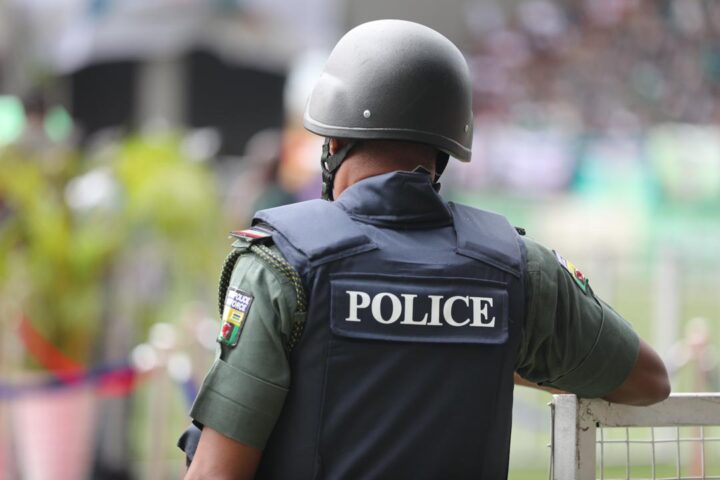
State police establishment overdue amid Nigeria's security crisis
Translated from English, summarized and contextualized by DistantNews.
At a glance
News
Sources not specified
Context piece
- Nigeria's security crisis fuels calls for state police, a model common in federal systems where states manage their own forces.
- Critics argue the federal police are underfunded and over-centralized, with states bearing most costs but lacking deployment control.
- Establishing state police is presented as a necessary, though not guaranteed, solution to widespread insecurity and the limitations of a single federal force.
Nigeria's escalating security challenges have intensified a long-standing debate over establishing state police forces. The current federal police system, established in 1930, struggles to serve a population of approximately 250 million with only about 325,000 officers, falling significantly short of the UN's recommended ratio. This inadequacy is evident in the rise of kidnappings, terrorism, and banditry across the nation.
Should the federal government allow states to police themselves? It is one of the oldest arguments in Nigeria’s constitutional history and one of the most urgent.
Critics point to systemic issues within the Nigeria Police Force, including underfunding, nepotism, and an overly centralized command structure. Despite state governments reportedly covering around 70 percent of police costs, they lack authority over officer deployment. For instance, the Lagos State Security Trust Fund provided substantial funding for police vehicles and equipment, yet a former Plateau State police commissioner noted his command operated for eighteen months without federal support, relying entirely on the state.
The scale of insecurity makes a compelling case on its own.
The constitutional framework also contributes to the problem, placing the police under the President and Inspector-General, effectively sidelining governors who are constitutionally responsible for security within their states. Former Lagos Governor Babatunde Fashola argued that if states can manage their own courts and assemblies, extending this to law enforcement through state police is a logical progression.
Considering the country’s widespread insecurity, uneven federal funding, and a constitutional setup where many governors claim responsibility for security without actual authority, the idea of allowing states to police themselves is a notion Nigeria can no longer ignore.
Given Nigeria's vast scale, diversity, and persistent insecurity, the idea of allowing states to manage their own policing is gaining traction. While it remains uncertain if state police can entirely resolve the nation's security issues, the current situation makes it a notion Nigeria can no longer afford to ignore.
An underfunded, poorly equipped police force only emboldens criminals.
DistantNews Editorial
Originally published by Vanguard in English. Translated, summarized, and contextualized by our editorial team with added local perspective. Read our editorial standards.
More Stories



From Our Blog

How the Same Story Looks Different in Different Countries

What Gets Lost (and Found) When News Is Translated

The Critical Role of Diaspora Media in Global News

What Travellers Should Know About Countries with Restricted Press

A Digital Nomad's Guide to Following Local News
