

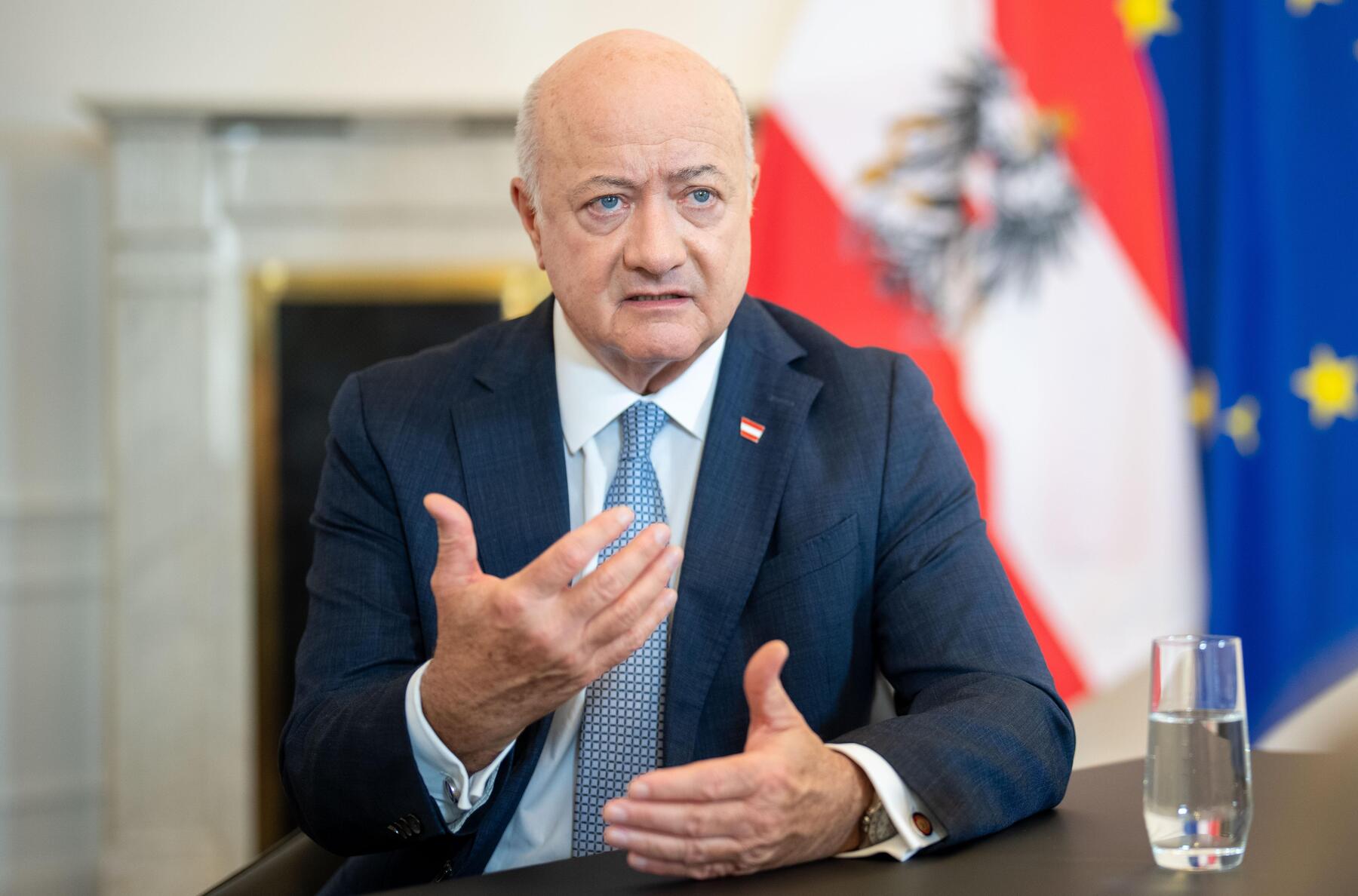
Stocker promises more money for insolvency compensation fund
Translated from German, summarized and contextualized by DistantNews.
At a glance
News
From a news agency
New plan
- Austrian Chancellor Christian Stocker promises a solution for a funding gap in the insolvency compensation fund.
- The gap, expected to reach 160 million euros in 2027, requires clarification on whether it stems from systemic issues or post-COVID effects.
- Proposals to use reserve funds from chambers of commerce were rejected by worker representatives and unions, who advocate for increased employer contributions.
Austrian Chancellor Christian Stocker has pledged to address a significant funding shortfall in the insolvency compensation fund, which safeguards employees' claims like wages and severance pay.
The gap is not yet clear to me.
However, Stocker emphasized the need to first determine the cause of the gap. He stated that it remains unclear whether the deficit is a result of systemic problems or lingering effects from the COVID-19 pandemic. The solution will depend on this determination.
There is a lot of money here.
The insolvency fund is financed by employers through a surcharge on unemployment insurance. A projected shortfall of 160 million euros for 2027 has prompted debate on how to cover it. Options include the responsible Social Minister taking out loans or increasing the surcharge, a move opposed by the conservative ÖVP and NEOS parties due to concerns about rising non-wage labor costs.
The absurd demand.
State Secretary Josef Schellhorn (NEOS) suggested tapping into the substantial reserves held by the chambers of commerce, a proposal swiftly rejected by the Chamber of Labour (AK) as "absurd." Trade union PRO-GE chief Reinhold Binder also stated that employers should not shirk their responsibility. Meanwhile, Green Party social affairs spokesperson Markus Koza believes the solution is straightforward: increasing contributions to the fund, as indicated by the relevant law.
Employers must not shirk their responsibility.
DistantNews Editorial
Originally published by Die Presse in German. Translated, summarized, and contextualized by our editorial team with added local perspective. Read our editorial standards.
More Stories



From Our Blog

What Gets Lost (and Found) When News Is Translated

The Critical Role of Diaspora Media in Global News

What Travellers Should Know About Countries with Restricted Press

A Digital Nomad's Guide to Following Local News

How the Same Story Looks Different in Different Countries
