


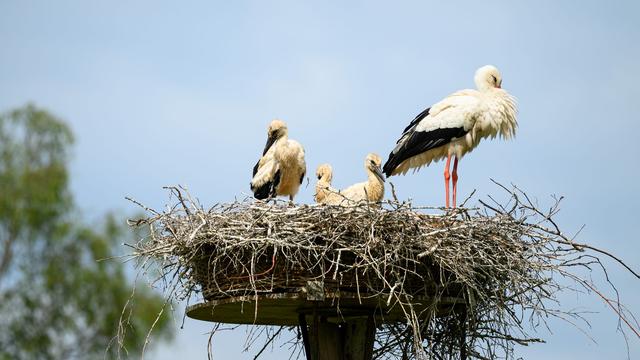
Stork Stronghold: Hamburg Heads for Record Stork Year
Translated from German, summarized and contextualized by DistantNews.
At a glance
News
Named sources
Context piece
- Hamburg is experiencing a record year for storks, with more breeding pairs than in any other major city.
- The city currently hosts 56 breeding pairs, with expectations that the number of young storks raised will surpass 2024's total of 113.
- The stork population has significantly increased from just eight pairs 50 years ago, attributed to the city's numerous ponds, meadows, and drainage ditches along the Elbe River.
Hamburg is on track for a record-breaking year for storks, solidifying its status as a major urban stronghold for the species. The city currently counts 56 breeding pairs, a number that has grown substantially from just eight pairs half a century ago. Conservationists anticipate that the number of young storks successfully raised this season will exceed last year's total of 113 fledglings. Jürgen Pelch, a stork caretaker for the Naturschutzbund (Nabu) Hamburg, expressed optimism that the results this year will be "record-breaking." The favorable conditions along the Elbe River, characterized by abundant ponds, moist meadows, and an extensive network of drainage ditches, contribute to the storks' well-being. These features ensure adequate water supply, both for drainage and irrigation, benefiting the storks and their prey, which include frogs, mice, and moles. Pelch, who has dedicated 50 years to volunteer stork monitoring in Hamburg, is now engaged in counting the young birds, a process that will culminate in an official report by the environmental authorities, Nabu, and himself in mid-to-late July.
The results should be record-breaking this year.
DistantNews Editorial
Originally published by Die Zeit in German. Translated, summarized, and contextualized by our editorial team with added local perspective. Read our editorial standards.
More Stories


From Our Blog

What Gets Lost (and Found) When News Is Translated

How the Same Story Looks Different in Different Countries

The Critical Role of Diaspora Media in Global News

What Travellers Should Know About Countries with Restricted Press

A Digital Nomad's Guide to Following Local News
