

/nginx/o/2026/07/19/17793483t1he5b5.jpg)
/nginx/o/2026/05/20/17651481t1hae55.jpg)
Study Questions Tick Increase in Tall Urban Grass; Fish Named Oldest Estonian Food
Translated from Estonian, summarized and contextualized by DistantNews.
At a glance
News
Named sources
Context piece
- A study in Tartu found no clear link between tall grass and higher tick populations in urban green spaces.
- The research challenges the common assumption that longer grass harbors more ticks.
- Separately, an expert identified fish as the oldest "true" Estonian food, predating traditional staples like dark rye bread.
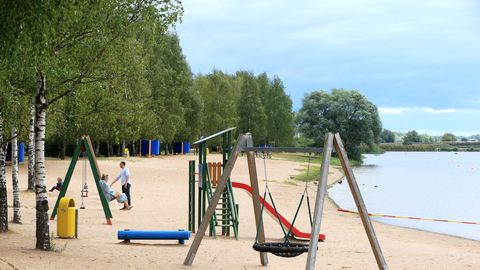
Urban green areas managed with less frequent mowing, intended to support biodiversity, do not necessarily harbor more ticks, according to a small study conducted in Tartu. While it is often claimed that tall grass hosts a greater number of ticks, research by Tartu University scientists on several green areas in the city found no clear positive correlation between tick abundance and grass height.
This finding challenges the widely held belief, frequently cited in scientific literature, journalism, and health advice, that longer grass directly leads to a higher tick population. The study's results suggest that the relationship is not a simple linear one.
See on teada-tuntud fakt, et teravilja tulek tõi kaasa hambahaigused. Nii et kala on kindlasti üks päris Eesti toite.
In a separate finding, Professor Ester Oras from Tartu University's archaeochemistry department identified fish as the oldest "true" Estonian food. She explained that fish consumption is evident throughout all historical periods in Estonia, and skeletal remains indicate that early hunter-fisher communities who relied heavily on fish were in better physical condition and suffered fewer dental problems compared to later populations that adopted grain-based diets.
Oras also noted that while dark rye bread is traditionally considered a staple, rye itself is a relatively recent addition to the Estonian diet. Wheat and barley were consumed in the region for a thousand years prior to rye's introduction. Therefore, barley flatbread and white bread have deeper historical roots in Estonian cuisine than black bread, from a strictly historical perspective.
Tegelikult on rukis meie toidulaual üsna hiline lisandus – juba tuhat aastat varem söödi meie aladel nisu ja otra, nii et rangelt ajaloolises mõttes on odrakarask ja valge sai meie juurtes palju sügavamal kui must leib.
DistantNews Editorial
Originally published by Postimees in Estonian. Translated, summarized, and contextualized by our editorial team with added local perspective. Read our editorial standards.
More Stories
/nginx/o/2026/07/16/17786791t1h71e5.jpg)
From Our Blog

What Gets Lost (and Found) When News Is Translated

The Critical Role of Diaspora Media in Global News

What Travellers Should Know About Countries with Restricted Press

A Digital Nomad's Guide to Following Local News

How the Same Story Looks Different in Different Countries
