

Suddenly more than 50,000 migrants in Ceuta. How? 'The wildest theories are circulating'
Translated from Dutch, summarized and contextualized by DistantNews.
At a glance
News
Sources not specified
Context piece
- Over 50,000 migrants suddenly appeared in Ceuta, prompting widespread speculation about how this occurred.
- Wild theories are circulating regarding the rapid and large-scale arrival of migrants.
- The situation has raised questions about border control and the coordination of migration flows into the Spanish enclave.
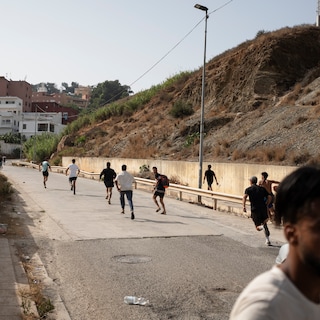
Ceuta experienced an unprecedented and sudden influx of over 50,000 migrants, a dramatic event that has left authorities and observers searching for explanations. The sheer scale and speed of this migration wave have fueled a torrent of speculation, with the wildest theories now circulating about how such a large number of people managed to reach the Spanish enclave.
The rapid arrival has overwhelmed local resources and prompted urgent responses from both Spanish and European authorities. Questions are being raised about border security vulnerabilities and the potential for organized movements that could facilitate such large-scale crossings. The situation in Ceuta has quickly become a focal point for discussions on migration policy and border management in the region.
While official investigations are likely underway, the public discourse is rife with conjecture, ranging from intelligence failures to sophisticated smuggling operations. The lack of immediate, clear answers has allowed a vacuum to be filled by various hypotheses, highlighting the complex and often opaque nature of irregular migration flows. The event serves as a stark reminder of the pressures at Europe's southern borders and the challenges in predicting and managing sudden demographic shifts.
DistantNews Editorial
Originally published by De Volkskrant in Dutch. Translated, summarized, and contextualized by our editorial team with added local perspective. Read our editorial standards.
More Stories
/s3/static.nrc.nl/wp-content/uploads/2026/07/27105745/280726BIN_2035499902_dibi.jpg)


From Our Blog

What Gets Lost (and Found) When News Is Translated

The Critical Role of Diaspora Media in Global News

What Travellers Should Know About Countries with Restricted Press

A Digital Nomad's Guide to Following Local News

How the Same Story Looks Different in Different Countries
