


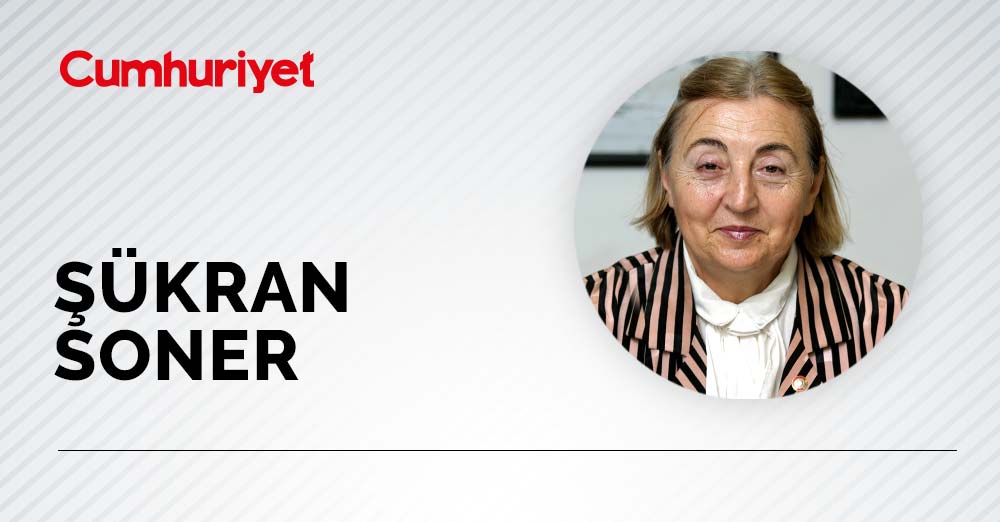
Şükran Abla, a peer to us all
Translated from Turkish and summarized by DistantNews. Read the original for the full story.
At a glance
In-depth
Named sources
Outcome reported
- Cumhuriyet colleagues remember Şükran Soner as both a trusted elder and a peer who put the newspaper’s survival first.
- The article highlights her reporting on radiation in Turkey’s Black Sea region after the Chernobyl disaster, published despite official denial and censorship.
- It also recalls her lifelong advocacy for labor, justice and those affected by repression.
Şükran Soner was everyone’s sister at Cumhuriyet, but she was also everyone’s peer. Colleagues turned to her as an elder they could consult and as someone their own age with whom they could discuss anything. Through every phase of the newspaper’s history, they say, she put Cumhuriyet and its survival first. In tense moments, she was one of the few people who could speak with everyone and listen patiently to every grievance.
Her family was never far from the conversation. While discussing the newspaper or Turkey’s problems, she would somehow bring up her son Devrim, her daughter-in-law Natali and her grandchildren, Onur and Erdem. These were the moments when her face lit up. She had also played a role in Natali becoming a Turkish citizen who spoke the language well.
The article recalls meeting journalist Şükran Ketenci in 1986, when she published a major series on the Chernobyl disaster. The Soviet Union had not yet collapsed, and the explosion at the nuclear plant in Ukraine had been concealed. As evidence of the environmental catastrophe spread across Ukraine, Eastern Europe, the Black Sea and beyond, Turkey resisted acknowledging the danger.
Radiation tea is also very delicious!
Official and semi-official claims suggested that weather conditions had protected Turkey and that contrary winds had kept the radiation away from the Black Sea. Industry Minister Cahit Aral sought to dispel public doubts by drinking tea before journalists and declaring, “Radiation tea is also very delicious!”
In that atmosphere, Cumhuriyet reporter Şükran Ketenci traveled through Black Sea villages, mountains and cities. Her series carried the headline “The Black Sea in the radiation belt!” It reported rising cancer cases in the region, and the article says no one could disprove it. Other publications later began reporting the reality, citing her series as an initial source.
The piece also recalls her support for labor, people seeking justice in coup courts and the newspaper’s broader struggle. When the writer last visited her office, its walls displayed photographs from farewell ceremonies for figures in Cumhuriyet and Turkey’s Enlightenment movement. Posters and newspaper front pages filled the space, while the desk had become an archive. Her final contributions included articles and interviews for Cumhuriyet television.
The Black Sea in the radiation belt!
About this summary
Originally published by Cumhuriyet in Turkish. Translated, summarized, and contextualized automatically by DistantNews, with a note on how the source frames the story. Not individually reviewed before publishing. How this works.
More Stories
From Our Blog

News in Translation: What Gets Lost, and How We Keep the Framing

Diaspora Media: How Communities Follow News From Home

Traveling Where the Press Is Not Free: How to Read the News There

The Digital Nomad's Guide to Local News

The Same Story, Different Countries: How Coverage Changes at the Border
