

Sumatran tiger captured after village incursions
Translated from German, summarized and contextualized by DistantNews.
At a glance
News
Named sources
Outcome reported
- A Sumatran tiger that repeatedly entered a village on the Indonesian island, preying on livestock, was captured by authorities.
- The rare animal was lured into a cage trap using a goat carcass and was safely removed by the conservation agency.
- The tiger, estimated to be 2.5 to 3 years old, will be relocated to a zoo temporarily while experts search for a suitable area for its eventual release back into the wild.
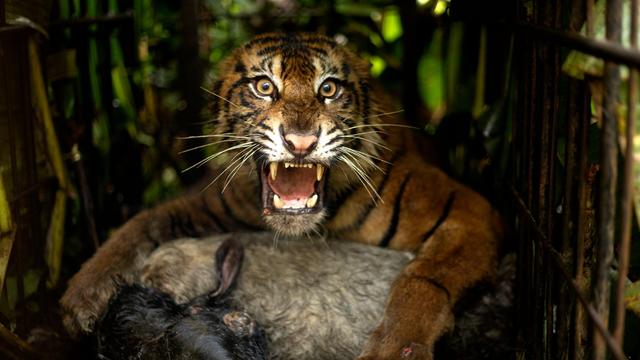
A young Sumatran tiger that had been causing a stir in a village on the Indonesian island of Sumatra has been safely captured. The rare animal had repeatedly ventured into residential areas, killing goats and reportedly preying on dogs.
Authorities from the BKSDA in West Sumatra set up a trap, using a goat carcass as bait. Within an hour, residents heard the trap spring shut. Upon investigation with conservation officials, they found the tiger secured inside the cage trap.
Residents and officials kept watch overnight before the tiger was transported away the following morning. The tiger, estimated to be between two and a half and three years old, had been observed as close as 50 meters from a primary school and 100 meters from a secondary school, prompting the relocation for the safety of both the public and the animal.
The Sumatran tiger (Panthera tigris sumatrae) is the smallest living tiger subspecies and is strictly protected under Indonesian and international law. With only an estimated 400 individuals remaining in the wild, they are listed as critically endangered by the IUCN. Habitat loss frequently leads to conflicts between tigers and humans, as seen in July when a 63-year-old coffee farmer was killed and partially eaten by a Sumatran tiger.
The captured tiger was found to be unharmed and in good health. Veterinarians collected blood samples for DNA testing. The animal has been moved to a zoo while experts identify a suitable location for its eventual reintroduction into its natural habitat.
It was necessary to relocate the tiger for the protection of the population and the animal, even if this is always a last resort.
DistantNews Editorial
Originally published by Die Zeit in German. Translated, summarized, and contextualized by our editorial team with added local perspective. Read our editorial standards.
More Stories



From Our Blog

What Gets Lost (and Found) When News Is Translated

How the Same Story Looks Different in Different Countries

The Critical Role of Diaspora Media in Global News

What Travellers Should Know About Countries with Restricted Press

A Digital Nomad's Guide to Following Local News
