

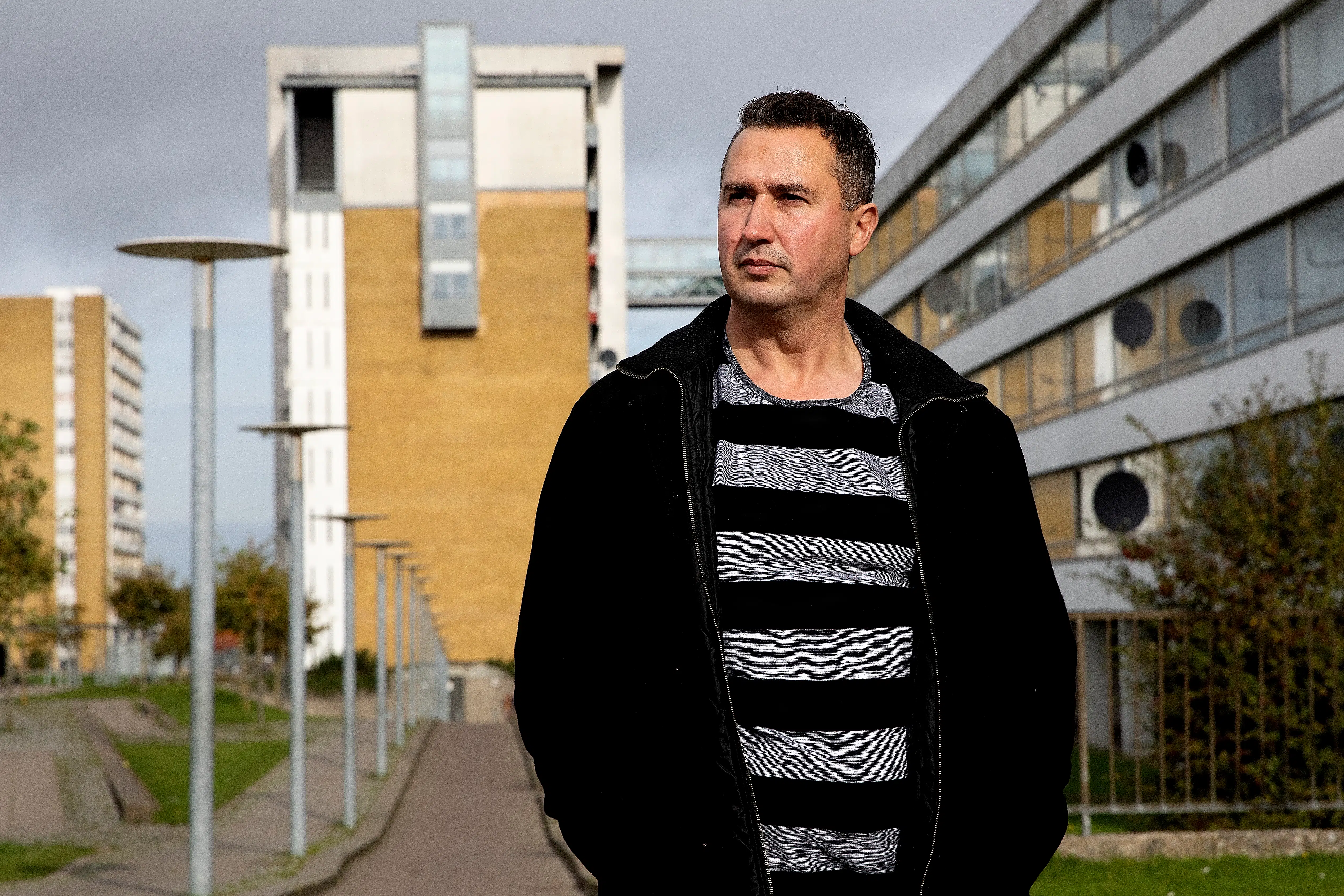

Supreme Court Rejects Appeals in Landmark Fake Invoice Case
Translated from Danish, summarized and contextualized by DistantNews.
At a glance
News
Official statement
Outcome reported
- The Danish Supreme Court has rejected appeals from individuals convicted in a major fake invoice case.
- The case involved the creation of 5,747 fake invoices totaling over half a billion Danish kroner.
- The scheme aimed to evade nearly 300 million kroner in taxes, VAT, and labor contributions.
The Danish Supreme Court has delivered a final blow to those convicted in what is described as the largest-ever case involving fake invoices. Appeals to the Supreme Court by several convicted individuals have been denied, upholding the Østre Landsret's (Eastern High Court) ruling from May 5.
The case, initially known as Operation Greed and later renamed the 'invoice case,' spanned over 100 court sessions in both lower and high courts. It centered on the creation of 5,747 fraudulent invoices with a total value exceeding 531 million Danish kroner. This elaborate scheme was used to evade approximately 300 million kroner in taxes, VAT, and labor contributions, generating a criminal profit of about 46.6 million kroner.
Prosecutors characterized the operation as "society-undermining crime in a cynical business model." Naveed Anwar, 52, was identified as the mastermind behind the invoice factory and received a seven-year prison sentence. His younger brother, Usman Ali Anwar, who collaborated closely with him, was sentenced to six years and six months and faces deportation from Denmark after residing there for over 30 years. The invoices were primarily generated from an office container located near A-Hotels in Brøndby.
The network supplied invoices to around 850 companies that had engaged in undeclared work. Among the key figures, Tasawar Hussein, 55, received a six-year sentence and was ordered to pay 175 million kroner in additional fines, a penalty also imposed on Usman Ali Anwar. Tepu Islam Ashraf, another central figure, was sentenced to five years and six months in prison.
While one of the 13 defendants was acquitted by the high court after being sentenced to two years in the lower court, the majority of the Eastern High Court's verdicts were upheld. A separate group of four individuals was responsible for laundering millions of kroner through exchange offices near Vesterport in Copenhagen. Mohammad Arshad, 68, handled the exchange of 389 million kroner and received a sentence of three years and 11 months. Shadzad Iqbal and Mohammad Akbar Aslam received identical sentences for their roles, while Mikkel Skelskov was sentenced to two years. The criminal activities were conducted through companies like Angel's Mannpower and Soendergren Entreprise, with individuals from Spain and Lithuania used as straw directors. The real estate company S. A. Aps., formerly Anwar Properties, provided addresses for the illicit operations and was fined 65 million kroner. The network's sales team, responsible for connecting with clients, included Idris Ibrahim Idris, Asif Bashir, and Amir Mohammad Abbas, with the latter two receiving sentences of three and six months respectively.
society-undermining crime in a cynical business model
DistantNews Editorial
Originally published by Berlingske in Danish. Translated, summarized, and contextualized by our editorial team with added local perspective. Read our editorial standards.
More Stories


From Our Blog

What Gets Lost (and Found) When News Is Translated

The Critical Role of Diaspora Media in Global News

What Travellers Should Know About Countries with Restricted Press

A Digital Nomad's Guide to Following Local News

How the Same Story Looks Different in Different Countries
