


Surprise discovery: Ranch call leads to ancient forest preserved for 50 million years
Translated from Spanish, summarized and contextualized by DistantNews.
At a glance
News
Named sources
Outcome reported
- Paleontologists discovered a petrified forest with 13 fossilized tree trunks dating back approximately 50 million years in Patagonia, Argentina.
- The discovery was made after a report from a local ranch owner near Pilcaniyeu.
- The fossilized remains offer insights into the warmer, wetter Eocene-era ecosystems that once existed in the region, contrasting with its current arid landscape.
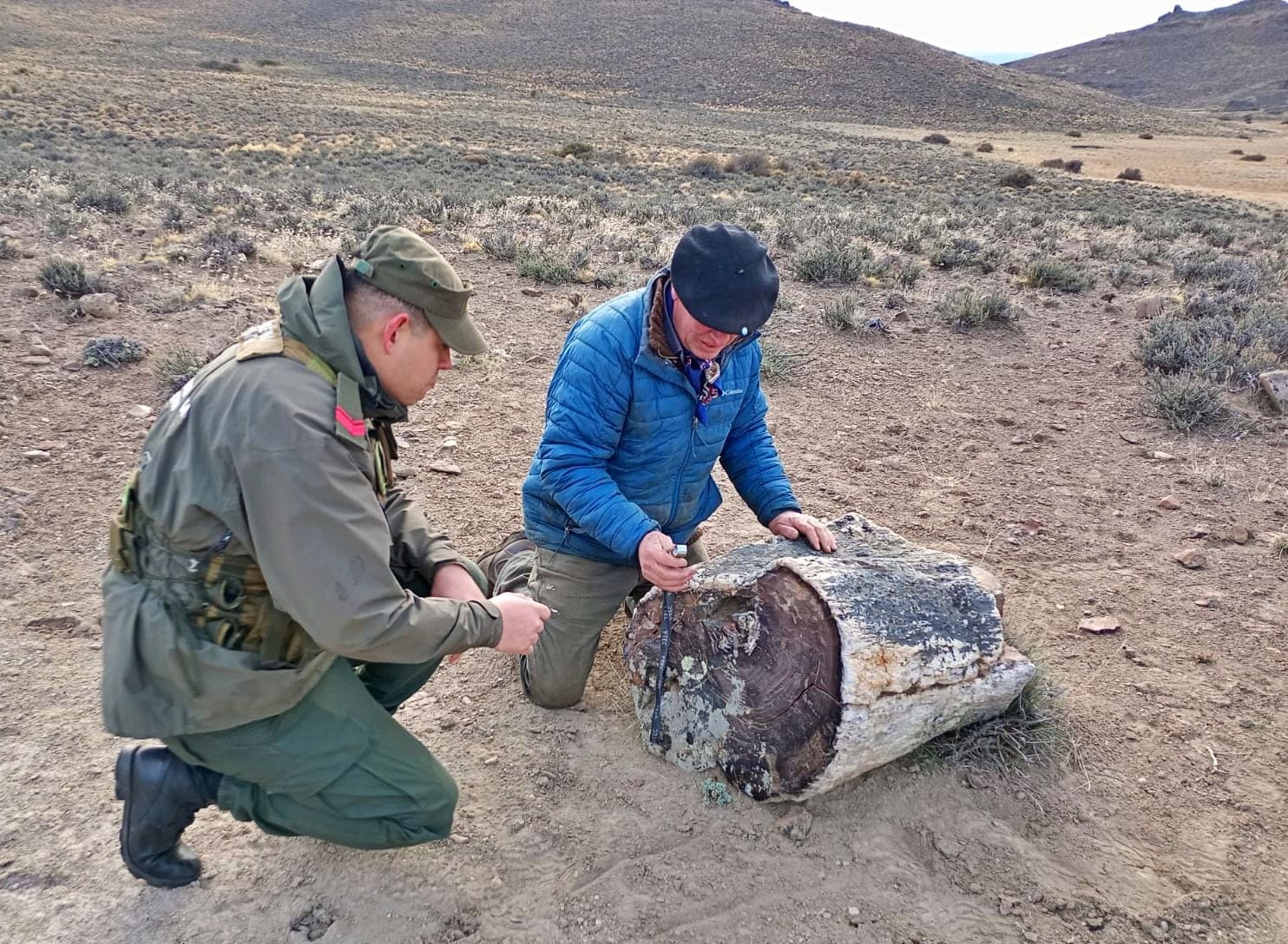
A remarkable discovery in Argentina's Patagonia region has unearthed a petrified forest containing 13 fossilized tree trunks, estimated to be around 50 million years old. The find occurred on a ranch near Pilcaniyeu, an area known for its arid landscape, revealing a stark contrast to the region's ancient past.
The discovery stemmed from a report by a local ranch owner about potential fossilized remains. Specialists from the Paleontological Association of Bariloche, assisted by the National Gendarmerie's environmental patrol, investigated the site. With the property owner's permission, researchers confirmed the presence of fossilized conifer and angiosperm trunks.
Preliminary analysis indicates the fossils date back to the Eocene epoch (approximately 56 to 34 million years ago). During this period, Patagonia experienced significantly warmer and wetter climates, supporting extensive forests unlike its present-day steppe environment. These fossilized remnants provide a valuable window into the region's lost ecosystems and offer new avenues for research into Patagonia's environmental evolution.
Experts believe studying these ancient species could illuminate the environmental transition between Patagonia's mountainous sectors and its plains. The discovery site's location, where mountains and basalt plateaus converge, is particularly significant for analyzing ecosystems that developed in a complex and dynamic geographical setting. The preservation of these trunks over millions of years is attributed to rapid burial by sediments, a geological process crucial for fossilization.
DistantNews Editorial
Originally published by La Nación in Spanish. Translated, summarized, and contextualized by our editorial team with added local perspective. Read our editorial standards.
More Stories


From Our Blog

What Gets Lost (and Found) When News Is Translated

The Critical Role of Diaspora Media in Global News

What Travellers Should Know About Countries with Restricted Press

A Digital Nomad's Guide to Following Local News

How the Same Story Looks Different in Different Countries
