


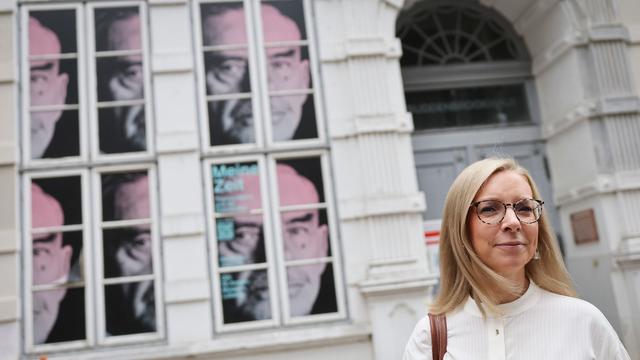

Sven Regener says he does not long for the 1980s
Translated from German and summarized by DistantNews. Read the original for the full story.
At a glance
Newswire
From a news agency
Context piece
- Sven Regener’s new novel, “Frankie and Freddie,” is set in Kreuzberg on the day before Christmas Eve in 1980.
- The author says he does not long for the 1980s, which he describes as a vanished world.
- Regener says Kreuzberg has become more tourist-oriented and English-speaking, while warning that globally mobile wealth can leave neighborhoods empty and depopulated.
Sven Regener keeps returning to 1980s Berlin in his writing, but he has no desire to return there himself. “No, I do not long for the 1980s at all. It really is a vanished world,” the 65-year-old writer and musician told the German Press Agency.
No, I do not long for the 1980s at all. It really is a vanished world.
His new novel, “Frankie and Freddie,” is set on the day before Christmas Eve in 1980, especially in the rougher SO36 area of Kreuzberg. Regener no longer lives there, but he still visits the neighborhood and recognizes parts of it. At the same time, he says a city must keep changing, or it would become a museum village.
Most of the clubs and pubs that once defined SO36 have disappeared. Regener notes that the same could be said of the neighborhood in the early 1980s when people looked back 20 years. The Madonna Bar, which inspired the Café Einfall in his novels, still exists, he says, while Kreuzberg has become more tourist-oriented and more English is spoken there.
A city changes constantly. Otherwise it would be more like a museum village.
Regener, who is also the singer and trumpeter of Element of Crime, is not especially troubled by every aspect of gentrification if people still live in the neighborhood. What concerns him more is the spread of global capital that leaves apartments empty for most of the year. He says this can cause entire districts to decline, alongside the displacement of residents.
This kind of money flowing around the world causes entire neighborhoods to become deserted, quite apart from the displacement of people.
About this summary
Originally published by Die Zeit in German. Translated, summarized, and contextualized automatically by DistantNews, with a note on how the source frames the story. Not individually reviewed before publishing. How this works.
More Stories


From Our Blog

News in Translation: What Gets Lost, and How We Keep the Framing

The Same Story, Different Countries: How Coverage Changes at the Border

Diaspora Media: How Communities Follow News From Home

Traveling Where the Press Is Not Free: How to Read the News There

The Digital Nomad's Guide to Local News
