


Switzerland's Penalty Heroes: Kobel and Vargas, Stars Who Came From Other Sports, Face Argentina Next
Translated from Spanish, summarized and contextualized by DistantNews.
At a glance
In-depth
Named sources
Outcome reported
- Switzerland defeated Colombia on penalties to advance to the World Cup quarterfinals, denying a potential South American clash with Argentina.
- Key figures in the victory were goalkeeper Gregor Kobel, who made a crucial save, and forward Rubén Vargas, who scored the decisive penalty.
- Both players, despite no prior connection, share a past where they initially showed disinterest in football, pursuing other sports before finding their path in the sport.
Switzerland's improbable journey to the World Cup quarterfinals, a feat not achieved in 72 years, was spearheaded by two unlikely heroes: goalkeeper Gregor Kobel and forward Rubén Vargas. Their decisive contributions in a penalty shootout against Colombia secured their advancement, thwarting a highly anticipated South American showdown between Argentina and Colombia. The victory, however, is underscored by the unique pasts of these two stars, who found their way to football after exploring other athletic avenues.
Probably, he saw that he didn't have that much talent in other sports and ended up choosing football.
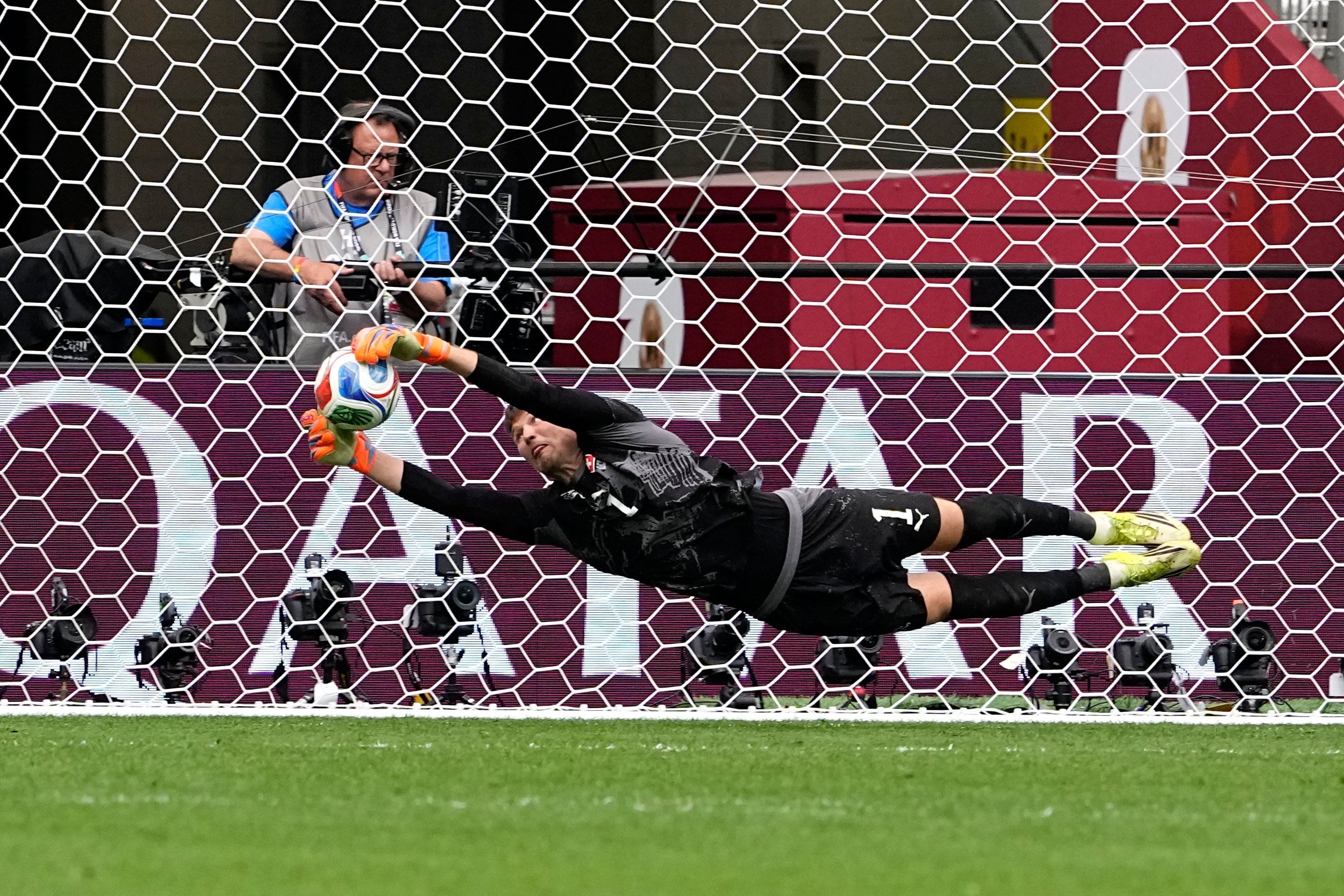
Gregor Kobel, the towering 1.96-meter goalkeeper for Borussia Dortmund, became the focal point when he leaped to his right to deny Juan Camilo Hernández's penalty. This pivotal save, coming after a Colombian miss and a Swiss equalizer in the shootout, significantly dampened the spirits of the South American side and set the stage for Vargas to seal the win. Kobel's father, Peter, a former professional ice hockey player, revealed that Gregor's initial sporting dreams involved ice skating. "Probably, he saw that he didn't have that much talent in other sports and ended up choosing football," his father stated, hinting at a natural aptitude that eventually steered him toward the goal.
Rubén Vargas, whose full name is Rubén Estephan Vargas Martínez, also has roots in a different sport, influenced by his Dominican father, Víctor Vargas. Víctor, who immigrated to Switzerland, was a baseball enthusiast, and Rubén initially followed suit, even being nicknamed "Filete" for his lean build. Vargas himself acknowledged early struggles due to his smaller stature compared to his peers. "I was always smaller and, as a child, I had some tough times because the others were stronger, bigger, and that's why I didn't play much," he once recalled. Yet, he now proudly asserts, "I have the southern blood and the quick legs of my father," embodying the attitude, humility, and speed that make him a threat.
I was always smaller and, as a child, I had some tough times because the others were stronger, bigger, and that's why I didn't play much.
Despite their shared success and national representation, Kobel and Vargas have no familial ties, did not study together, and had not played for the same club until joining the Swiss national team. Kobel was born in Zurich in December 1997, while Vargas hails from Adligenswil, Lucerne, born in August 1998. Their paths converged through football, a sport they might not have pursued had their early inclinations persisted. Kobel's goalkeeping technique, for instance, was influenced by observing how ice hockey goalies defended their nets, a skill he adapted to the football pitch. Vargas, on the other hand, found his passion for football at school, a stark contrast to his father's baseball legacy. Their individual journeys, marked by detours into other sports, ultimately converged to bring Switzerland to the World Cup quarterfinals.
I have the southern blood and the quick legs of my father.
DistantNews Editorial
Originally published by La Nación in Spanish. Translated, summarized, and contextualized by our editorial team with added local perspective. Read our editorial standards.
More Stories


From Our Blog

What Gets Lost (and Found) When News Is Translated

The Critical Role of Diaspora Media in Global News

What Travellers Should Know About Countries with Restricted Press

A Digital Nomad's Guide to Following Local News

How the Same Story Looks Different in Different Countries
