

T-MEC negotiations enter key stage, Mexico tells Congress
Translated from Spanish, summarized and contextualized by DistantNews.
At a glance
News
Official statement
Ongoing story
- Mexico and the United States are in a key stage of T-MEC negotiations, with pending issues reduced from 54 to 14.
- A new round of talks is scheduled for July 20 to define next steps and address priority issues.
- Key U.S. concerns include manufacturing job losses and trade deficits, while Mexico seeks to boost regional production and reduce Asian import dependency.
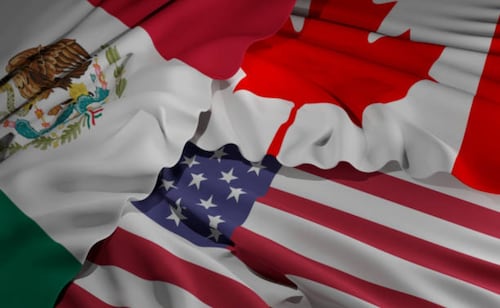
Mexico's government has informed Congress that negotiations over the Mexico-United States-Canada Agreement (T-MEC) have reached a critical phase. The number of outstanding issues has significantly decreased from 54 to 14.
A new round of working meetings is set for July 20, aiming to advance discussions on the remaining topics. The Ministry of Economy stated that this bilateral meeting will focus on defining the path forward, addressing prioritized concerns from both nations, and reporting on progress.
U.S. concerns primarily revolve around the loss of manufacturing jobs, reliance on supply chains from third countries, the trade deficit, rules of origin, and economic security. However, Mexico's government proposes a regional strategy to bolster North American production and lessen dependence on Asian imports.
Mexico has presented 13 points of its own, including the elimination of U.S. Section 232 tariffs on strategic industries like steel, aluminum, and automotive sectors. The administration aims to remove these tariffs to enhance regional competitiveness and investment certainty. Mexico also plans to promote investments in strategic sectors such as semiconductors, pharmaceuticals, and electronics to increase North American production capacity and reduce critical import dependencies.
DistantNews Editorial
Originally published by El Universal in Spanish. Translated, summarized, and contextualized by our editorial team with added local perspective. Read our editorial standards.
More Stories


From Our Blog

What Press Freedom Means for the News You Read

What Gets Lost (and Found) When News Is Translated

The Critical Role of Diaspora Media in Global News

What Travellers Should Know About Countries with Restricted Press

A Digital Nomad's Guide to Following Local News
