


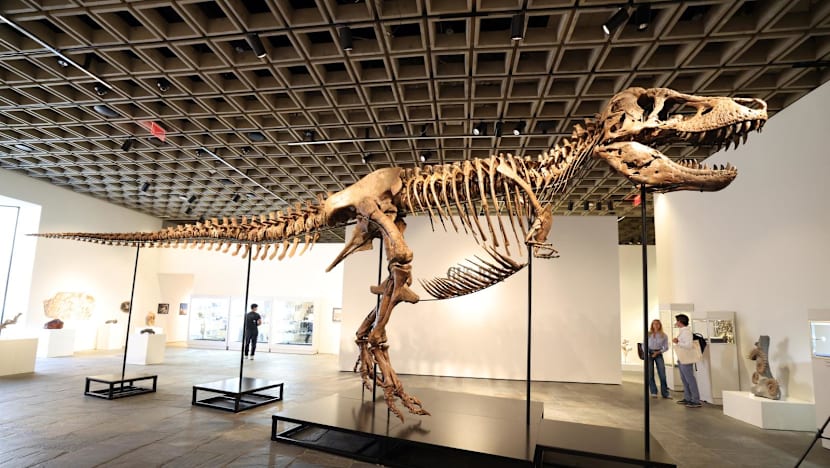
T. rex skeleton 'Gus' sells for record $50.1 million at US auction
Translated from English, summarized and contextualized by DistantNews.
At a glance
News
Named sources
Outcome reported
- A 67-million-year-old Tyrannosaurus rex skeleton, nicknamed Gus, sold for a record $50.1 million at a Sotheby's auction in New York.
- Gus is one of the most complete T. rex skeletons ever found, measuring 38 feet long and 63% complete.
- The sale highlights a growing market for dinosaur fossils, though some paleontologists criticize specimens entering private collections.
A remarkably complete Tyrannosaurus rex skeleton, known as Gus, has fetched a record-breaking $50.1 million at a Sotheby's auction in New York. The sale on Tuesday concluded a 10-minute bidding war among seven collectors, establishing a new benchmark for the most expensive dinosaur fossil ever sold at auction.
Gus, estimated to be 67 million years old, is one of the largest T. rex specimens discovered, measuring 38 feet in length. With 183 fossilized bones, it is approximately 63% complete. The skeleton was unearthed in 2021 on a cattle ranch in South Dakota. This ancient predator lived during a period characterized by a warm climate, high sea levels, and vast coastal plains.
The sale, to an anonymous buyer, underscores a booming market for dinosaur fossils. However, this trend has drawn criticism from some paleontologists who are concerned about significant specimens entering private hands. "The United States is the only country in the world where fossils like this are considered personal property," noted Cassandra Hatton, head of science and natural history at Sotheby's, prior to the auction.
Hatton explained that land ownership in the U.S. grants the owner the right to sell any fossils found on their property, making it a unique market for acquiring such ancient artifacts. The previous record for a fossil auction was held by the Apex the Stegosaurus, which sold for $44.6 million in 2024 to hedge fund billionaire Ken Griffin.
The United States is the only country in the world where fossils like this are considered personal property. If you own the land, you own the fossil and you have the right to sell it. So if you want a dinosaur, this is the only place that you can get it.
DistantNews Editorial
Originally published by CNA in English. Translated, summarized, and contextualized by our editorial team with added local perspective. Read our editorial standards.
More Stories


From Our Blog

What Gets Lost (and Found) When News Is Translated

The Critical Role of Diaspora Media in Global News

What Travellers Should Know About Countries with Restricted Press

A Digital Nomad's Guide to Following Local News

How the Same Story Looks Different in Different Countries
